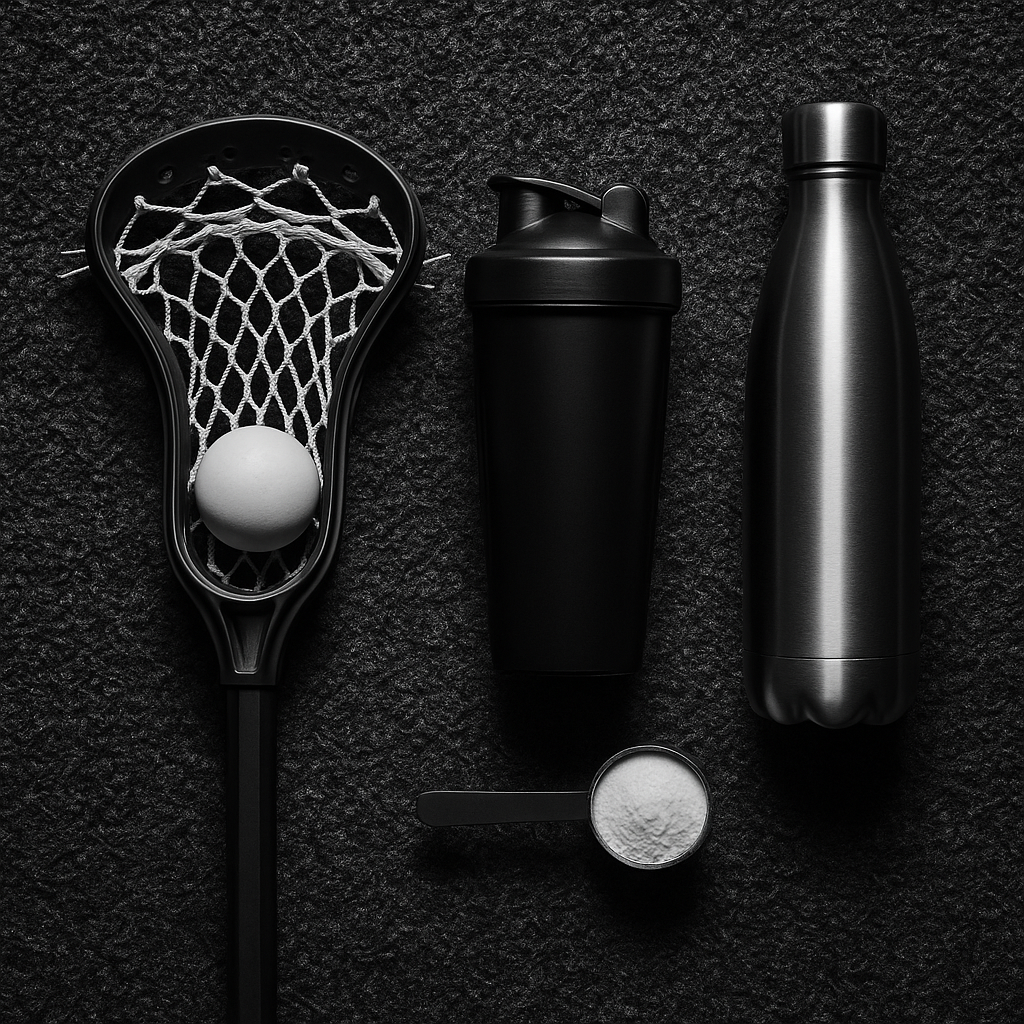
Creatine for Lacrosse: Speed, Power, and Late-Game Intensity
Lacrosse is a game of relentless sprints, quick changes of direction, and heavy contact—exactly where creatine shines. Learn how creatine supports explosive offense, tougher defense, and steadier legs in the fourth quarter, with clear dosing and buying tips for Canadian players.
Key Takeaways
- Use creatine monohydrate at 3–5 g per day; it’s the gold-standard form with the strongest evidence.
- Optional loading (20 g/day for 5–7 days) saturates faster; otherwise, expect ~3–4 weeks to top up stores.
- Creatine supports short, repeated efforts—faster first steps, harder shots, stronger checks, and better shift-to-shift recovery.
- Stay hydrated and salt your meals, especially for box lacrosse arenas and summer field heat.
- Choose Canadian products with an NPN and third‑party testing (NSF Certified for Sport or Informed Choice).
- Creatine is permitted by WADA/CCES; always check your team’s supplement policy.
- Time your dose whenever it’s convenient; consistency matters more than timing.
Why creatine matters in lacrosse
Lacrosse—box or field—is built on short, intense bursts: 5–10 second accelerations, hard cuts, net drives, checks, and quick line changes. These efforts primarily tap the phosphocreatine (PCr) system, your body’s fastest energy source for maximal power. When PCr runs low, power drops and recovery between shifts slows. That’s where creatine shines.
Creatine monohydrate increases intramuscular creatine and PCr stores, helping you repeat high-output efforts with less drop-off. Offensively, that can mean sharper first steps, stronger dodges, and more pop on outside shots. Defensively, it supports harder slides, body position battles, and better stick-to-stick scrums—especially in late-game sequences when legs get heavy.
For Canadian players navigating spring field or summer box schedules, creatine is a practical, well-researched staple—affordable, safe for healthy athletes, and easy to stack with training. It’s also permitted by anti-doping bodies (see CCES/WADA notes below), making it a smart, low-risk add for U SPORTS, CUFLA, junior, senior, or NLL hopefuls.
- Monohydrate remains the gold standard—see our picks at Best Creatine in Canada.
- Not sure how much? Use our Creatine Dose Calculator.
- New to timing? Read When to Take Creatine.
How it works for speed, power, and recovery
During maximal efforts (sprints, checks, shots), your muscles rely on ATP. The PCr system rapidly regenerates ATP so you can sustain peak power. Supplementing with creatine monohydrate raises muscle creatine and PCr stores, which can:
- Boost acceleration and first steps for dodges, close-outs, and transition bursts.
- Support shot power and release speed by maintaining high-rate force production.
- Reduce fatigue across shifts so your third or fourth sprint rep falls off less.
- Speed recovery between short efforts and between shifts, helping maintain intensity late in games.
These benefits are most evident in repeated high-intensity work—exactly the metabolic signature of lacrosse. Evidence from sport science consistently supports creatine for brief, intermittent efforts and strength-power training, with the International Society of Sports Nutrition’s position stand identifying creatine monohydrate as one of the most effective ergogenic aids for such tasks.
Practically, you’ll notice creatine’s impact most when you combine it with quality training: short sprint repeats, change-of-direction drills, resisted shooting, and strength work. For specific protocols, see our training-focused Guides.
Dosing, loading, and timing for in‑season and off‑season
The simplest, most researched approach is:
- Maintenance: 3–5 g of creatine monohydrate daily. Take it at any consistent time—morning, with a meal, or post-practice. Consistency beats timing. See When to Take Creatine.
- Optional loading: 20 g/day split into 4×5 g for 5–7 days, then 3–5 g/day. Loading saturates muscles faster; skipping it still works, just allow ~3–4 weeks. Details at Creatine Loading Phase.
In-season tips for Canadian players:
- Start early in camp or 2–3 weeks before playoffs to let levels rise without fuss.
- Hydrate and salt meals, particularly for summer field tournaments or warm box arenas. Creatine increases intracellular water, so match it with fluids.
- Travel-friendly: Pre-portion 3–5 g baggies or use capsules. Mix with a carb/protein snack post-practice for convenience.
If you want help personalizing the dose, try our Creatine Dose Calculator. Remember: monohydrate powder is reliable and budget-friendly; exotic forms haven’t outperformed it in research.
Making it count on offense, defense, and specialty roles
Creatine won’t replace skill work, but it can raise your ceiling for the work that matters most.
- Offense: Pair creatine with resisted sprints, 5–15 m accelerations, and shot velocity sessions (e.g., 4–6 sets of 6–8 high‑speed reps). The aim: higher peak outputs and less drop‑off in later reps.
- Defense: Emphasize short shuffle‑to‑sprint transitions and body‑position battles (timed 5–10 s efforts with 20–30 s rest). Creatine supports repeatability in these collisions.
- Faceoffs/Draws: Fast, high‑force hip and upper‑body pulls benefit from PCr availability. Pair creatine with heavy triples and explosive med‑ball work.
- Goalies: Quick-twitch pushes across the crease and repeated up-downs are short, intense bursts; combine creatine with reactive footwork and low‑rep power lifts.
To realize the full effect, keep sessions quality-focused (ample rest, crisp reps). Programming ideas and periodization templates are in our training Guides. Creatine supports the engine; smart practice and lifting tell it where to go.
Buying creatine in Canada: what to look for
In Canada, you can find excellent creatine monohydrate options online and at local shops. Prioritize:
- Monohydrate powder: The most studied form, cost‑effective, and easy to dose. “Micronized” versions mix more easily.
- Plain, unflavoured: Fewer additives; mixes into water or your recovery shake.
- Evidence over hype: Designer forms haven’t shown superior results to monohydrate in head‑to‑head research.
- Quality and compliance: Look for Canadian products with a Natural Product Number (NPN) and third‑party testing like NSF Certified for Sport or Informed Choice, useful for U SPORTS/CUFLA/NLL pathways.
For vetted options and value picks, see our Best Creatine in Canada and deep-dive Creatine Supplements Review. A 500 g tub (about 100 daily servings at 5 g) typically offers the best cost per serving—simple, transparent, and effective.
Safety, hydration, and fair play in Canada
For healthy athletes, creatine monohydrate is one of the most researched and well‑tolerated supplements in sport. The ISSN position stand supports both its efficacy and safety when used as directed. Common concerns like cramping are often tied to insufficient hydration or electrolytes during heavy training—address this proactively.
- Hydration: Sip fluids regularly; include sodium via meals or sports drinks during long, hot sessions (summer field lacrosse, tournament days).
- Medical considerations: If you have a kidney condition or are on medications, speak with your healthcare provider before use.
- Anti‑doping: Creatine is not on the WADA Prohibited List. Canadian athletes can verify status via the CCES Prohibited List. Always follow team policies on supplement disclosure.
Want a refresher on protocol and timing? Check When to Take Creatine and the Creatine Loading Phase explainer for step‑by‑step guidance.
Creatine Quick Facts for Lacrosse
- 3–5 g/day Daily maintenance dose
- 20 g/day × 5–7 Optional loading protocol
- Monohydrate Gold-standard research form
- Group A (AIS) Highest evidence category
- Not Prohibited Permitted by WADA/CCES
Frequently Asked Questions
Will creatine make me slower or too heavy for lacrosse?
Creatine primarily increases intracellular water in muscle, which supports power without impairing speed. Some athletes notice a small, gradual body mass increase, but this typically does not hinder acceleration and can improve resilience in contact. Keep sprint mechanics sharp and stay hydrated to maximize benefits.
Should I load creatine during the season or wait for the off‑season?
Loading is optional. In season, many athletes simply start with 3–5 g/day and allow 3–4 weeks to fully saturate—no disruption to routines. If you need faster saturation (e.g., heading into playoffs), a short 5–7 day load works well. Either approach converges on the same muscle levels over time.
What’s the best time to take creatine on practice and game days?
Timing is flexible—consistency matters most. Take it when you’re least likely to forget: with breakfast, post‑lift, or with a recovery snack after practice. On game days, you don’t need a special timing window; your muscle stores, not acute timing, drive performance.
Is creatine safe and allowed for Canadian university or junior players?
Creatine monohydrate has a strong safety profile for healthy individuals when used as directed. It is not on the WADA Prohibited List and is permitted under CCES. If you have a medical condition or take prescriptions, consult your healthcare provider, and always follow your team’s supplement policy.
Box vs. field lacrosse: does creatine help one more than the other?
Both formats feature repeated, short bursts—ideal for creatine’s effects on power and repeat sprint ability. Box emphasizes tighter, more frequent high-intensity exchanges, while field includes longer transitions and heat exposure—hydrate and include sodium to get the most from creatine in either setting.