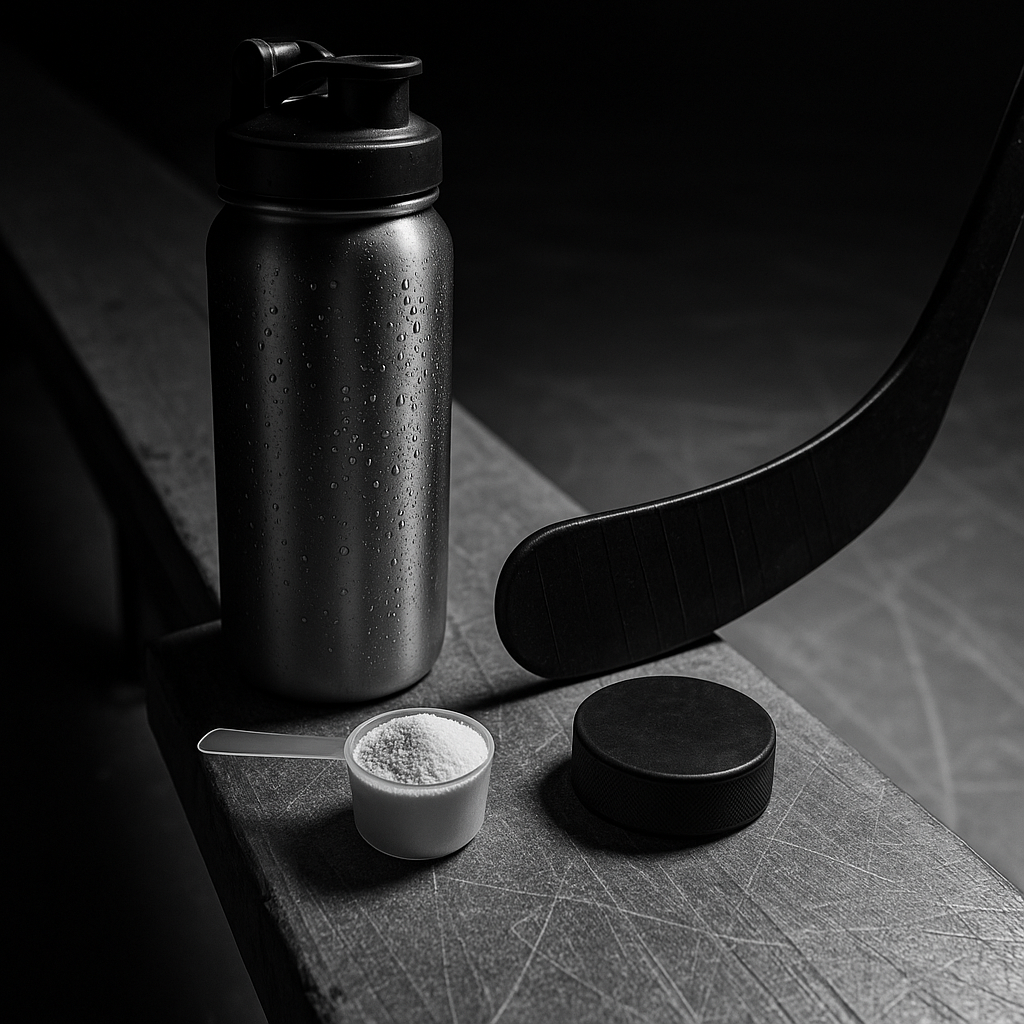
Creatine for Hockey Players: Power Shifts and Board Battles
Hockey is made of five-second bursts and repeat sprints. Creatine monohydrate can help you win first steps, hold your edges in contact, and recover shift to shift. Here’s a clear plan for in-season and off-season use in Canada.
Key Takeaways
- Creatine monohydrate is the gold standard; 3–5 g/day covers most hockey players.
- Off-season: consider a 5–7 day load (0.3 g/kg/day) to saturate fast; in-season: skip loading and maintain.
- Consistent daily intake matters more than timing; pair with a meal or post-skate snack.
- Expect a small early weight increase (~0.5–1.5 kg) from intramuscular water — plan equipment and travel accordingly.
- Choose Canadian-available, third‑party tested monohydrate (NSF/Informed Choice) and look for an NPN on the label.
- Creatine supports repeated sprint power and shift-to-shift recovery without increasing cramps or dehydration risk.
- Don’t change your dose right before big games or tournaments; keep your routine steady.
Why creatine fits hockey
Hockey is repeated, explosive effort: two to three strides to win a puck, a hard cut to separate, then a board battle — all inside short shifts. Those actions are powered by the ATP–phosphocreatine (PCr) system, which fuels bursts up to ~10 seconds. Creatine monohydrate increases intramuscular creatine and phosphocreatine, improving rapid ATP resynthesis so you can push harder and recover faster between efforts.
For Canadian players in U Sports, junior, beer league, or pro, the principles are the same. The mainstream protocol backed by the International Society of Sports Nutrition (ISSN) is simple: 3–5 g/day of creatine monohydrate as a maintenance dose, with an optional short loading phase if you’re not mid-season. Monohydrate remains the gold standard for efficacy, safety, and value.
If you’re new to creatine, start by learning the basics and dialing in your dose. Try our quick tools and guides:
- Creatine calculator to estimate your daily and loading amounts.
- When to take creatine for busy practice and travel schedules.
- All creatine guides if you want to go deeper before the season starts.
What the science says
Across controlled trials and position stands, creatine monohydrate consistently improves high-intensity performance, particularly repeated sprints and short-duration power — exactly what hockey demands. The ISSN concludes creatine is effective for increasing phosphocreatine stores, improving training quality, and supporting small but meaningful gains in power and repeated-bout performance. Many athletes also report better shift-to-shift recovery as muscle energy is replenished more quickly during short rests.
Safety is well supported in healthy individuals using recommended doses. The most common early change is a modest increase in body mass (often ~0.5–1.5 kg) due to water being drawn into muscle — a normal and performance-positive adaptation. Large reviews and expert position papers do not find increased risk of cramps or dehydration; if anything, maintaining good hydration and electrolyte intake remains best practice for all players.
Creatine may also help certain athletes who consume little dietary creatine (e.g., vegetarian or largely plant-based players), as their baseline muscle stores are typically lower. If you have a medical condition or take medications, speak with a healthcare professional or team dietitian before starting any supplement.
Bottom line: monohydrate, taken consistently, is the most studied form with the best evidence for hockey-relevant outputs. Curious about brands? See our Canadian picks in best creatine and deeper lab notes in creatine supplements review.
Dosing protocols: in-season vs off-season
You have two evidence-based ways to saturate muscles with creatine:
- Loading: ~0.3 g/kg/day (often split into 4 x 5 g) for 5–7 days, then 3–5 g/day to maintain. Fastest way to top up stores.
- No-load: Start directly at 3–5 g/day. You’ll reach saturation in about 3–4 weeks.
In-season: Most hockey players skip loading to avoid a sudden 0.5–1.5 kg shift during a road trip or back-to-back. Maintain 3–5 g/day, ideally with a meal or your post-skate snack. Keep it boring and consistent. Timing is flexible; consistency wins. See our primer on timing here: when to take creatine.
Off-season: Loading is useful when you’re building strength and body mass in the gym. Plan the 5–7 day load away from on-ice testing, and track morning body weight so equipment (holder alignment, shin strap tension, etc.) stays dialed. Learn how to run a safe, simple load here: creatine loading phase.
Unsure on amounts? Use our creatine calculator. Remember: monohydrate is still the go-to, and 3–5 g/day is sufficient for most players across positions.
Game day and travel strategy
Keep your routine stable. If you already take creatine, continue your 3–5 g on game day. If you’re new, don’t start right before a big match or tournament — add it earlier in the week and monitor how you feel. Mix your dose in water, a smoothie, or with a carb-containing snack for convenience and comfort.
Hydration matters regardless of supplements. Pack a refillable bottle, and consider an electrolyte source during long travel days. Evidence does not show that creatine increases cramps or dehydration risk when taken as directed; cramping is more closely related to total workload, heat, and hydration status.
For back-to-back games or showcases, consistency helps maintain muscle phosphocreatine even as intensity ramps up. If you get an upset stomach with larger servings, split your daily dose into 2–3 smaller sips spread through the day.
Anti-doping and quality: Choose third-party certified products (NSF Certified for Sport, Informed Choice) to reduce contamination risk, and follow your team or sport’s supplement policy. The Canadian Centre for Ethics in Sport (CCES) provides guidance on safer supplement use. When travelling, keep creatine in its original container and pack a scoop to avoid guesswork.
Choosing a creatine in Canada
Focus on creatine monohydrate powder. It’s the most studied, affordable, and reliable form. Micronized monohydrate dissolves a bit easier; otherwise, there’s no performance advantage to pricier forms (e.g., HCl, buffered) based on current evidence. Look for simple ingredient lists: creatine monohydrate only.
For Canadian buyers:
- License and quality: Many products sold in Canada carry a Natural Product Number (NPN). While not mandatory for all creatine imports, an NPN indicates the product is licensed by Health Canada. More importantly, seek third‑party testing (NSF Certified for Sport or Informed Choice) to reduce contamination risk.
- Serving accuracy: Use a scale or follow label grams, not scoops, if you want precision. Most athletes do well with 3–5 g/day.
- Taste and mixability: Unflavoured powder disappears into smoothies, yoghurt, or a post-skate chocolate milk. Slight grittiness is normal for monohydrate.
See our curated picks for Canadian availability and certification in best creatine, and dive into lab notes and value breakdowns in creatine supplements review. If you’re vegetarian or vegan, creatine can be especially helpful because baseline muscle stores are often lower.
Sample plans for in-season and off-season
Here are practical ways to slot creatine alongside skating and strength work. Adjust to your schedule, and don’t overhaul routines right before games.
- In-season microcycle (example): Mon — lift (lower body power) + 3–5 g creatine with post-lift meal. Tue — practice; take 3–5 g with lunch. Wed — light skills; no change. Thu — practice + video; 3–5 g with dinner. Fri — game day; keep the same 3–5 g at your usual time. Sat — recovery skate; 3–5 g with breakfast. Sun — off; 3–5 g with your largest meal.
- Off-season block (strength emphasis): Week 1: loading phase (0.3 g/kg/day split into 4 servings) while you begin a 3–4 day strength split. Weeks 2–8: maintain at 3–5 g/day, aim to progress squats, pulls, and unilateral work; skate 1–2 times to keep edges sharp.
- Travel/tournament week: Keep the 3–5 g/day steady. If mornings are chaotic, pre-portion doses into small baggies or a pill case. Pair with snacks you already tolerate (e.g., yoghurt + berries, milk + granola bar).
For timing nuances, see when to take creatine. For exact grams by body mass and a tap-to-plan loading phase, use the calculator and our loading guide. If you’re a younger athlete, involve a parent, coach, or team dietitian so supplementation fits your development plan and team policies.
Creatine for Hockey at a Glance
- 3–5 g/day Standard maintenance dose
- 0.3 g/kg/day Typical 5–7 day loading protocol
- 0.5–1.5 kg Common early body mass increase (water in muscle)
- 5–10 s ATP–PC bursts where creatine contributes most
Frequently Asked Questions
Will creatine make me cramp or dehydrate on the ice?
Current evidence and expert position stands do not show higher rates of cramps or dehydration with creatine when taken as directed. Cramping is more closely tied to total workload, heat, and hydration status. Maintain your usual fluid and electrolyte plan, and keep your creatine dose consistent.
Should goalies take creatine, or is it only for skaters?
Goalies rely on explosive lateral pushes and repeated efforts through a full game, so the ATP–PC system is critical for them too. Creatine can support those short, powerful movements and between-rep recovery. Monitor any small early weight change to ensure gear fit and mobility remain optimal.
Is creatine safe for junior players?
Research supports the safety of creatine monohydrate in healthy individuals using recommended doses, but policies for minors vary. Junior athletes should involve a parent/guardian and a qualified professional (team dietitian, physician) and prioritize a solid diet first. If used, stick to monohydrate at 3–5 g/day and follow team or league guidelines.
Do I need creatine HCl or other ‘special’ forms to avoid bloating?
No. Monohydrate is the gold standard for performance and safety, and most athletes tolerate it well. If you get stomach discomfort, try smaller split doses, take it with food, or choose a micronized monohydrate for better mixability rather than switching to costlier forms.
Should I cycle off creatine during playoffs?
There’s no need to cycle off if you’re responding well. The priority in playoffs is consistency: keep taking 3–5 g/day at your usual time and avoid last-minute changes. If you plan to adjust your dose for any reason, do it well before critical games and monitor body weight and how you feel on the ice.