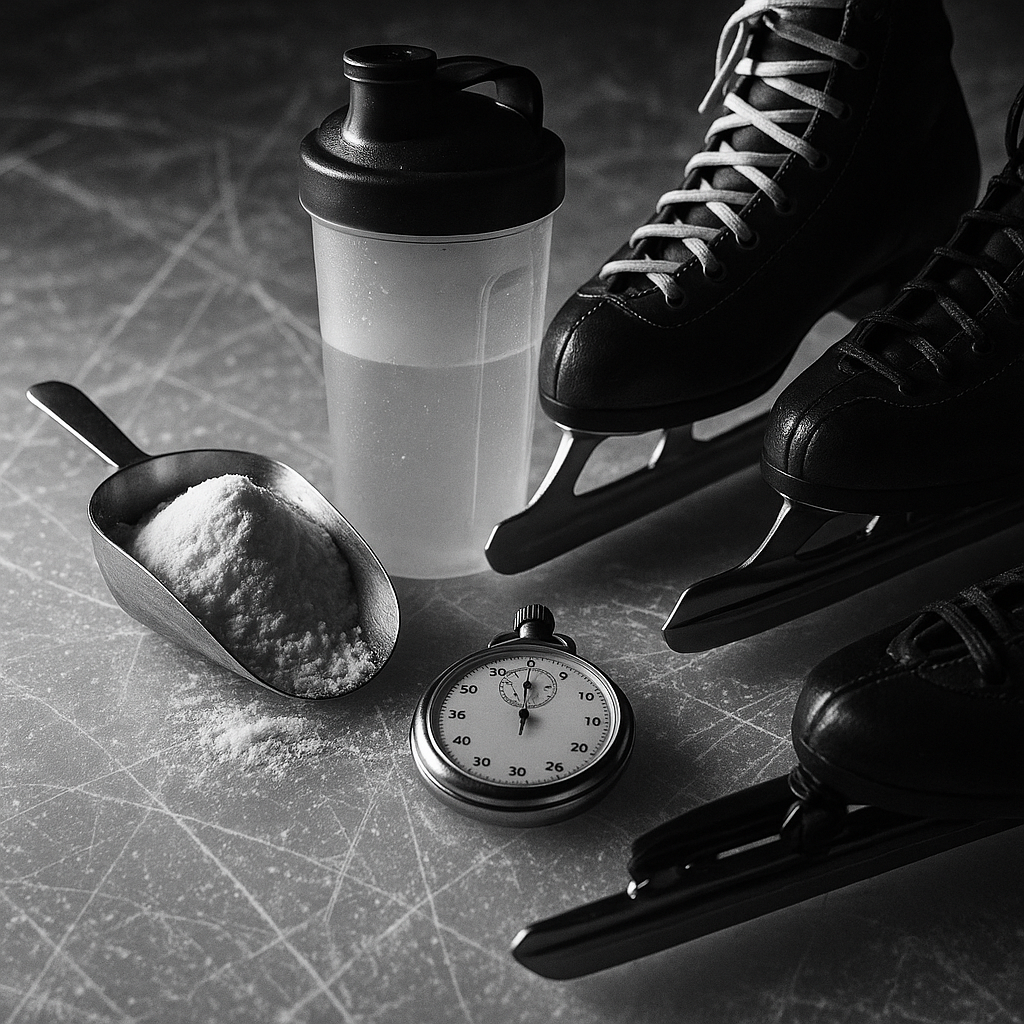
Creatine for Figure Skaters and Speed Skaters
Ice is unforgiving: jumps, explosive starts, and late-program surges demand quick energy you can’t fake. Here’s how creatine can help figure and speed skaters build reliable power without unnecessary bulk—plus Canadian-specific buying and dosing tips.
Key Takeaways
- Creatine monohydrate supports short, explosive efforts (5–15 s) that define jumps, starts, and corners.
- Use 3–5 g/day for maintenance; a 5–7 day load (20 g/day split) is optional, not required.
- Skip loading and start in the off‑season if you’re sensitive to small water-weight changes.
- Take creatine with a meal or post-skate; consistency matters more than timing.
- Choose plain monohydrate with third‑party testing and a Canadian NPN on the label.
- Track morning body mass and jump height/10 m sprint times to judge your response.
- Creatine is permitted in sport and not on the WADA Prohibited List.
Why creatine makes sense for ice sports
Figure skating and speed skating are classic high–low energy sports: long practices and programs punctuated by fierce, short bursts. Those critical moments—take‑offs into triples, an explosive start in the 500 m, or a decisive pass in short track—draw heavily on the ATP–phosphocreatine (PCr) system, which fuels all‑out efforts lasting roughly 5–15 seconds. Creatine monohydrate increases intramuscular phosphocreatine stores, improving your ability to regenerate ATP quickly and repeat powerful efforts with less drop‑off.
The core of the evidence is consistent: plain creatine monohydrate is the gold standard, and daily intakes of 3–5 g support performance across repeated sprints, jumps, and heavy sets. The International Society of Sports Nutrition (ISSN) endorses this approach and considers creatine among the most effective, well‑studied supplements for high‑intensity performance and training quality. For skaters, that can translate into slightly higher take‑off power in practice, stronger exits out of corners, and more consistent execution in later elements when fatigue typically creeps in.
If you’re new to creatine, start with the fundamentals and keep it simple. Our guides to when to take creatine, the loading phase, and our dosage calculator will help you tailor an approach that fits your skating schedule and recovery plan.
Figure skaters: jump power, spins, and program stamina
Landing high‑value jumps begins with a powerful, technically clean take‑off. Creatine can help by slightly increasing the immediate energy available to your turn‑over steps and the explosive extension that sends you into the air. In practice, many skaters notice they can hold quality for more attempts per session—useful when you’re grooving entries, adding rotations, or working combinations late in a session.
Beyond jumps, consider the cumulative demands of spins and step sequences: repeated accelerations, toe‑pick bursts, and quick transitions that rely on short anaerobic efforts. By supporting phosphocreatine availability, creatine may help maintain snap in those micro‑bursts as programs wear on, potentially reducing the fade you feel late in a run‑through.
Practical tips for the rink:
- Program prep: Keep daily creatine at 3–5 g with food. If you’re weeks from competition and want faster saturation, use an optional 5–7 day load (20 g/day in 4 doses), then maintain.
- Weight‑sensitive moments: If costume fit or lift mechanics are tight, skip loading; small, early water shifts are less likely with straight maintenance dosing.
- Training feedback: Track jump height or rotation speed in practice, along with morning body mass, to see how your body responds.
For more on practical timing, see When to Take Creatine, and for product picks that mix cleanly and travel well, visit Best Creatine.
Speed skaters: starts, corners, and repeat sprint power
Whether you race short or long track, your opening strides and first corner set the tone. The ATP–PCr system is central to those first seconds of acceleration, while repeated surges and tactical speed changes keep drawing on it across a race. Creatine helps buffer that system by elevating intramuscular phosphocreatine, which can support higher peak power and better maintenance of speed across repeated efforts in training.
Where might you feel it? Explosive starts, the drive phase out of corners, and interval sets on‑ice or on the bike/slideboard. Many skaters find creatine improves the quality and consistency of high‑power reps, which compounds over a training cycle into stronger race‑relevant outputs.
Action plan:
- Maintenance first: 3–5 g/day of creatine monohydrate is sufficient for most athletes. Loading is optional if you need faster saturation early in a training block.
- Integrate with strength work: Pair creatine with your heavy pushes, Olympic‑style lifts, and short sprint work to reinforce neuromuscular adaptations.
- Monitor key metrics: Track 10 m and flying 30 m times, power on the bike, and perceived pop out of corners to judge efficacy.
For deeper background and brand picks that meet sport certification standards, see Creatine Supplements Review and our broader Guides.
Managing body mass and aesthetics without surprises
Creatine can cause a small, mostly intracellular water increase in muscle as stores saturate. Some athletes notice this during an aggressive loading phase; others barely register any change. If your sport or role is highly weight‑sensitive (aesthetic lines in figure skating, or strict power‑to‑weight targets on the ice), you can minimize surprises with a few simple tactics.
- Skip loading before competition: Go straight to 3–5 g/day. Saturation takes longer, but early water shifts are typically smaller.
- Start in base/off‑season: Introduce creatine well ahead of costume fittings or peak events. Track morning body mass and how your boots feel.
- Consistency over timing: Take creatine with a regular meal. There’s no need to time it to the minute around skates; adherence is what matters.
- Hydration basics: Maintain normal fluid intake, especially during travel and dryland. Intracellular water increases do not equal bloating, but dehydration can still impair feel and performance.
If you’re exceptionally sensitive to even small mass changes, trial creatine during a low‑stakes block and stop a couple of weeks before critical events if you decide it’s not the right fit. Our overview of the loading phase outlines trade‑offs so you can choose the lowest‑risk path.
Dosing, timing, and smart season planning
The most practical plan for skaters is simple and evidence‑based:
- Maintenance: 3–5 g/day of creatine monohydrate, any time of day, ideally with food for habit stacking and good GI tolerance.
- Optional loading: 20 g/day for 5–7 days, split into 4 x 5 g doses, then 3–5 g/day. This just saturates muscle faster; it’s not mandatory.
- Timing: If you like routines, take it post‑skate or after strength sessions with a carb‑protein meal. Consistency outperforms precise timing.
- Travel blocks: Keep your daily dose. Pack single‑serve bags and a small scoop; cold arenas are fine—creatine is stable in water for hours.
There’s no requirement to “cycle off,” though some athletes pause during deloads or if managing body mass for an event. If you want personalized numbers by body size, try our dosage calculator. For a refresher on practical timing, visit When to Take Creatine.
As always, pair supplementation with fundamentals: adequate protein, carbohydrate availability for hard sessions, and sleep. Creatine enhances a strong plan; it doesn’t replace it.
Buying creatine in Canada: simple, safe choices
Keep your shopping list short. The form with the strongest evidence is creatine monohydrate—unflavoured powder. It’s effective, affordable, and widely available across Canada. Look for:
- NPN on the label: As a Natural Health Product, Canadian creatine should display a Natural Product Number (NPN), indicating it’s licensed for sale.
- Third‑party testing: Choose products certified by programs such as NSF Certified for Sport or Informed Sport to reduce contamination risk—especially important for tested athletes.
- Transparent labels: Avoid proprietary blends. You want one ingredient: creatine monohydrate. “Micronized” is fine—it just mixes a bit better.
- Price per gram: Compare tubs by cost per 100 g, not by flashy servings. Monohydrate should be one of the best value supplements you buy.
If you prefer brand guidance, our Canadian picks and test notes are here: Best Creatine and a deeper Creatine Supplements Review. For more how‑to content on safe, effective use, browse our Guides.
Creatine on Ice: Quick Facts
- 3–5 g/day Typical maintenance dose for skaters
- 20 g/day × 5–7 days Optional loading protocol (then 3–5 g/day)
- 5–15 seconds Duration powered by the ATP–PCr system
- 95% in muscle Where the body stores creatine
- Not prohibited Creatine’s status on the WADA Prohibited List
Frequently Asked Questions
Will creatine help me jump higher or rotate faster in figure skating?
Creatine supports short, explosive efforts by increasing intramuscular phosphocreatine, which can translate into slightly better take‑off power and the ability to repeat high‑quality jump attempts in practice. It’s not a technique fix, but it can help you maintain pop and consistency as fatigue builds.
Will I gain weight on creatine, and is that a problem for skating?
Some athletes see a small, mostly intracellular water increase as muscles saturate with creatine—more noticeable if you use a fast loading phase. If mass is sensitive for you, skip loading and use 3–5 g/day; introduce it in the off‑season and track morning body mass so there are no surprises near competition.
Is creatine safe for tested athletes like national‑level skaters?
Creatine monohydrate is among the most researched sports supplements and is not on the World Anti‑Doping Agency (WADA) Prohibited List. Choose third‑party tested products (e.g., NSF Certified for Sport, Informed Sport) and avoid blends to minimize contamination risk.
Do I need to time creatine around my skate or gym session?
Consistency matters more than timing. Take 3–5 g/day with a regular meal for habit stacking and comfort. If you prefer, post‑session with a carb‑protein meal is convenient, but precise timing offers little additional benefit compared with daily adherence.
Is creatine monohydrate better than creatine HCl or other forms?
Yes for most athletes. Creatine monohydrate has the strongest evidence for performance, is widely available in Canada, and is usually the best value. Other forms have not consistently shown superior benefits in well‑controlled research.