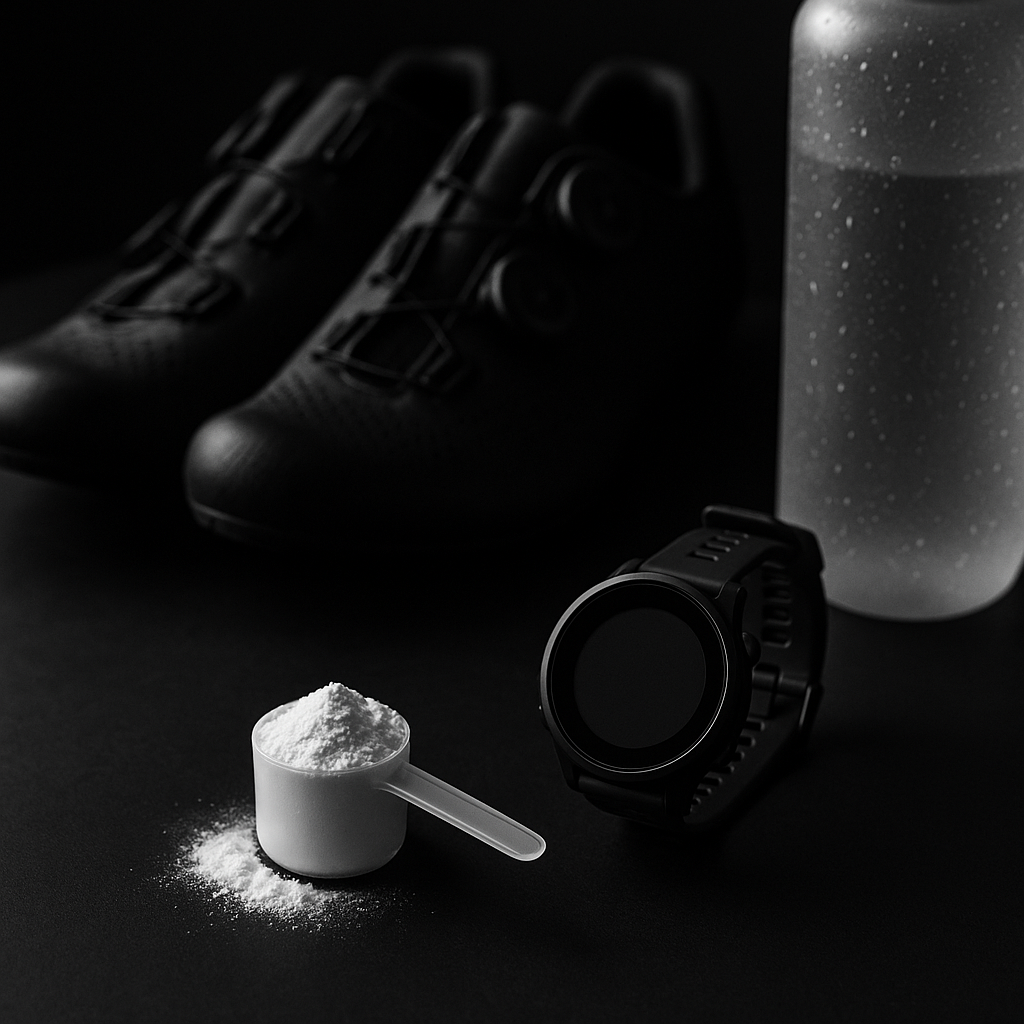
Creatine for Endurance Athletes: When the Case is Stronger Than You Think
If you run, ride, or row, creatine isn’t just for weight rooms. It can sharpen your sprint finish, raise power on climbs, and improve the quality of tempo and interval sessions—without compromising your aerobic engine.
Key Takeaways
- Creatine supports high-power bursts (5–30 seconds) that decide hill attacks, surges, and sprint finishes.
- Expect little change to steady-state aerobic capacity, but better repeatability and session quality.
- Use creatine monohydrate: 3–5 g/day maintenance; optional 20 g/day loading for 5–7 days.
- Minor water weight (often 1–2 kg with loading) is common—trial it before key races.
- Pairing creatine with carbohydrate may support glycogen storage and hard training days.
- Split doses with meals to reduce GI upset; stay well hydrated in heat.
- Choose Canadian products with an NPN and third‑party testing (NSF/Informed Choice).
Why creatine matters for endurance
Endurance events aren’t purely aerobic. Whether you’re closing a 10K, attacking a climb, bridging a gap in a crit, or surging past an aid station, the key moments are powered by the phosphocreatine (PCr) system. Creatine monohydrate increases intramuscular creatine and PCr stores, which can translate into a few more seconds of higher power, better repeatability, and faster recovery between hard efforts.
Importantly, creatine doesn’t turn marathoners into bodybuilders. At steady state, pace and oxygen economy dominate. But the real world of endurance includes micro-bursts, terrain changes, and tactical moves that tax your anaerobic-alactic system. That’s where creatine earns its keep—especially in sprint finishes, hill attacks, and tight pack dynamics.
For athletes who train with intervals, creatine may support higher quality reps and shorter recoveries within VO2, threshold, and sprint sets, enabling more work at the intended intensity. Over a training cycle, that can compound into better race-day execution. If you’re new to supplementation, start with the gold-standard form—creatine monohydrate—and a maintenance dose of 3–5 g/day, which is widely supported by the International Society of Sports Nutrition (ISSN).
What the research says
The consensus from mainstream sports nutrition is straightforward: creatine monohydrate is effective and safe for enhancing high-intensity performance and lean mass. The ISSN’s position stand recognizes monohydrate as the best-supported form, with typical maintenance dosing at 3–5 g/day. For endurance athletes, the most consistent benefits appear in repeated sprint ability, peak power, and final-kick efforts, rather than improvements in VO2max or prolonged time trials.
What about body weight? Short-term loading can increase total body water and raise mass modestly—often 1–2 kg—because creatine draws water into muscle. This is not fat gain and may be neutral or even beneficial for muscular function. That said, lighter-weight runners or climbers should trial creatine in training blocks rather than the week of a key race.
On safety, long-term use in healthy adults is well supported. Major agencies classify creatine as permitted and evidence-based for performance in the right contexts. If you’re heat-adapted and keep up with fluids and electrolytes, current evidence does not support higher rates of cramps or heat illness from creatine. The bottom line: for endurance sports, creatine won’t replace aerobic development, but it can sharpen the edges where races are won.
Glycogen and interval quality
Creatine’s benefits aren’t limited to split-second power. There’s evidence that creatine can augment muscle glycogen storage when paired with carbohydrate intake, which is valuable before big training days and stage races. More PCr also supports faster phosphocreatine resynthesis between intervals, helping you repeat high power outputs with slightly less rest and maintain quality deeper into a session.
In practical terms, that might mean holding the 5th and 6th VO2 reps closer to target watts, or keeping your last 400 m repeats snappier. Across weeks, better adherence to intended intensities can nudge threshold and race-pace work upward—indirect gains that matter for marathoners, triathletes, and cyclists.
To leverage this, align creatine with carbohydrate-rich meals on heavy training days and maintain daily consistency. If you like to plan meticulously, our creatine calculator can guide dosing, and our primer on when to take creatine explains timing options. Remember: consistent daily intake is more important than the exact time of day.
How to dose for endurance
Stick to the protocol with the strongest evidence:
- Maintenance: 3–5 g/day of creatine monohydrate. Most endurance athletes do well at 3 g/day; larger athletes or those seeking faster saturation can use 5 g/day.
- Optional loading: ~20 g/day split into 4 doses for 5–7 days, then 3–5 g/day. Loading saturates muscles faster but is not required. See our step-by-step loading guide.
- Timing: Any time of day works if you’re consistent. Many take it with a meal or post-workout to pair with carbs/protein. More on this in when to take creatine.
- Hydration: As training volume and weather heat up, match creatine with good fluid and sodium practices.
Race calendar tips: avoid first-ever loading the week of a key race. Trial for 3–4 weeks in training first to understand any body-mass changes and GI tolerance. If you taper weight tightly for certain courses (e.g., mountainous marathons), you may pause loading yet keep a lower maintenance dose to preserve most benefits. For nuanced scenarios, browse our creatine guides.
Managing weight, heat, and GI
Three practical considerations help endurance athletes get the upside with fewer surprises:
- Body mass: Creatine can add water within muscle, especially after loading. If you’re sensitive to weight on climbs, skip loading and use 3 g/day for a slower, subtler saturation. Trial well before A‑races.
- Heat and cramps: Research does not support higher cramp or heat illness rates with creatine when hydration and electrolytes are adequate. In hot blocks, be intentional about fluids, sodium, and pre-cooling.
- GI comfort: Split doses (e.g., 1–2 g with meals) and choose a fine, micronized monohydrate. If you combine with caffeine and notice GI upset, separate their timing.
Most athletes never notice downsides beyond a small, early uptick in scale weight. If you do experience persistent GI issues, review dose size and purity—our supplement reviews cover reputable options—and consider taking creatine post-run or post-ride when gut tolerance can be higher.
Choosing a product in Canada
For Canadians, look for three signals of quality:
- Form: Choose creatine monohydrate—the gold standard for efficacy, safety, and value. Unflavoured powder keeps cost per gram low.
- Regulatory: Check for a Health Canada NPN (Natural Product Number). You can verify ingredients in the Natural Health Products Ingredients Database.
- Third‑party testing: For tested sport, prefer NSF Certified for Sport or Informed Choice/Sport products to reduce contamination risk.
Many Canadian retailers and brands offer high‑purity monohydrate, including products made with well‑known raw materials like Creapure. To compare costs, purity, and certifications, start with our curated picks in best creatine and deeper notes in the supplements review. If you’re new, buy a small tub, trial in training, and only then scale up.
Creatine for Endurance at a Glance
- 3–5 g/day ISSN-backed maintenance dose
- 20 g/day × 5–7 days Optional loading strategy
- 1–2 kg Typical initial water weight during loading
- Group A AIS classification for creatine
Frequently Asked Questions
Will creatine slow me down by adding weight?
Creatine can increase intracellular water, especially with loading, which may raise body mass modestly. Many endurance athletes find the power and repeatability gains offset this. If weight is critical for climbs, skip loading and use 3 g/day for several weeks before deciding.
Does creatine improve marathon or long time-trial times directly?
Creatine doesn’t meaningfully raise VO2max or steady-state endurance by itself. Its value is in surges, hills, and sprint finishes, and in improving the quality of hard training. Those benefits can still help long events indirectly through better preparation and tactical execution.
When should I take creatine on training days?
Consistency beats timing. Take 3–5 g/day at a time you’ll remember—many choose with a meal or post‑workout alongside carbs and protein. See our breakdown in When to Take Creatine for more options.
Is creatine legal for sport and safe long term?
Yes. Creatine is not on the WADA Prohibited List and has a strong safety record in healthy adults when used as directed. Choose third‑party tested products if you are in a tested sport.
Should I load creatine before a race?
Only if you’ve already trialled it. Loading can work quickly but may add 1–2 kg of water early on. Most endurance athletes load in training blocks and then maintain, or they skip loading and use a steady 3 g/day for a few weeks pre‑race.