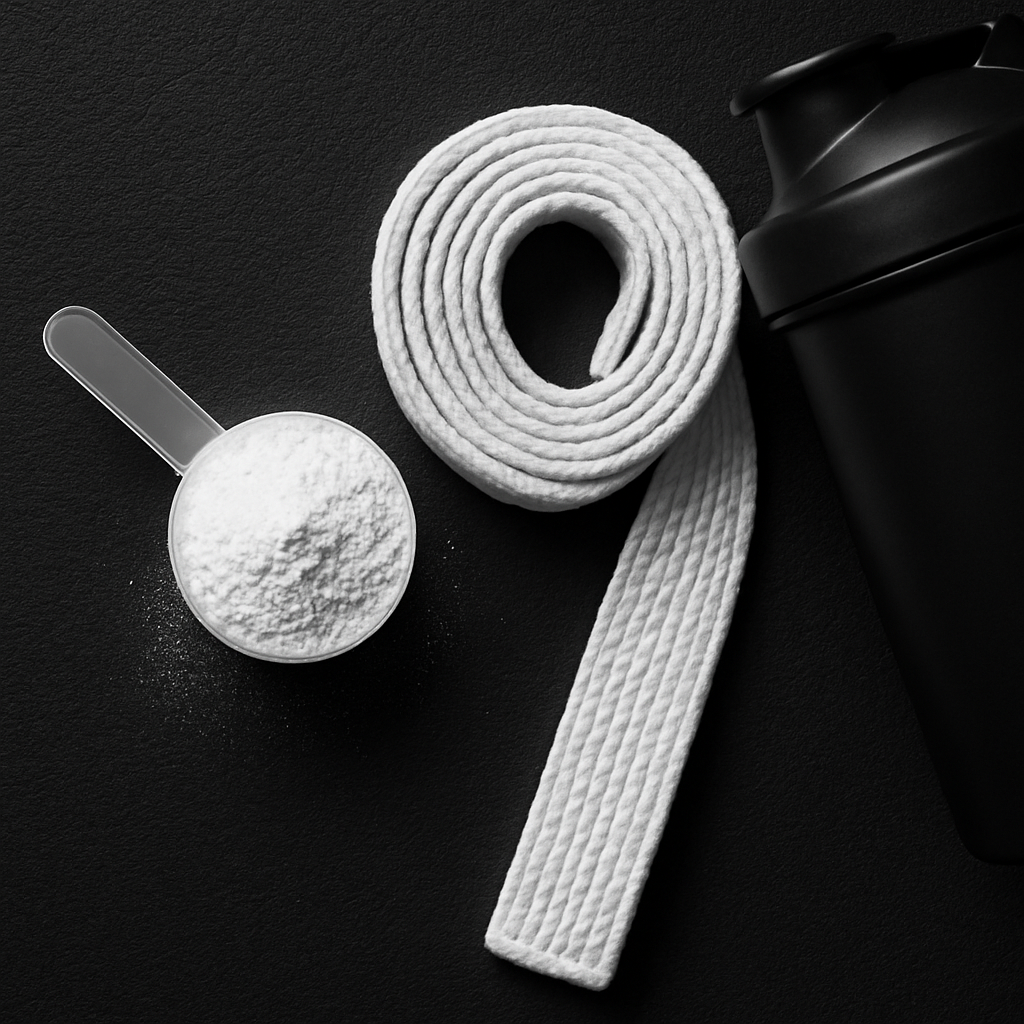
Creatine for Brazilian Jiu-Jitsu Athletes
BJJ drains your phosphocreatine fast—during grip fights, scrambles, and explosive passes. Creatine can help you repeat those efforts with less drop-off. Here’s how to use it in a weight-class sport without risking the scale.
Key Takeaways
- Use creatine monohydrate: 3–5 g per day is the gold-standard maintenance dose.
- Optional loading: ~20 g/day split into 4 doses for 5–7 days, then 3–5 g/day.
- Consistency beats timing; take it daily with a meal or shake you never miss.
- Expect a small, mostly intracellular water increase—plan ahead for weigh-ins.
- For tight weight cuts, build a buffer or consider pausing 7–14 days pre-event.
- Choose Canadian products with an NPN and third‑party testing; micronized mixes easier.
- Creatine is not banned (WADA compliant) and is supported by ISSN and major sport bodies.
Why creatine matters in BJJ
Brazilian Jiu-Jitsu demands repeated bursts of high-intensity effort: shooting a takedown, scrambling out of danger, locking a grip, or finishing a pass. Those actions rely heavily on the phosphocreatine (PCr) energy system—your body’s fastest way to regenerate ATP for short, explosive work. As rounds and drills pile up, PCr stores get taxed, and performance can tail off.
Creatine monohydrate increases your muscle’s creatine and phosphocreatine stores, helping you repeat sprints of effort with less drop-off and recover faster between bouts of high output. That can translate to more effective grip fighting, stronger isometric holds, and better quality reps during hard positional sparring.
This is not a stimulant; you won’t feel an immediate “buzz.” The benefits accrue over days to weeks as muscles become saturated. The International Society of Sports Nutrition recognizes creatine monohydrate as the gold standard for strength and high-intensity sports, and BJJ shares many physiological demands with those activities. If you’re new to supplementation, our practical overviews in Guides and timing tips in When to Take Creatine can help you build a routine that fits your training.
How to dose creatine for BJJ
For most grapplers, the simplest plan is 3–5 g/day of creatine monohydrate. Take it at a consistent time you won’t forget—often with a meal or post-roll shake. Timing around training is not critical; consistency is. If you prefer to saturate faster, use an optional loading phase: about 20 g/day split into 4 x 5 g doses for 5–7 days, then drop to 3–5 g/day. Both approaches arrive at the same destination; loading just gets you there sooner.
- With food: Pairing creatine with carbohydrate and/or protein is a practical way to remember it and may support uptake.
- Missed a dose? No problem—resume your routine. There’s no need to double up.
- Vegetarian or vegan? You may see a slightly larger response because baseline muscle creatine is often lower.
To fine-tune your plan, try our quick Loading Phase explainer, see real-world timing options in When to Take Creatine, and estimate how long a tub will last with our Creatine Calculator.
Making weight without surprises
Most BJJ tournaments are true same‑day weigh-ins—some (like IBJJF) weigh you with the gi right before stepping on the mat. Creatine can raise total body water slightly, which often shows up as a small increase on the scale. Importantly, the research indicates this water is primarily intracellular (inside muscle), not the kind of bloating that leaves you feeling puffy.
- Plan a buffer: If you usually hover near your class limit, give yourself an extra margin of safety. Don’t rely on a last‑minute sweat if your event weighs with the gi.
- Comp week strategy: If you’re right on the edge, one option is to pause creatine 7–14 days before competition to let a little water/weight drift down. This is optional; many athletes continue year‑round without issue.
- Performance trade‑off: Stopping creatine may trim a bit of scale weight but also gives up some repeat‑effort support. Decide based on how tight your cut is and how you feel in training.
For more on day-to-day dosing when schedules get chaotic, see When to Take Creatine. If you’re newer to weight classes, check your event rules and weigh‑in timing, and consider test‑weighing with a wet gi to simulate real conditions.
Choosing creatine in Canada
Stick with creatine monohydrate. It’s the most studied, effective, and affordable form. Look for plain, unflavoured powder—ideally micronized for easier mixing. Some Canadian products use Creapure (a branded German monohydrate known for purity), but any reputable monohydrate with proper quality controls can work.
- Check for an NPN: Canadian creatine products should list a Natural Product Number (NPN) from Health Canada.
- Third‑party testing: Choose brands that publish certificates of analysis or work with independent labs.
- Keep it simple: Avoid proprietary blends or “exotic” forms claiming superiority without strong evidence.
- Value: Expect roughly pennies per 3–5 g serving; big tubs are usually most economical.
Not sure where to start? Browse our curated picks in Best Creatine in Canada and deeper product notes in Creatine Supplements Review. For broader how‑to help, see our step‑by‑step Guides.
Stacking and fuelling for the mats
Creatine pairs well with solid nutrition. A small carbohydrate and protein meal around training supports performance and recovery; your daily creatine can tag along with whatever option fits your stomach before hard rolls.
- Caffeine: Useful for alertness; not consistently shown to cancel creatine’s benefits. If large pre‑roll doses bother your gut, space them apart.
- Beta‑alanine: May help buffer acidity in repeated high‑intensity efforts over longer work bouts. Build gradually to avoid tingles.
- Sodium bicarbonate: Can aid high‑intensity intervals but often causes GI upset; test well before competition.
- Hydration and electrolytes: Creatine does not dehydrate you; still, hot gi sessions increase sweat losses. Sip fluids and include sodium with long training blocks.
Keep your stack minimal and well-tested in practice, not on competition day. If you’re travelling for a tournament, pre‑weigh baggies of 3–5 g creatine and pack a simple shaker. For timing ideas, skim When to Take Creatine, and for dosing options (including loading) see Creatine Loading Phase.
Safety, myths, and who should avoid it
Creatine monohydrate is one of the most researched sports supplements and is widely considered safe for healthy adults when used as directed. Major sport nutrition organizations, including the International Society of Sports Nutrition, support its efficacy for high‑intensity exercise. Creatine is not on the WADA Prohibited List.
- Common concerns: No strong evidence that creatine causes cramping or dehydration; in some contexts it may support better thermoregulation when hydration is adequate.
- Who should seek medical advice: Anyone with kidney disease, taking nephrotoxic medications, pregnant or breastfeeding, or under 18 should consult a healthcare professional before using creatine.
- GI comfort: Large single doses can cause stomach upset. Split doses during loading and mix thoroughly in warm water or a shake.
- Everyday adherence: The best plan is the one you’ll follow. Set a phone reminder or pair your dose with a daily habit.
If you want a quick shopping and dosing refresher before your next camp, our Best Creatine and practical Guides are good first stops.
Creatine quick-start for BJJ
- 3–5 g/day Daily maintenance for most athletes
- 20 g/day × 5–7 days Optional loading phase
- Mostly intracellular Where added water goes
- Not banned by WADA Legal for competition
- $0.10–0.20 CAD/5 g Typical cost in Canada
Frequently Asked Questions
Will creatine make me miss weight for BJJ?
Creatine can produce a small increase on the scale, largely from intracellular water. If you sit close to your class limit, build a buffer or consider pausing 7–14 days pre‑event. If you have comfortable room under the limit, most athletes can continue creatine through competition without issue—especially at events that weigh with the gi right before stepping on the mat.
When should I take creatine on training or competition days?
Timing is flexible—consistency is what matters. Take your 3–5 g dose at a time you never miss, such as with breakfast or a post‑session shake. On comp day, stick to your normal routine; there’s no requirement to take it immediately before a match.
Does creatine cause cramps or dehydration under the gi?
Current evidence does not support creatine causing cramps or dehydration when used as directed. In fact, by drawing water into muscle cells, it may support normal fluid balance during exercise. Still, hard gi sessions are sweaty—plan fluids and electrolytes accordingly.
Is creatine HCl better than monohydrate for BJJ?
There’s no robust evidence that HCl or other forms outperform monohydrate for performance. Monohydrate remains the best‑studied, most effective, and most economical choice. If you want easier mixing, look for micronized monohydrate.
I’m vegetarian/vegan—will creatine help me more?
Vegetarian and vegan athletes often start with lower muscle creatine stores and may see a somewhat larger increase when supplementing. The same 3–5 g/day monohydrate plan applies; pair with your usual meals or shakes for convenience.