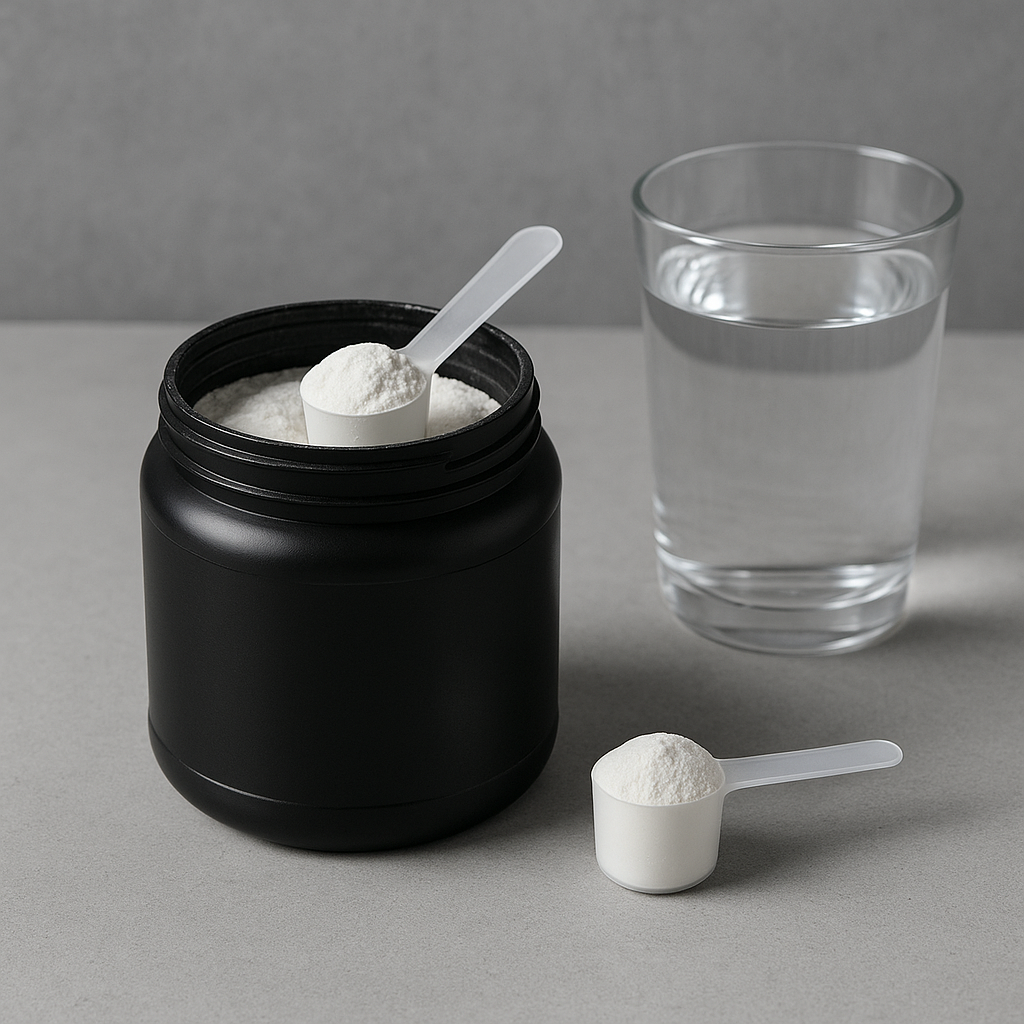
The Complete Beginner's Guide to Creatine in Canada
New to creatine? Discover what it is, how it works, which forms and brands are best for Canadians, and how to dose for real results. Get clear, evidence-based answers to all your starter questions and feel confident before your first scoop.
Key Takeaways
- Creatine monohydrate is the gold-standard, safest, and most cost-effective form.
- A maintenance dose of 3–5 grams daily is supported by robust peer-reviewed science.
- Canadian brands and Health Canada–licensed products ensure quality and safety.
- You can expect gradual improvements in strength, muscle size, and recovery over weeks—not days.
- Loading phases are optional and not necessary for most beginners.
- Creatine is suitable for anyone from gym newcomers to plant-based eaters seeking a safe edge.
- Use our <a href='/calculator'>creatine calculator</a> to personalize your dose.
What Is Creatine, and Why Take It?
Creatine is a naturally occurring compound found primarily in muscle tissue. Your body makes some on its own, and you get small amounts from foods like red meat and fish. But supplementing with creatine—especially as creatine monohydrate—lets you raise your muscles’ stores beyond what's possible through diet alone.
When you take creatine, your muscles can regenerate energy (ATP) faster, improve short-burst strength and power, and recover more quickly between efforts. That’s why creatine is one of the most-researched and widely recommended supplements for Canadians aiming to build strength, gain muscle, or improve high-intensity performance.
- Suitable for all ages (typically 18+ for supplements) and dietary preferences—including vegetarians and vegans
- Extremely safe at recommended dosages (see below for details)
For a complete primer, see our creatine guides.
What Results Can You Realistically Expect from Creatine?
Creatine isn't a miracle worker, but its effects are real and measurable when combined with resistance or interval training. Expect:
- Small but noticeable strength increases within 2–4 weeks
- Gradual improvements in muscle size, thanks to increased muscle water content and training performance
- Potentially faster recovery between intense workouts
Improvements depend on your diet, age, training style, and genetics. Most beginners will notice gym or sport performance benefits by the time their first tub is finished. Creatine is not a steroid, and most typical muscle gain is modest: expect 1–2 kg over several months, not overnight transformations.
You can learn more about progress timelines and maximizing results in our timing guide.
What Form of Creatine Should You Buy as a Beginner?
Cream of the crop? Creatine monohydrate. Decades of studies—including Health Canada and International Society of Sports Nutrition (ISSN) reviews—show creatine monohydrate delivers all the benefits, with a great safety record at a budget-friendly price point.
- Powdered monohydrate: The most researched, dissolves easily in water or juice, widely available in Canada
- Other forms (like creatine HCl, ethyl ester, or magnesium chelate) offer no proven advantages and cost more
Check for third-party testing, NSF certification, or a Natural Product Number (NPN) to ensure your supplement meets Health Canada’s safety standards. See our unbiased Canadian buyer’s guide for recommendations.
How Much Creatine Should You Take? Dosage for Canadians
The science is clear: most adults do best with 3–5 grams of creatine monohydrate per day. This ‘maintenance’ dose is strongly supported by clinical trials and official guidelines from the International Society of Sports Nutrition and Health Canada.
- Standard dose: 5 g daily for most adults
- Lighter athletes: 3–5 g daily usually sufficient
No need for elaborate cycling. Taking your daily scoop with food or post-workout works well—but consistency is what matters most. Use our creatine calculator to tailor your dosage to your body weight and needs.
Should Beginners Consider a Loading Phase?
A creatine loading phase is optional for beginners. Traditional protocols call for ‘loading’—20 grams split into 4 daily doses for 5–7 days—followed by maintenance. This saturates muscle stores quickly, but research shows a simple 3–5 g daily approach works just as well over a few weeks.
- If you want results sooner, loading is safe for healthy adults but can cause mild stomach upset or bloating.
- Most Canadians find daily ‘slow and steady’ dosing easier on digestion and more practical long-term.
Curious to know which protocol fits your goals and timeline? Compare options in our step-by-step loading guide.
Buying Creatine in Canada: Trusted Brands & Safety Tips
In Canada, look for brands licensed by Health Canada with a visible Natural Product Number (NPN). This ensures your creatine meets Canadian safety and purity standards.
Well-established Canadian options include:
- Allmax Nutrition (Creapure monohydrate)
- Popeye’s Supplements
- Precision, SDS, or Mutant brands
For the best price and peace of mind, buy unflavoured powder in tubs, not single-serve packets. Want detailed brand rankings and in-depth reviews? Browse our best creatine in Canada list and in-depth reviews.
Side Effects, Safety, and Common Myths
Creatine monohydrate is one of the safest, most studied supplements available, with no evidence of harm in healthy adults at recommended doses.
- Short-term weight gain (often 1–2 kg) is normal and mainly due to increased muscle water
- Mild stomach upset can occur—split doses or take with meals to minimize
- No credible evidence links creatine to kidney or liver issues in healthy users
Avoid underdosed proprietary blends, unnecessary additives, and high-priced 'designer' versions. When in doubt, stick to basic monohydrate and products with an NPN. For more on safety, see our evidence-based creatine safety guide.
Creatine for Beginners: Quick Facts
- 3–5 grams Recommended daily maintenance dose
- 20+ years Time creatine’s benefits have been proven in clinical trials
- 0 Reported long-term adverse effects in healthy adults (recommended dose)
- NPN Look for a Natural Product Number on Canadian supplements
Frequently Asked Questions
Is creatine safe for teenagers or seniors?
Current evidence shows creatine is safe for healthy individuals, but supplement use in teenagers or seniors should be discussed with a physician, especially if there are underlying health conditions.
Does creatine cause bloating or dehydration?
Some beginners experience mild water retention or bloating, especially during loading. This effect is usually temporary. Drink adequate water, but creatine doesn't cause dehydration in healthy users.
Can I mix creatine with protein powder, coffee, or juice?
Yes, creatine can be mixed into most beverages. It dissolves best in warm water or juice, and it's safe to take with other supplements like protein or caffeine unless advised otherwise by your doctor.
Are there vegan or plant-based creatine options?
Nearly all creatine monohydrate supplements are vegan-friendly, as they are synthetically produced in labs without animal products. Check the label to ensure no animal-derived fillers are included.
Do I need to take creatine on rest days?
Yes, daily supplementation keeps your muscle stores saturated and is key for optimal long-term results, even if you aren't exercising that day.