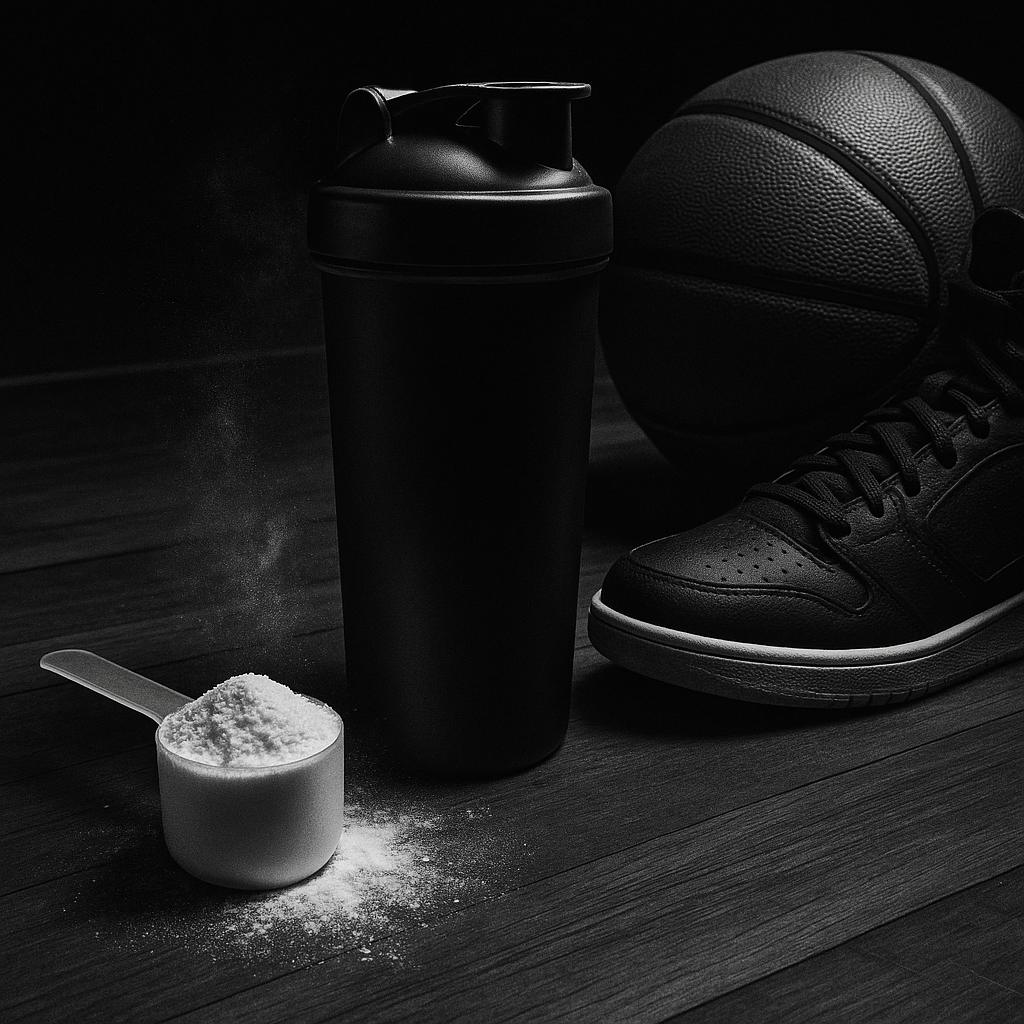
Creatine for Basketball: Vertical Jump and Explosive Speed
Basketball is a game of split‑second bursts — jump higher for boards, explode past defenders, and bounce back for the next game. Here’s how creatine can help Canadian hoopers build repeat power, support recovery, and choose the right product.
Key Takeaways
- Creatine monohydrate (3–5 g/day) supports repeated jumps, sprints, and changes of direction.
- Loading (20 g/day for 5–7 days) is optional; it just gets you saturated faster.
- Take it when it’s convenient — pairing with a meal helps consistency.
- Expect small but meaningful boosts in peak power that stack with plyometrics and strength work.
- Stay hydrated, especially on back‑to‑backs and travel; creatine pulls water into muscle.
- Choose Canadian NPN‑licensed, third‑party tested monohydrate for safety and value.
- Gummies and blends are often underdosed — plain micronized powder is your best bet.
Why creatine matters in basketball
Basketball lives in the ATP–phosphocreatine (PCr) zone — think vertical jumps, first steps, help‑side recoveries, and short sprints in transition. Creatine helps replenish muscle phosphocreatine, the immediate energy reserve for high‑intensity, short‑duration efforts. When your PCr stores are robust, you can hit higher peak power and maintain it better across repeated bouts — a subtle edge that shows up on the glass, in closeouts, and during late‑game possessions.
The strongest body of evidence supports creatine monohydrate as the gold standard. For most athletes, a simple maintenance intake of 3–5 g per day is enough after your muscles are saturated. This approach is endorsed by the International Society of Sports Nutrition (ISSN) and widely used by strength, sprint, and team‑sport athletes.
Importantly, creatine doesn’t replace skill work, plyometrics, or strength training — it amplifies them. If you’re already squatting and practicing approach jumps, defensive slides, and short sprints, creatine can help you express more power rep after rep. The benefits are generally modest but meaningful at game speed. If you’re new to dosing and timing, see our guides on when to take creatine and the creatine loading phase.
Vertical jump and first‑step quickness
In practice, creatine’s value shows up in the movements that decide possessions: a quick plant and takeoff for a rebound, or that explosive first dribble past a defender. By increasing intramuscular phosphocreatine, you can produce more force quickly and recover it faster between reps — helpful during jump clusters and repeated accelerations.
Pair your creatine with a smart training block for the best return:
- Heavy lower‑body strength (2–3 days/week): back or front squats, trap‑bar deadlifts, split squats (3–5 sets of 3–6 reps). This builds the force base for jumping.
- Plyometrics (1–2 days/week): countermovement jumps, approach jumps, pogos, and depth landings. Keep reps crisp, full recovery between sets.
- Acceleration drills (1–2 days/week): 5–10 m starts, stance‑switches, and band‑resisted first steps to sharpen that initial burst.
During these power sessions, creatine may help you maintain jump height and sprint speed across sets. Don’t chase fatigue on jump days; keep outputs high. If you want a quick primer on optimizing intake around training, bookmark when to take creatine and our practical guides.
Dosing and timing for hoopers
The simplest, evidence‑based plan: take 3–5 g of creatine monohydrate daily, any time you’ll reliably remember it. Many athletes pair it with a meal or post‑practice snack to build the habit. If you want faster saturation, you can optionally load with ~20 g/day for 5–7 days in 4 equal doses, then move to 3–5 g/day. A body‑mass‑based alternative some practitioners use is ~0.1 g/kg/day for maintenance.
Timing around games isn’t critical; creatine works by saturating muscle over days to weeks, not by acute pre‑game dosing. The key is consistency. On tournament weekends, keep your daily serving and focus on fluids and carbs to support glycogen and hydration.
Need help personalizing? Our creatine dose calculator can map out options by body mass, and our step‑by‑step pages on the loading phase and best time to take creatine cover the finer points. If you have kidney concerns, are pregnant or breastfeeding, or take prescription medications, speak with a healthcare professional before starting any supplement.
Back‑to‑back games, recovery, and hydration
Back‑to‑backs and tournament travel compress recovery. Alongside sleep and nutrition, creatine can support repeat performance by helping restore high‑energy phosphates between intense efforts. Some research also notes favourable effects on training adaptations and markers related to muscle damage, though responses vary and the basics still matter most: calories, carbohydrates, protein, and fluids.
Hydration tip sheet for Canadian hoopers:
- Fluids and sodium: Start games well‑hydrated; sip water regularly and include electrolytes if you’re a salty sweater or playing multiple times per day.
- Creatine and water: Creatine draws water into muscle. That’s good for performance, but it means you should be deliberate with fluids, especially on travel days and in warm gyms.
- Recovery stack: After games, aim for carbs + protein (e.g., yogurt + fruit, or a sandwich + milk) and your daily creatine. Gentle mobility and easy shooting can help you unwind.
If cramps have worried you, large reviews don’t support creatine as a cause of cramping or dehydration in healthy athletes. Keep an eye on total fluids, electrolytes, and overall workload. For more practical ideas, browse our performance guides.
Choosing a creatine in Canada
For value, purity, and data, stick with creatine monohydrate. Micronized powders mix easily, cost pennies per gram, and are the form most used in research. In Canada, look for an NPN (Natural Product Number) on the label — this signals the product is licensed for sale by Health Canada under the Natural Health Products Regulations.
Shopping checklist:
- Form: Plain monohydrate powder. Skip blends and proprietary formulas that dilute the dose.
- Dose clarity: A serving should list the milligrams of creatine per scoop (e.g., 3–5 g). Verify the scoop size.
- Third‑party testing: NSF Certified for Sport or Informed Choice is ideal for competitive athletes.
- Origin and identity: Some brands use trademarked raw material (e.g., Creapure). This isn’t required, but transparent sourcing is a plus.
To compare trusted Canadian options, see our curated picks in Best Creatine and deep dives in our Creatine Supplements Review. If cost per serving matters, a 1 kg tub of monohydrate typically lasts most hoopers several months at 3–5 g/day.
A simple 4‑week plan to test the difference
Want to give creatine a fair trial? Combine consistent intake with a focused, low‑noise training block and track outputs.
- Week 1 (Baseline): Test your countermovement jump (best of 3), 10 m sprint, and a repeat jump test (e.g., 3 sets of 6). Log results, RPE, and how quickly height drops off across sets.
- Week 2–3 (Build): Take 3–5 g/day with a meal. Train 2 lower‑body strength days (heavy but crisp), 1 plyometric day (low volume, high quality), and 1 short acceleration day. Keep skill work as scheduled. Sleep 7–9 hours.
- Week 4 (Re‑test): Repeat Week 1 tests. You’re looking for steadier jump heights and sharper first‑step starts across sets — small improvements count.
Game days: No special timing needed — just keep your daily dose. Prioritize fluids, electrolytes, and carbs between games. If you’re an adolescent athlete, creatine appears to be well‑tolerated in healthy youth when supervised; speak with a parent/guardian and a qualified professional before starting. For dose details and timing ideas, see Calculator and When to Take Creatine.
Creatine quick hits for hoopers
- 3–5 g/day Evidence-based maintenance dose
- 20 g/day × 5–7 d Optional loading for faster saturation
- Monohydrate Gold-standard form supported by ISSN
- Not prohibited Creatine isn’t on the WADA Prohibited List
- 1 scoop ≈ 3–5 g Check your label for the true serving size
Frequently Asked Questions
Will creatine help my vertical jump?
Creatine supports the energy system that powers explosive, short‑duration efforts. When paired with proper strength and plyometric training, many athletes see small but meaningful improvements in peak power and the ability to maintain jump height across sets.
What’s the best time to take creatine on game days?
Timing isn’t critical. Creatine works by saturating muscle over days to weeks, not by a quick pre‑game boost. Take 3–5 g whenever you’ll remember it — often with a meal — and focus on fluids, electrolytes, and carbs between games.
Will creatine make me heavier and slower?
Creatine can increase muscle water content, so a modest uptick on the scale is common at first. On court, athletes generally report equal or better quickness because the extra intracellular water supports force and repeat power. Keep footwear and warm‑ups consistent while you adapt.
Is creatine safe for high school basketball players?
Creatine monohydrate is among the most researched sports supplements. Evidence suggests it’s well‑tolerated in healthy individuals when used as directed. For adolescents, involve a parent/guardian and a qualified professional, choose an NPN‑licensed product, and stick to 3–5 g/day.
Does creatine cause cramps or dehydration?
Current research does not support an increased risk of cramping or dehydration with creatine in healthy athletes. It does shift water into muscle, so be deliberate with fluids and electrolytes — especially during back‑to‑backs, hot gyms, or travel days.
Are gummies and blends as good as powder?
Often no. Gummies and blends frequently provide less than an effective daily dose and cost more per gram. Plain micronized creatine monohydrate powder is the most studied, easiest to dose at 3–5 g/day, and best value.