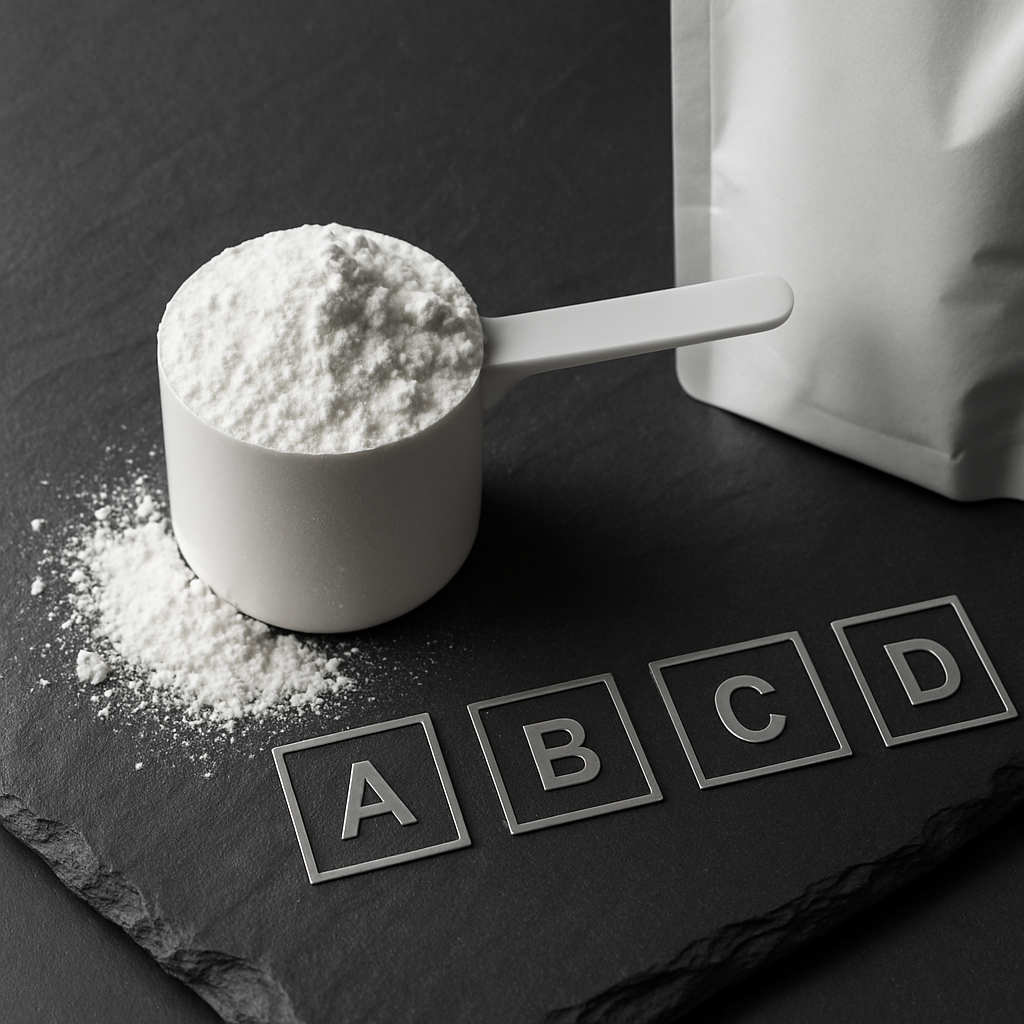
Grading the Evidence: What Creatine Can and Cannot Do
Not all creatine claims are created equal. We grade the evidence A through D: from rock-solid strength gains to weak links like hair loss. See what holds up, what’s promising, and what to skip—plus practical dosing advice for Canadians.
Key Takeaways
- Creatine monohydrate earns an A for strength/power; expect small-to-moderate, meaningful performance and lean-mass improvements.
- Cognition gets a B: small benefits, most evident in sleep deprivation, vegetarians/vegans, and some older adults.
- Depression gets a B as an adjunct: preliminary RCTs suggest additive benefit with antidepressants—work with your clinician.
- Hair loss gets a D: one small study raised DHT but measured no hair outcomes; there’s no clinical evidence of creatine causing baldness.
- Use 3–5 g/day of creatine monohydrate; a 5–7 day loading phase is optional, not required.
- Choose Canadian NPN-licensed products; monohydrate powder (often Creapure) is the best-tested, most affordable form.
- Timing is flexible—consistency matters more. See our calculator and timing guide for easy routines.
How we graded the claims
Creatine is one of the most researched sports supplements, but the strength of evidence varies by claim. To make sense of it, we use an A–D grading system:
- A – Strong evidence: Multiple high-quality randomized trials and/or meta-analyses consistently show benefit in relevant outcomes.
- B – Moderate evidence: Several controlled trials suggest benefit, but effects may be small, population-specific, or evidence is still growing.
- C – Limited/mixed evidence: Few studies, inconsistent findings, or methodological issues.
- D – Insufficient/negative evidence: Little to no credible support, or better-quality trials fail to show benefit.
We anchor these grades in mainstream guidance and peer‑reviewed science. The International Society of Sports Nutrition (ISSN) recognizes creatine monohydrate as safe and effective for performance, with typical maintenance intake of 3–5 g/day. In Canada, look for products with a Natural Product Number (NPN) and clear dosing on the label. When we reference “effect sizes,” we’re speaking broadly in terms like small or moderate improvements—language commonly used in meta-analyses—rather than promising dramatic transformations.
Below, we grade four common claims: strength (A), cognition (B), depression (B), and hair loss (D). For practical details on dosing and timing, see our guides: When to take creatine, Loading vs. no loading, and our Creatine calculator.
Grade A: Strength and power
Verdict: A (strong evidence). Across dozens of randomized trials in athletes and recreational lifters, creatine monohydrate reliably improves high‑intensity performance and training adaptations. Typical findings include small-to-moderate gains in one‑repetition maximum (1RM), increased repeated‑sprint and set‑to‑set power, and modest increases in lean mass over weeks to months of training. This pattern is supported by the ISSN position stand and multiple reviews spanning a wide range of sports and age groups.
What this looks like in practice:
- Expect meaningful but not magical changes—think noticeable progress in lifting performance and ability to maintain power across sets.
- Strength and physique adaptations compound with structured training, adequate protein, and sleep.
- Women, older adults, and plant‑based eaters appear to benefit similarly to men, with normal individual variability.
Dosing: You can load (e.g., ~20 g/day split for 5–7 days) to saturate muscle faster, then maintain at 3–5 g/day. Or skip loading and take 3–5 g/day consistently; full saturation just takes longer. Timing is flexible—consistency matters more than the clock. See our loading guide and timing tips.
Form: Choose creatine monohydrate (the gold standard). In Canada, look for NPN-licensed products; many high‑quality options use Creapure. For vetted picks, see Best creatine and our supplement reviews.
Grade B: Cognition
Verdict: B (moderate evidence). Several controlled trials indicate small cognitive benefits from creatine, particularly under conditions where brain energy demand is stressed or baseline brain creatine may be lower. Reported improvements tend to cluster in tasks like working memory, reaction time, and reasoning during sleep deprivation, in vegetarians/vegans (who may have lower dietary creatine), and in some older adults. In well‑rested omnivores, results are more mixed and often smaller.
Effect size in context: Think subtle but useful advantages—shaving milliseconds off responses, remembering a few more items, or performing slightly better when tired. That’s valuable for shift workers, students during exam blocks, and athletes managing travel fatigue, but it isn’t a substitute for sleep, nutrition, and practice.
Dosing and timing: The same playbook works here: 3–5 g/day of monohydrate. Some studies used short loading phases; others did not. There’s no clear “best time.” Consistency over days to weeks appears more important than acute timing.
Bottom line: Evidence supports small cognitive benefits overall, larger in specific groups. If cognition is your priority, pair creatine with fundamentals (sleep hygiene, hydration, balanced meals) and consider our practical tips in Creatine Guides.
Grade B: Depression and mental health
Verdict: B (moderate evidence as an adjunct). Early randomized trials suggest that adding creatine to standard antidepressant therapy can enhance or accelerate symptom improvement for some individuals, particularly women with major depressive disorder. These trials generally report small-to-moderate additive benefits versus medication alone. However, the total number of participants across studies is still modest, and protocols vary (dose, duration, and concomitant medications).
What Canadians should know:
- Creatine is not a replacement for professional mental healthcare. If you’re on medication or being treated for depression, discuss creatine with your prescriber before starting.
- Typical study doses overlap with sports use (often 3–5 g/day), with benefits appearing over weeks.
- Available data focus on unipolar depression; evidence is insufficient for bipolar disorder, anxiety-specific outcomes, or PTSD.
Safety: In healthy individuals, creatine is well‑tolerated. Those with kidney disease, on nephrotoxic medications, or with complex psychiatric regimens should seek medical advice first. If you proceed, start with 3 g/day and monitor tolerance.
Grade D: Hair loss
Verdict: D (insufficient evidence). The hair‑loss claim largely traces back to a single small trial in male rugby players that reported increased dihydrotestosterone (DHT) after a short loading phase. Importantly, that study did not measure hair outcomes (no shedding counts, no dermatology assessments, no long‑term follow‑up). Subsequent research has not established that creatine causes hair loss in men or women.
What this does—and does not—mean:
- A transient shift in androgen markers does not equal clinical hair loss. No high‑quality trials show creatine users losing more hair than non‑users.
- If you have a strong family history of androgenic alopecia, monitor your hair and discuss concerns with a healthcare professional—but current evidence does not justify avoiding creatine solely for hair reasons.
- Stay focused on well‑supported outcomes (strength/power). For hair health, look to clinically studied options and speak with a pharmacist, dermatologist, or physician.
Bottom line: The mechanistic signal from one study is not the same as real‑world hair loss. As of today, there’s no clinical evidence that creatine causes baldness.
How to use creatine in Canada
Form: Choose creatine monohydrate powder. It’s the gold standard for efficacy, widely available, and cost‑effective. Many Canadian products use Creapure (a high‑purity German source). Look for an NPN on the label to confirm Health Canada licensing.
Dose: Maintain at 3–5 g/day. Loading (about 20 g/day split for 5–7 days) speeds saturation but isn’t required. If you prefer simple habits, skip loading—just take 3–5 g daily. See our Creatine calculator to personalize your plan, and learn more in Loading vs. no loading.
Timing: Take it when you’re most consistent—morning coffee, post‑workout shake, or with a meal. Hydration and daily adherence matter more than precise timing. For more, see When to take creatine.
Stacking and safety: Creatine pairs well with protein, carbohydrates, and caffeine (tolerance varies). In healthy adults, long‑term use is well‑studied and generally safe. If you have kidney disease, are pregnant/breastfeeding, or take prescription medications, consult your healthcare provider first.
Shopping tips: Prioritize monohydrate, simple labels, third‑party testing where available, and transparent dosing. For vetted picks, check Best creatine and our independent reviews. Team sport athletes and lifters alike can expect the clearest returns on performance.
Creatine at a Glance: Evidence Grades
- A Strength & power: robust, consistent benefits
- B Cognition: small gains, context-dependent
- B Depression (adjunct): preliminary clinical support
- D Hair loss: no clinical hair-loss data
- 3–5 g/day Typical maintenance dose (monohydrate)
Frequently Asked Questions
Do I need to load creatine?
No. Loading (~20 g/day for 5–7 days) saturates muscle faster, but you can simply take 3–5 g/day and reach the same saturation over a few weeks. Choose the approach that best fits your routine and stomach tolerance.
Does creatine cause hair loss?
There’s no clinical evidence that creatine causes hair loss. One small study found a short-term rise in DHT after loading, but it did not measure hair outcomes. Until better data exist, hair-loss fears should not outweigh creatine’s well-supported benefits for performance.
Which form of creatine is best?
Creatine monohydrate is the gold standard for efficacy, safety, and cost. Fancy forms haven’t consistently outperformed it. In Canada, look for NPN-licensed products; Creapure-sourced monohydrate is a common high-purity option.
Is creatine safe long-term?
In healthy adults, long-term creatine use is well-studied and generally safe. Stay hydrated and use standard doses (3–5 g/day). If you have kidney disease, are pregnant or breastfeeding, or use prescription drugs, talk to your healthcare provider first.
Will creatine help endurance running or cycling?
Creatine’s benefits are strongest for short, high-intensity work (sprints, lifting, team sport bursts). For steady-state endurance, effects are smaller and can be mixed. It may still help with finishing sprints, hills, and repeated surges.