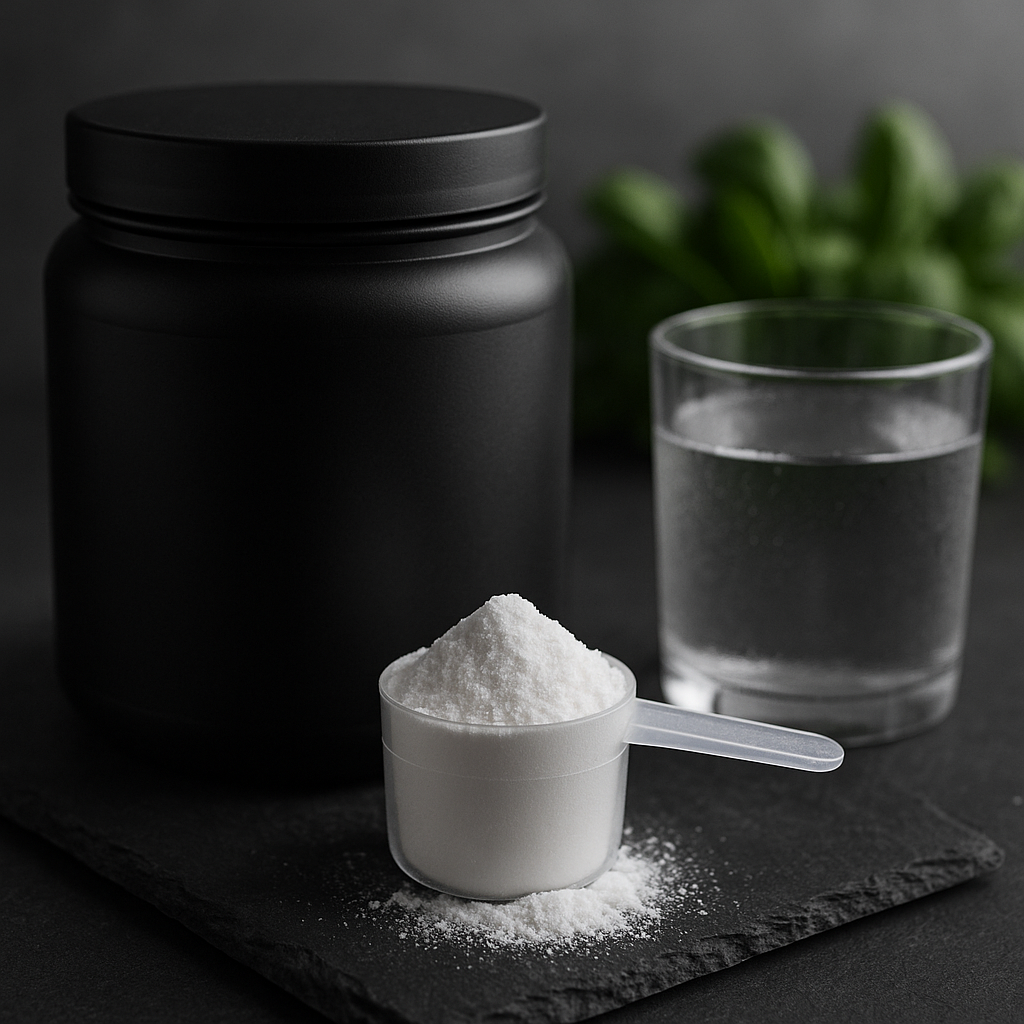
Creatine for Vegans: Why Plant-Based Athletes Need It Most
Plants contain zero creatine. That means vegans often start with lower muscle and brain creatine stores — and stand to gain the most from supplementing. Here’s the evidence, the right dose (hint: aim for the top end), and how to choose vegan-friendly creatine in Canada.
Key Takeaways
- Vegan diets provide no dietary creatine; stores are typically lower without supplementation.
- Creatine monohydrate is the gold standard; 3–5 g/day is the ISSN-supported maintenance dose.
- Plant-based athletes often benefit from the higher end (5 g/day) or 0.1 g/kg/day.
- A 5–7 day loading phase (20 g/day split) speeds saturation but isn’t required.
- Look for single-ingredient creatine monohydrate, ideally Creapure, with third‑party testing.
- Most creatine is synthetically made and vegan-friendly; verify vegan labels on Canadian products.
- Consistent daily use matters more than timing; pair with carbs or a meal if you prefer.
Why vegans start at zero
Creatine is a naturally occurring compound stored in muscle and brain that helps rapidly recycle ATP, the energy currency you use for sprints, heavy lifts, and sharp thinking. While your body can synthesize some creatine from amino acids (glycine, arginine, methionine), dietary creatine comes almost entirely from animal foods like beef, fish, and poultry. Plants contribute none. On a vegan diet, you can still make creatine endogenously, but without food sources your baseline stores tend to be lower unless you supplement.
Why does this matter? Lower intramuscular creatine means less of a buffer for repeated high-intensity efforts and potentially less capacity to handle dense training blocks. In the brain, lower stores may also limit performance on tasks that stress working memory or quick processing. The flip side is encouraging: when baseline is lower, the relative benefit of supplementation is often larger.
For an overview of how creatine works across sport and health, see our practical Guides, and if you’re curious about timing habits, our take on when to take creatine covers what actually matters day to day.
Performance benefits for plant-based athletes
Creatine supplementation increases muscle phosphocreatine stores, improving the ability to sustain and repeat short, intense efforts — think 5–15 rep sets, cycling sprints, repeated accelerations, or rowing starts. Over weeks, this often translates to more total training volume and better strength and power adaptation. The International Society of Sports Nutrition (ISSN) identifies creatine monohydrate as the gold standard with the most robust evidence for ergogenic benefits.
Because vegans typically start with lower muscle creatine, they commonly experience a larger rise in muscle stores with supplementation than omnivores, yielding equal or greater performance gains in the gym and on the field. This doesn’t mean omnivores won’t benefit — many do — but it explains why plant-based lifters and team-sport athletes are often the biggest responders.
If you’re deciding on a protocol, our walkthrough of the optional loading phase lays out the pros and cons, and our creatine calculator can help tailor doses by body mass, which is helpful if you’re on the larger or smaller side of typical recommendations.
Cognition and brain energy: vegans may have more to gain
Your brain also uses the creatine/phosphocreatine system to buffer energy during high cognitive demand. A small body of research suggests that people with lower baseline creatine — including many vegetarians and vegans — can see improvements in tasks like short-term memory and reasoning after supplementing with creatine monohydrate. These are controlled settings that stress mental performance, not claims of dramatic day-to-day changes, but the signal is consistent enough to matter if you study, code, or work shift schedules.
Beyond cognition, some athletes report better perceived recovery during congested training weeks when they keep brain and muscle stores topped up. While we await more large trials in diverse vegan populations, the current evidence and decades of safe use in sport make creatine a pragmatic, low-cost tool for plant-based students and professionals as well as athletes.
New to supplementation? Start simple, stay consistent, and pair creatine with a meal or carbohydrate source if you prefer gentler digestion. For more practical tips, visit our timing guide and full how-to resources.
How much to take on a vegan diet
Evidence-based dosing is straightforward and applies equally to vegans and omnivores, with one nuance: plant-based athletes often do best at the higher end of the standard range.
- Maintenance: 3–5 g/day of creatine monohydrate. Vegans typically target 5 g/day to ensure full saturation, or use a body-mass approach of ~0.1 g/kg/day (e.g., ~7 g at 70 kg) as noted by the ISSN.
- Optional loading: 20 g/day (four 5 g servings) for 5–7 days, or ~0.3 g/kg/day, then switch to maintenance. Loading saturates stores in about a week; skipping it reaches the same place in ~3–4 weeks.
- Timing: Consistency beats timing. Take it whenever you reliably remember — with breakfast, in a post-workout shake, or mixed into oats.
- Hydration: Creatine draws water into muscle; keep daily fluids on point, especially during hot Canadian summers or indoor winter training.
If you like to personalize by body mass or phase length, our creatine calculator does the math. For full context on protocols, see loading vs. no-loading and our practical take on when to take creatine.
Choosing vegan creatine in Canada: forms, labels, and brands
Creatine monohydrate remains the gold standard for effectiveness, safety, and value. Alternative forms (HCL, ethyl ester, buffered) haven’t shown superior outcomes in well-controlled studies. The vast majority of creatine on the market is synthetically produced (non-animal) and is therefore vegan-friendly. That said, formulations can differ: some include flavours, anti-caking agents, or are packaged alongside non-vegan ingredients.
- What to look for: Single-ingredient creatine monohydrate; ideally Creapure (a high-purity German-made monohydrate) or other products with third-party testing (e.g., NSF Certified for Sport, Informed Choice). Check for a vegan label or statement.
- Canadian availability: Well-known options in Canada include plain, unflavoured monohydrate from brands like Allmax, PVL, XPN, and Canadian Protein. Many offer Creapure versions and/or vegan labelling — verify on the product page or contact the manufacturer.
- Price check: Value is best when you buy tubs of plain powder. Compare cost per 5 g serving across retailers.
Want help picking? See our curated lists: Best Creatine in Canada and our full supplement reviews for ingredient, testing, and price comparisons.
Safety, recovery, and the long view
Creatine monohydrate is one of the most studied sports supplements. Position stands and consensus statements from leading organizations note its excellent safety profile in healthy people when used at recommended doses. Common experiences like a small, early bump in body mass (water pulled into muscle) are expected and typically level off. Gastrointestinal upset is uncommon and usually resolves when you split doses and take them with food.
If you have existing kidney disease, are pregnant or breastfeeding, or take medications that affect kidney function, consult your clinician before starting. Keep your hydration and overall nutrition solid — creatine supports, but doesn’t replace, fundamentals like carbohydrate intake around hard sessions, adequate protein, and sleep.
The biggest mistake we see is inconsistency. Set a daily cue, take your 5 g, and train. For a complete overview of protocols and practical tips, explore our Creatine Guides and bookmark our pieces on timing and the loading phase.
Creatine for Vegans — Quick Facts
- 0 mg Dietary creatine in plant foods
- 3–5 g/day Evidence-based maintenance dose
- 0.1 g/kg/day Body-mass-based maintenance option
- 5–7 days Typical loading phase length
Frequently Asked Questions
Is creatine monohydrate vegan?
Yes. Most creatine monohydrate is synthetically produced from non-animal sources and is vegan-friendly. Always check the label for a vegan statement and scan the ingredient list if it’s flavoured or part of a blend.
Do vegans need a higher dose of creatine?
Not universally, but many plant-based athletes do best at the higher end of the standard range. Aim for 5 g/day (or ~0.1 g/kg/day). This helps fully saturate muscle and brain stores that start lower without dietary creatine.
Should I do a loading phase or just take 5 g per day?
Loading (20 g/day split into four doses for 5–7 days) saturates stores quickly. Skipping loading and taking 5 g/day reaches the same saturation in ~3–4 weeks. Choose what fits your preference and training calendar.
Will creatine cause bloating or weight gain on a plant-based diet?
Early water uptake into muscle can add 0.5–1.5 kg. It’s intracellular (in muscle), not abdominal bloat for most people. If your stomach feels off, split doses (e.g., 2.5 g twice daily) and take with a meal.
Are other forms (e.g., HCL) better than monohydrate?
No. Creatine monohydrate has the most evidence for effectiveness, safety, and value. Other forms have not shown superior real-world performance outcomes in head-to-head research.
Is creatine safe to use long-term?
In healthy adults, long-term use at recommended doses is well supported by research and major sport-nutrition organizations. If you have kidney disease, are pregnant, or take nephroactive medications, speak with your clinician first.