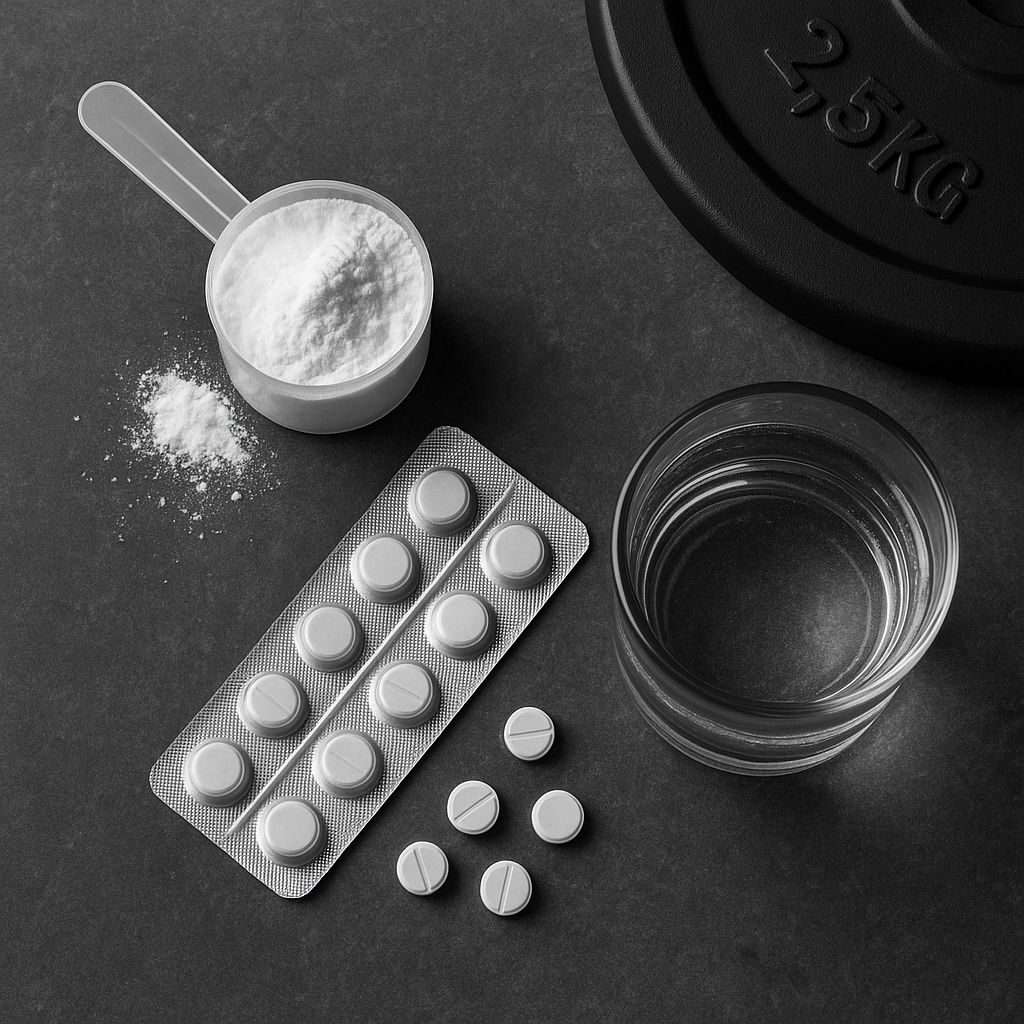
Creatine and the Thyroid: What Hypothyroid Athletes Should Know
Training with hypothyroidism can be tougher on energy and recovery. Here’s how creatine fits in: what it does for ATP, why CK can be high in hypothyroid states, how to time it around levothyroxine, and safe-use tips for Canadians.
Key Takeaways
- Creatine supports rapid ATP recycling; thyroid hormones influence the same energy systems, so they overlap in how you feel and perform.
- Hypothyroidism can elevate creatine kinase (CK) regardless of training; creatine itself is not known to chronically raise CK.
- Monohydrate is the gold standard; 3–5 g/day is a well-supported maintenance dose (ISSN).
- Take levothyroxine alone on an empty stomach; schedule creatine at a different time to keep medication absorption consistent.
- Optional loading: 20 g/day split into 4 doses for 5–7 days, or skip and go straight to 3–5 g/day.
- Choose Canadian-licensed products (NPN) and consider third-party tested creatine for quality assurance.
- Monitor symptoms and labs (TSH, FT4, CK) with your clinician, especially if training volume changes.
Thyroid and creatine: the energy overlap
Your thyroid and creatine both touch the same core idea: how fast your cells can make and recycle energy. Thyroid hormones (primarily T4 and T3) help set basal metabolic rate, influence mitochondrial function, and affect how muscles use fuel. Creatine, meanwhile, sits right at the first step of hard efforts. Stored in muscle as phosphocreatine, it rapidly donates a phosphate to ADP to regenerate ATP—the currency for sprinting, jumping, and the first seconds of a heavy lift.
When thyroid function is low, many athletes notice reduced stamina, heavier-feeling limbs, or more sluggish recovery. Creatine won’t replace thyroid hormone, but it can help the immediate ATP–phosphocreatine (PCr) system work closer to its best. That’s why creatine monohydrate remains a staple in evidence-based sports nutrition: it reliably tops up intramuscular creatine stores so you can repeat high-power efforts with a bit more quality.
If you’re new to creatine, start with the fundamentals. We cover timing, loading, and everyday use in our practical guides: see all Creatine Canada guides, plus deep dives on when to take creatine and the loading phase. The bottom line: thyroid hormones help set the pace of your engine; creatine makes your short sprints more efficient.
Hypothyroidism, sore muscles, and creatine kinase (CK)
A common lab finding in untreated or undertreated hypothyroidism is an elevated creatine kinase (CK) level. CK is an enzyme abundant in muscle that helps shuttle energy; when muscle fibres are stressed or damaged—or in certain metabolic states—CK can rise. In hypothyroidism, this happens even without intense training, and it often normalizes once thyroid replacement is optimized.
For athletes, CK can also rise after a hard session, especially with eccentric work or new volume. That creates a double confounder: hypothyroidism and training can both nudge CK upward. Creatine supplementation itself is not known to chronically elevate CK in healthy users; in fact, in some training studies creatine has been associated with improved recovery metrics. Still, it’s wise to interpret CK alongside symptoms (weakness, swelling, dark urine) and context (recent training spikes, illness), and to work with your clinician on trends rather than single numbers.
If your CK is high, pause and ask: How was my thyroid control? Did I recently add volume or do unfamiliar lifts? Creatine can stay in your plan, but make adjustments to training and thyroid management first. If you ever have severe muscle pain, profound weakness, or cola-coloured urine, seek urgent care.
Will creatine change my thyroid labs?
In the sports nutrition literature, creatine has not been shown to directly alter thyroid function tests. Most high-quality creatine research focuses on performance, safety, and body composition; few studies even measure TSH, FT4, or FT3. There is no well-documented mechanism by which creatine monohydrate would suppress or stimulate the thyroid gland.
Pragmatically, if a lab value shifts after you start creatine, look first to factors known to impact thyroid results: changes to levothyroxine dosing or timing, biotin use, significant training stress, illness, or weight change. Hydration level and creatine intake do not meaningfully affect TSH or free thyroid hormone assays.
For peace of mind, maintain consistent routines for both medication and supplements for at least 6–8 weeks before rechecking thyroid labs, unless your clinician advises otherwise. Keep a simple log of training, sleep, and dosing. That context helps your provider interpret results and separate training effects from thyroid status.
Levothyroxine timing, interactions, and spacing supplements
Levothyroxine works best when taken the same way, every day—typically on an empty stomach with water, 30–60 minutes before breakfast, or consistently at bedtime several hours after the last meal. Certain minerals (calcium, iron) and some antacids can reduce absorption, which is why standard guidance is to separate them by at least 4 hours.
Creatine monohydrate itself is not a mineral salt and major drug references do not list a direct interaction with levothyroxine. That said, it’s still smart to keep your thyroid medication isolated: take levothyroxine alone, and schedule creatine later with a meal or pre/post-workout shake. If your creatine drink includes dairy or fortified plant milks, you’ll automatically avoid any overlap with the calcium/iron window.
Consistency matters more than the clock. Choose a routine you can repeat. For more on practical timing, see when to take creatine. If your prescription label or clinician offers specific instructions, follow those first.
Dosing and forms: how to take creatine when you’re hypothyroid
Creatine monohydrate remains the gold standard: it’s the most studied, effective, and cost-efficient form. For most people, a maintenance dose of 3–5 g/day is sufficient after stores are saturated. You can optionally use a short loading phase (e.g., 20 g/day split into four 5 g servings for 5–7 days), but skipping loading and going straight to 3–5 g/day works fine—saturation simply takes longer.
Timing is flexible; take it at a time you’ll remember. Many athletes pair creatine with a carb/protein meal or a post-training shake. If you prefer to load or fine-tune by body weight, try our creatine calculator, and read our primers on the loading phase and when to take it. If you have a sensitive stomach, consider a micronized monohydrate and start at 2–3 g/day, building up over a week.
In Canada, look for products with a Natural Product Number (NPN) and consider third-party certifications like NSF Certified for Sport or Informed Sport. We keep updated picks and testing notes at best creatine and our in-depth supplement reviews.
Monitoring, training, and recovery: building a smart plan
Creatine can help you squeeze more quality from high-intensity efforts, but the foundation of progress with hypothyroidism is consistent medication, structured training, and adequate recovery. Build gradually: add sets and intensity in small steps, and favour progressive overload over big jumps that spike soreness and CK. Prioritize sleep, protein (1.6–2.2 g/kg/day for most lifters), and hydration.
Track what matters. Note your levothyroxine dose/timing, creatine dose/time, training, and how you feel (energy, soreness, morning readiness). If your clinician is following labs, trends in TSH, FT4, and CK are more useful than one-off readings. It’s reasonable to re-check after a training block change or once you’ve kept your dosing routine stable for several weeks.
Red flags like extreme muscle pain, weakness, or dark urine warrant medical attention. Otherwise, stay the course: combine evidence-based supplementation with patient, well-planned training. For broader playbooks on dosing, timing, and program support, see our Creatine Canada guides.
Creatine + Thyroid: Quick Facts
- 3–5 g/day Evidence-based creatine maintenance dose (ISSN-supported)
- 20 g/day × 5–7 days Optional loading phase to saturate stores faster
- ~95% Proportion of body creatine stored in skeletal muscle
- No known direct interaction Creatine monohydrate and levothyroxine in major references
Frequently Asked Questions
Can creatine make hypothyroid symptoms worse?
There’s no evidence that creatine exacerbates hypothyroidism. It won’t treat the condition, but by supporting rapid ATP recycling it may help training quality and perceived energy during short, intense efforts. Keep your thyroid replacement consistent—medication remains the priority for symptom control.
Should I take creatine at the same time as levothyroxine?
It’s best to take levothyroxine alone on an empty stomach and keep that routine consistent. Schedule creatine later with a meal or around training. Separating supplements helps keep thyroid medication absorption predictable.
Does creatine raise CK (creatine kinase) or affect lab tests?
Creatine isn’t known to chronically raise CK. Hypothyroidism itself and hard training can elevate CK, so interpret results in context. If CK is unexpectedly high, review recent training, thyroid control, and medications with your clinician rather than blaming creatine outright.
Is creatine safe if I have Hashimoto’s and normal kidney function?
For healthy individuals, creatine monohydrate is well-supported for safety and efficacy by the International Society of Sports Nutrition. If you have kidney disease or other conditions, consult your clinician first. Stay hydrated and use standard doses (3–5 g/day).
Do I need a loading phase if I’m hypothyroid?
No. Loading (about 20 g/day for 5–7 days) simply fills muscle stores faster. You can skip loading and take 3–5 g/day; saturation will occur over several weeks with similar long-term results.
Which creatine form is best for thyroid concerns?
Creatine monohydrate is the gold standard regardless of thyroid status. It’s the most studied and consistently effective form. Micronized monohydrate can improve mixability and may reduce stomach upset for some users.