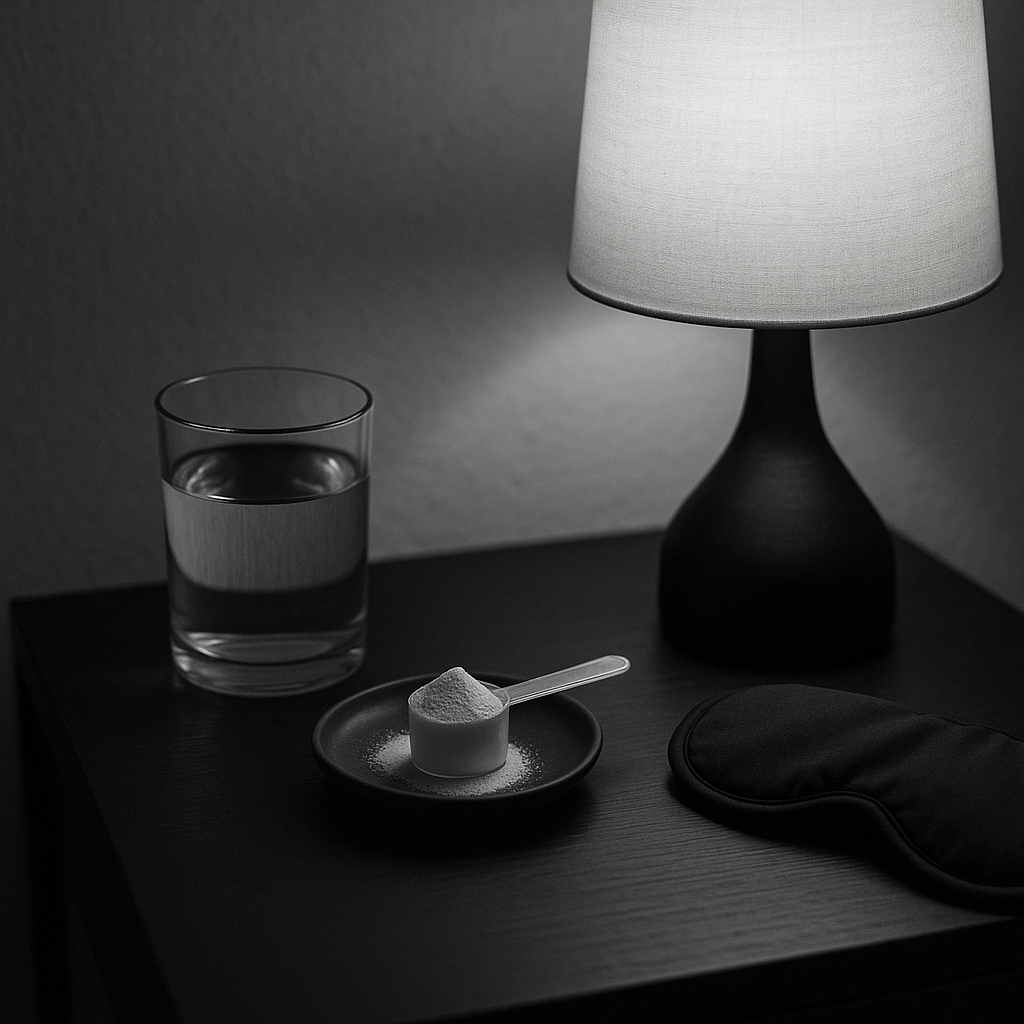
Creatine and Sleep: Can It Help You Recover Overnight?
Short on sleep and wondering if creatine can help? We unpack how brain energy changes overnight, what the research says about sleep loss, and how to time your dose—especially if you work shifts.
Key Takeaways
- Creatine monohydrate supports brain energy; it won’t sedate you or replace good sleep.
- Small studies suggest creatine may blunt some effects of sleep loss on thinking and mood.
- Use 3–5 g/day of creatine monohydrate (ISSN-supported); loading is optional.
- Dose whenever it’s convenient; avoid pairing with late caffeine if bedtime is near.
- Shift workers: take creatine with your largest “biological morning” meal and hydrate well.
- Choose plain monohydrate with a Canadian NPN; skip costly “fancy” forms.
- Track your own response; creatine should feel neutral for sleep quality in most people.
Why sleep needs energy—and where creatine fits
Sleep looks passive, but your brain’s energy bill stays high overnight. Neurons keep firing to consolidate memories, prune synapses, and clear metabolic by-products. The ATP–phosphocreatine (PCr) system acts as a rapid energy buffer in both muscle and brain, helping stabilize cellular energy during short bursts of demand. That’s why creatine, which raises intramuscular and brain phosphocreatine, is being studied not just for lifts and sprints, but also for cognitive function under stress—including sleep loss.
Most of the body’s creatine (~95%) is stored in skeletal muscle, with a small but meaningful amount in the brain and other tissues. By supplementing, you gradually increase these stores. In theory, a better-buffered brain may tolerate brief energy dips (as occur with restricted sleep) a little more smoothly, preserving aspects of alertness, mood, or decision-making.
It’s important to separate two ideas: supporting brain energy vs. improving sleep itself. Creatine is not a sedative and doesn’t trigger sleep. Instead, it may help you perform closer to baseline when sleep isn’t perfect. For a deeper primer on creatine basics, forms, and dosing, see our guides and our evidence-based picks in Best Creatine.
What the research says about sleep deprivation
Early human studies suggest creatine can blunt some cognitive and mood declines after acute sleep restriction. Small randomized trials have reported modest benefits on tasks like reaction time and executive function when participants were short on sleep. Animal work also hints that higher brain phosphocreatine may lessen homeostatic sleep pressure. That said, the evidence base is still limited in size and scope, and creatine has not been shown to fix chronic sleep debt or restore complex, real-world performance to fully rested levels.
On the flip side, there’s no strong evidence that creatine directly improves sleep architecture (e.g., more deep sleep) in healthy adults. The most consistent findings are in situations of energetic stress—vegetarian diets with lower baseline creatine, cognitively demanding tasks, and yes, sleep loss—where creatine appears to help maintain mental performance. For context on why sleep loss hurts cognition and health so broadly, see the NHLBI overview on sleep deprivation and deficiency.
Bottom line: creatine may be a useful tool for nights when sleep is less than ideal, but it’s not a substitute for a good sleep routine. We cover timing and dosing in the next section; for a full dosing walkthrough, visit When to Take Creatine.
Does creatine improve sleep quality?
Creatine monohydrate is not a sleep aid. Most users report neutral effects on sleep timing and quality, which is exactly what we expect from a non-stimulant nutrient. If you notice restlessness after an evening dose, it’s usually due to something paired with your creatine (late caffeine, a heavy meal, or a new pre-workout) rather than the creatine itself. Hydration is worth monitoring—if a late drink of water plus creatine has you waking to pee, move your dose earlier.
From a safety standpoint, the ISSN position stand concludes creatine monohydrate is safe and effective for healthy adults when used as directed. If you have kidney disease, speak with your physician first. For most Canadians, consistent daily intake is what matters, not the exact clock time. If sleep quality is your priority, focus on the fundamentals—regular schedules, light management, and wind-down routines—then layer creatine for performance and recovery support.
Want to fine-tune your timing? Our practical guide on when to take creatine covers breakfast vs. post-workout vs. evening trade-offs and how to test your own response with minimal disruption to sleep.
Dosing around bedtime: loading or not?
For most people, the simplest plan is 3–5 g/day of creatine monohydrate with any meal. That’s the gold-standard, ISSN-supported maintenance dose. You can also do a short loading phase (e.g., ~20 g/day split into 4 doses for 5–7 days) to saturate stores faster, then drop to 3–5 g/day. Both approaches converge to the same place over a few weeks. See details in our Creatine Loading Phase explainer or use our Creatine Calculator to plan your split.
Timing and sleep tips:
- Evening dosing is fine for most. If you’re sensitive or prone to nighttime bathroom trips, dose earlier with lunch.
- Avoid pairing with late caffeine if bedtime is near—caffeine, not creatine, is the usual sleep disruptor in pre-workouts.
- Take with food or a shake to minimize any mild GI upset, especially during loading.
- Hydrate normally; you don’t need to chase creatine with extra litres of water, just meet your usual daily needs.
Remember: consistency beats perfection. Pick a time you won’t forget so daily intake becomes automatic.
Shift workers and early starters
If you work nights or rotating shifts, creatine can be part of your resilience toolkit—but it can’t replace sleep. On tough rotations, a well-saturated creatine pool may help you think a bit clearer and feel less drained when sleep is short or irregular. Practical tips for Canadian shift workers:
- Dose with your “biological morning.” Whatever time you wake for your main shift, take 3–5 g with your first substantial meal to anchor the habit.
- Separate from late caffeine. Keep stimulants to the first half of your shift so they don’t push sleep further into the day.
- Hydrate strategically. Front-load fluids early in the shift; taper near end to reduce daytime awakenings when you sleep.
- Light management matters more than supplements. Bright light when waking; dark, cool room when sleeping. See the Canadian Centre for Occupational Health and Safety guidance on shift work.
For athletes on early travel or tournament schedules, the same approach applies: keep your daily creatine consistent, align with meals, and focus on sleep hygiene and nutrition around competition. If you’re new to creatine, start it before a heavy shift block or road trip so your stores are topped up.
Buying creatine in Canada: what to look for
Stick to the basics. Creatine monohydrate is the most studied, most reliable, and most cost-effective form. Look for:
- NPN or site-licensed manufacturing. A product with a Canadian Natural Product Number and transparent quality controls.
- Third-party testing. Certifications like NSF or Informed Choice add confidence for tested athletes.
- Plain powder. Unflavoured monohydrate keeps cost per 5 g serving low; fancy blends rarely add value.
- Transparent dosing. A full 3–5 g serving without proprietary blends is key.
Canadians have excellent choices domestically and online. Compare options and prices in our Best Creatine and deeper Creatine Supplements Review. If you’re curious about timing around workouts or bedtime, don’t miss When to Take Creatine. As always, pair supplements with the fundamentals: smart training, nutrition, and a sleep routine that fits your life.
Creatine and Sleep—At a Glance
- 3–5 g/day Evidence-based maintenance dose (monohydrate)
- 5–7 days @ ~20 g/day Typical optional loading phase
- ~95% in muscle Where the body stores creatine; the rest is in brain and other tissues
- Non-sedative Creatine supports energy; it doesn’t make you drowsy
Frequently Asked Questions
Will creatine keep me awake if I take it at night?
Creatine is not a stimulant and generally doesn’t affect the ability to fall asleep. If a late dose seems disruptive, it’s usually due to paired factors (e.g., caffeine in a pre-workout or extra fluids before bed). Move your serving to earlier in the day and separate it from stimulants.
Can creatine replace sleep during exam week or night shifts?
No. Some studies suggest creatine may help preserve aspects of cognition and mood during short-term sleep restriction, but it does not replace the restorative effects of adequate sleep. Use it as a performance support, while prioritizing sleep hygiene, light management, and planned naps where possible.
Is there a best time to take creatine for sleep quality?
Timing is flexible—consistency matters most. Many people take 3–5 g with breakfast or post-workout. If you notice nighttime bathroom trips, shift your dose to earlier meals. Avoid coupling creatine with late caffeine if bedtime is near.
Does creatine interact with melatonin or magnesium?
There are no well-documented interactions between creatine and common sleep supplements like melatonin or magnesium in healthy adults. If you take prescription medicines or have a health condition, confirm with your clinician before combining supplements.
Is creatine safe for long-term use if I’m focused on recovery?
Yes for healthy adults. The ISSN position stand supports the safety and efficacy of creatine monohydrate when used as directed. If you have kidney disease or other medical concerns, consult your healthcare provider before starting.