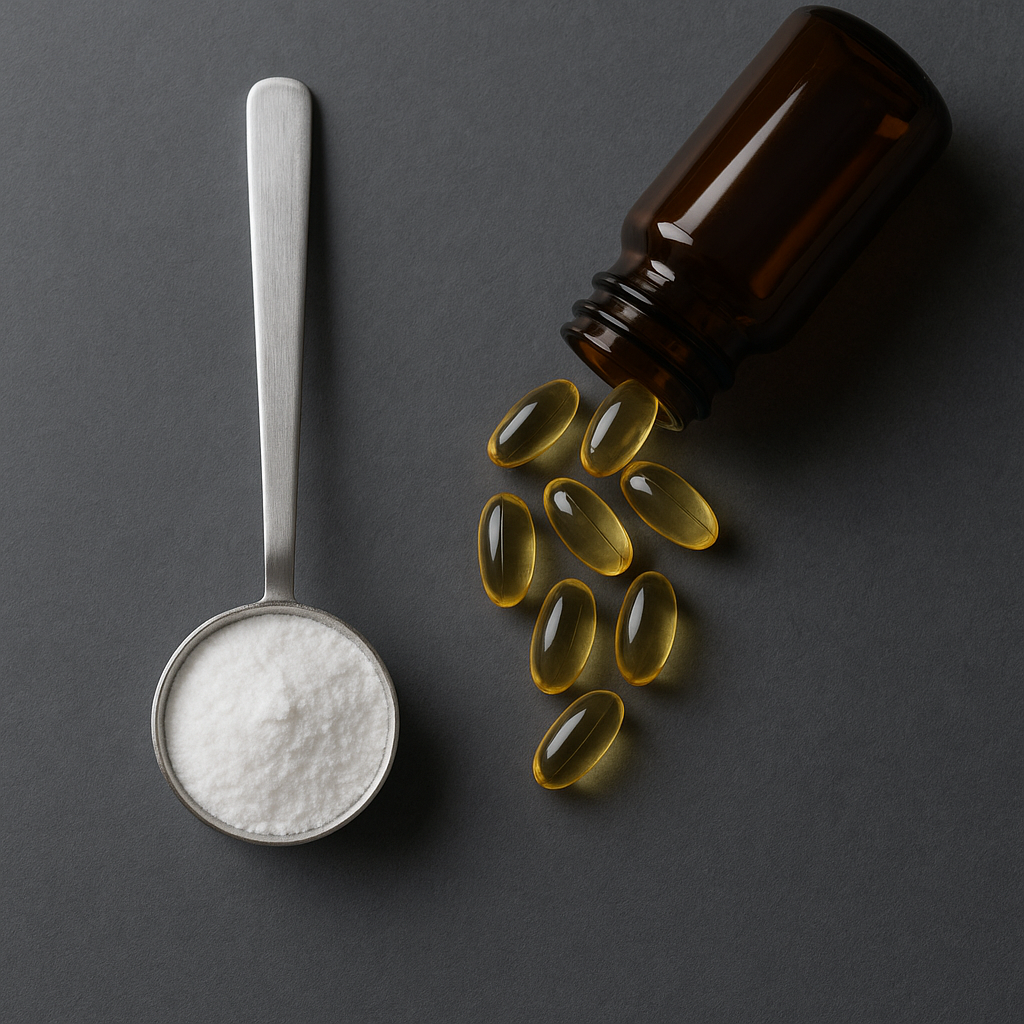
Creatine and Omega-3: A Research-Backed Power Stack
Pairing creatine with omega-3 brings together energy and anti-inflammatory support in one practical, everyday stack. Here’s how the combo may help muscle, brain and recovery—plus Canadian dosing and sourcing tips to do it right.
Key Takeaways
- Use creatine monohydrate at 3–5 g/day; loading (20 g/day for 5–7 days) is optional.
- Aim for ~1–2 g/day combined EPA+DHA from fish oil or algae oil when dietary fish is low.
- Take fish oil with meals; take creatine any time daily—consistency beats timing.
- Older adults may benefit: omega-3 can support anabolic sensitivity; creatine supports strength and lean mass with training.
- Choose Canadian-legal products with an NPN, third‑party testing, and clear EPA/DHA per serving.
- Select fish oils from small, wild-caught species (anchovy/sardine), or algae oil for a plant-based option.
- There’s no strong evidence of negative interaction—stack is generally compatible; consult a clinician if on anticoagulants.
Why combine creatine and omega-3?
Creatine and omega-3 target two complementary levers of performance and healthy aging: cellular energy and inflammation resolution. Creatine monohydrate increases phosphocreatine stores that help regenerate ATP during high-effort bouts and demanding training. Omega-3 fatty acids (EPA and DHA) integrate into cell membranes and support anti-inflammatory pathways that can influence soreness, joint comfort, and training quality.
For athletes and active Canadians, that mix can be practical: creatine helps you do a bit more work in the gym, and omega-3 helps you feel a bit better between sessions. In masters athletes and older adults, the pairing is also attractive: fish oil has been studied for its ability to support the muscle’s anabolic response to nutrients, while creatine consistently augments strength and lean mass with resistance training.
We’ll keep this guide evidence-forward and pragmatic: clear dosing, timing, and product quality checks that suit Canadian buyers. If you’re brand-new to creatine, our Creatine Calculator and timing guide can help you get started. If you’re curious about loading, see our loading explainer.
What the research says for muscle and recovery
The International Society of Sports Nutrition (ISSN) position stand concludes that creatine monohydrate is a safe, effective ergogenic aid for power, strength, and repeated high-intensity efforts when used as directed. In the context of training, that often translates into small-but-meaningful performance gains that compound over months.
For omega-3s, evidence suggests EPA/DHA can help modulate exercise-induced inflammation and, in some trials, reduce delayed-onset muscle soreness (DOMS). Effects are typically modest and may be more noticeable when dietary omega-3 intake is low. In older adults, randomized trials have shown n-3 PUFA supplementation can improve muscle quality and function, potentially by enhancing the muscle’s anabolic sensitivity to protein and insulin.
Direct head-to-head trials testing the combined stack are limited, so claims of synergy should be viewed as mechanistic and complementary rather than proven additive effects. Practically, many lifters and endurance athletes pair them to support training quality (omega-3) while pursuing performance and adaptation (creatine). If you’re comparing products, see our picks at Best Creatine in Canada and the in-depth supplement review hub.
Brain energy and inflammation: where the stack might help
Creatine isn’t just for muscles. The brain also relies on phosphocreatine to buffer ATP during cognitively demanding or sleep-restricted periods. Human studies report that creatine can support certain aspects of cognition under stressors like sleep deprivation—useful context for shift workers, students, and athletes in heavy training blocks. While effects vary by task and population, the direction of evidence is encouraging.
Omega-3s (especially DHA) are structural components of neuronal membranes and play roles in synaptic function and neuroinflammation. Observational and interventional research links adequate EPA/DHA intake with brain health across the lifespan. Results in athletes on reaction time and concussion recovery are still developing, but omega-3’s safety profile and general health benefits make it a reasonable inclusion for many.
As with muscle, formal trials combining creatine and omega-3 for cognition are scarce, so we avoid over-claims. The rationale is complementary: creatine supports cellular energy availability; omega-3 supports membrane integrity and inflammation resolution. If brain performance is a key goal, consistency matters more than clock time—see our practical tips in When to Take Creatine.
How to dose and time creatine and omega-3
Creatine monohydrate
- Maintenance: 3–5 g/day. This is the ISSN-supported, evidence-based daily dose for most adults.
- Optional loading: 20 g/day split into 4 doses for 5–7 days, then 3–5 g/day. Loading saturates faster but isn’t required (details here).
- Timing: Any time is fine—take it daily. Pairing with a meal is convenient. More at When to Take Creatine.
Omega-3 (EPA+DHA)
- Target: If you rarely eat fatty fish, a practical range is ~1–2 g/day combined EPA+DHA from fish oil or algae oil. If you eat fish 2+ times/week, you may only need a maintenance dose (e.g., 500–1,000 mg/day) or no supplement—adjust to diet and goals.
- Timing: Take with meals to improve tolerance and reduce fishy burps. Splitting the dose (e.g., breakfast and dinner) can help.
- Form: Triglyceride or re-esterified triglyceride forms are common; what matters most is the labeled EPA/DHA per serving and product freshness.
Stacking tip: It’s fine to take creatine and omega-3 together with a meal. If you’re tracking creatine by body weight or phase, our Creatine Calculator can help. If you’re on anticoagulant therapy, talk to your clinician before adding high-dose fish oil.
Quality and sourcing in Canada
Canadian buyers have a few simple guardrails to ensure quality and compliance:
- Look for an NPN (Natural Product Number) on the label. This indicates the product is licensed for sale by Health Canada.
- Third-party testing: For creatine and fish oil, certifications like NSF Certified for Sport, Informed Choice, or IFOS (for fish oils) add assurance. Independent Certificates of Analysis (COAs) are a plus.
- Fish oil sourcing: Prefer small, wild-caught cold-water species (anchovy, sardine). Look for freshness metrics (e.g., low peroxide/TOTOX values) and sustainability logos (e.g., MSC) where possible.
- Plant-based? Choose algae-derived EPA/DHA. Most creatine monohydrate is synthetically produced and vegan-friendly.
- Storage and taste: Fish oil should not smell strongly fishy or rancid; store liquid forms in the fridge. Creatine is stable; keep dry and sealed.
Need help picking a product? Start with our Canadian-focused Best Creatine picks and the deep-dive Creatine Supplements Review. When in doubt, prioritize transparency: clear EPA/DHA amounts per serving, a valid NPN, and recent third-party test results.
Putting it together for older adults and masters athletes
If your goals include strength, function, and staying active with fewer aches, this stack can be a smart foundation alongside protein and resistance training.
- Daily routine: Breakfast: fish oil (providing ~500–1,000 mg EPA+DHA) + 3–5 g creatine. Dinner: fish oil (another ~500–1,000 mg EPA+DHA) if needed to reach your daily target.
- Training days: No special timing needed; consistency over weeks matters most. Pair creatine with any meal you’re least likely to miss.
- Nutrition: Hit protein targets (e.g., 25–40 g per meal). Omega-3 may support the muscle’s response to protein in older adults, and creatine augments training-induced strength and lean mass gains.
- Medical considerations: If you use anticoagulants, have bleeding disorders, or upcoming surgery, discuss fish oil dosing with your clinician. Creatine is well tolerated in healthy adults; maintain hydration and follow standard dosing.
Track training, soreness, and adherence for 6–8 weeks, then reassess. Our practical Guides and Calculator can help you personalize dosing and budget. Expect steady, not dramatic, changes—the stack works best as part of a long-term routine you can stick with.
Your Creatine + Omega-3 Stack at a Glance
- 3–5 g/day Creatine monohydrate maintenance dose (ISSN-supported)
- 1–2 g/day Typical supplemental EPA+DHA target when fish intake is low
- 20 g/day × 5–7 days Optional creatine loading before switching to maintenance
- NPN on label Health Canada requirement for licensed natural health products
Frequently Asked Questions
Can I take creatine and omega-3 at the same time?
Yes. There are no known adverse interactions from taking creatine monohydrate and fish oil (or algae oil) together. Many people take both with a meal for convenience and to improve fish oil tolerance. The more important factor is taking them consistently day to day.
What’s the best time of day to take them?
Creatine can be taken any time; adherence matters more than timing. Fish oil is best taken with meals to enhance comfort and absorption. If you prefer specifics for creatine timing around workouts, see our guide: /when-to-take-creatine.
Do omega-3s reduce muscle growth or blunt training adaptations?
Current evidence does not show that omega-3 supplements blunt hypertrophy. In older adults, omega-3 may support the muscle’s anabolic response, and creatine reliably augments strength and lean mass with resistance training. Focus on adequate protein and progressive overload.
Do I need to load creatine if I’m stacking with omega-3?
No. Loading (about 20 g/day for 5–7 days) simply gets you to saturation faster. If you prefer a simpler approach, use 3–5 g/day from day one and you’ll reach similar levels over a few weeks. Details: /creatine-loading-phase.
Is algae oil as effective as fish oil for this stack?
Algae oil provides DHA and, in many products, EPA as well, making it a suitable plant-based alternative. What matters most is your combined EPA+DHA intake (often ~1–2 g/day when dietary fish is low), product freshness, and verified quality. Choose an option with a valid NPN and third-party testing.