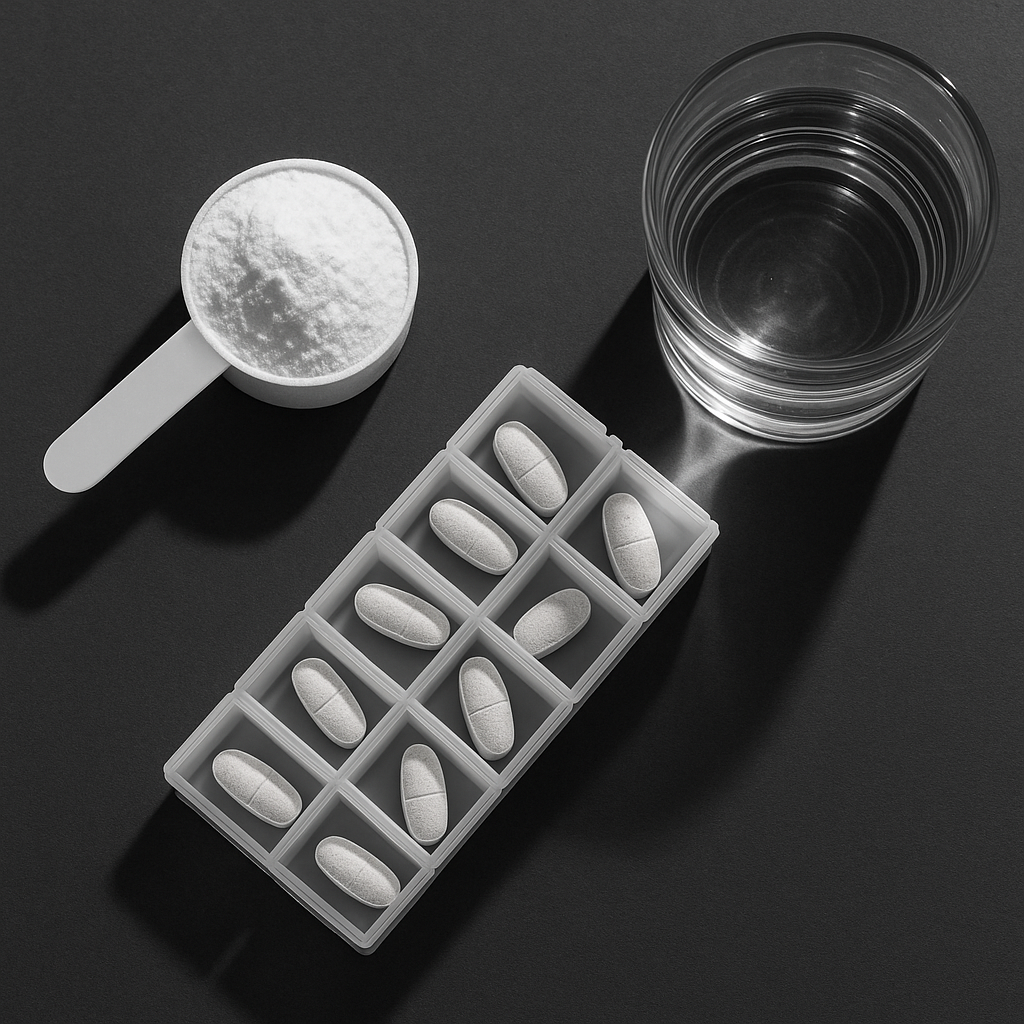
Can You Take Creatine with a Multivitamin?
Short answer: yes—creatine and a daily multivitamin can be taken together. Here’s how to combine them without overcomplicating your routine, what to watch for, and how to dose creatine correctly in a Canadian context.
Key Takeaways
- It’s safe for most healthy adults to take creatine with a multivitamin.
- Creatine monohydrate is the gold standard; take 3–5 g/day for maintenance.
- Timing is flexible—pairing both with a meal can improve GI comfort and adherence.
- During an optional loading phase (20 g/day split doses), keep your multivitamin at its usual time.
- Look for products with an NPN in Canada and consider third‑party tested options.
- Creatine may raise serum creatinine on labs without harming kidneys; inform your clinician.
- If you have kidney disease, are pregnant/breastfeeding, or take medications, speak with a healthcare professional first.
Can you take creatine and a multivitamin together?
Yes—most healthy adults can safely take creatine alongside a daily multivitamin. Creatine is a simple compound stored in muscle that helps regenerate ATP for repeated high‑intensity efforts. The most studied and recommended form is creatine monohydrate, typically taken at 3–5 g per day as a maintenance dose. This dosing and the safety profile are supported by the International Society of Sports Nutrition (ISSN) and decades of research in athletes and non‑athletes alike.
Multivitamins are blends of essential vitamins and minerals designed to fill small dietary gaps; they don’t meaningfully alter creatine’s absorption or function. There’s no established negative interaction between standard multivitamin ingredients (for example, B‑vitamins, vitamin D, iron, magnesium) and creatine monohydrate. For most people, taking them together can simplify your routine and improve consistency—arguably the most important factor with creatine.
As with any supplement plan, consider your personal health context. If you have known kidney disease, are pregnant or breastfeeding, or take prescription medications, check with a healthcare professional first. Creatine is not banned by sport governing bodies and is widely used by Canadian athletes. If you’re new to creatine, our guides on when to take creatine and whether to use a loading phase can help you choose a approach that fits your goals.
How to take them together for best results
Creatine timing is flexible, so the best plan is one you’ll follow daily. Many people take both creatine and their multivitamin with breakfast or lunch to reduce the chance of mild stomach upset and to anchor the habit to a meal they never miss. Stir 3–5 g creatine monohydrate into water, milk, or a smoothie, swallow your multivitamin, and you’re done.
- With food or without: Either is fine for creatine. If your multivitamin contains fat‑soluble vitamins (A, D, E, K), a meal with some fat may help absorption—this doesn’t affect creatine.
- Hydration: Aim for about 250–500 mL of fluid with your creatine dose. Good daily hydration supports training and may reduce the chance of GI discomfort.
- Workout days vs. rest days: Consistency matters more than precise timing. If you prefer, take creatine after training when you’re already mixing a shake, and keep your multivitamin at its usual time.
- Make dosing easy: If you don’t have a scale, use our creatine calculator for scoop conversions and personalized plans.
Bottom line: pair them at a convenient time, stick to it, and train hard. If you’re curious about marginal timing tweaks, see our guide on when to take creatine.
Interactions, myths, and what actually matters
Minerals (calcium, magnesium, iron): No evidence shows these minerals impair creatine’s uptake or benefits. It’s fine if your multivitamin includes them. If you supplement iron separately under medical advice, continue as directed—iron doesn’t negate creatine.
Caffeine: Standard multivitamins don’t usually contain caffeine. While an older acute study suggested potential interference, longer‑term research and real‑world practice don’t show a consistent problem. If caffeine makes your stomach sensitive, consider separating it from creatine for comfort.
GI comfort: Taking creatine and a multivitamin together is generally well tolerated. If you experience mild bloating or loose stools, try splitting creatine into 2–3 smaller doses or pairing with a meal and extra water.
Kidneys and lab tests: Creatine can raise blood creatinine (a breakdown product) without harming kidneys; this can confuse lab interpretation. If you undergo bloodwork, tell your clinician you use creatine so they can interpret results appropriately.
Quality matters: Choose creatine monohydrate with a Natural Product Number (NPN) in Canada and, ideally, third‑party testing (e.g., NSF, Informed Choice). Our overviews of best creatine picks and full supplement reviews can help you shop confidently.
Dosing, forms, and what to look for in Canada
Maintenance: The evidence‑based maintenance dose is 3–5 g/day of creatine monohydrate. Taking this daily—regardless of your multivitamin—supports strength, power, lean mass, and high‑intensity performance over weeks to months.
Loading (optional): If you want faster saturation, take about 20 g/day for 5–7 days, split into 4 doses (e.g., 5 g with each meal), then drop to 3–5 g/day. Keep your multivitamin at its usual single daily dose. Learn more in our loading guide.
Forms: Stick with creatine monohydrate. Other forms are typically more expensive without better outcomes. Powder dissolves easily in warm water or a shake; capsules are convenient for travel.
Label checks in Canada: Look for a Natural Product Number (NPN) on the label and review directions, ingredients, and allergens. Consider Canadian‑available products that are third‑party tested. If you prefer an “all‑in‑one” multinutrient, verify the creatine amount—many blends underdose (for example, 1–2 g per day), which is below the supported maintenance target.
Not sure where to start? See our curated picks in best creatine and full reviews, and use the creatine calculator to match dosing to your body mass and goals.
Who should be cautious or talk to a clinician
Creatine and multivitamins are well tolerated by most healthy adults, but some situations warrant individual advice:
- Kidney disease or at‑risk populations: People with chronic kidney disease or a history of kidney issues should consult a healthcare professional before using creatine. Creatine can elevate serum creatinine without injury, which can complicate monitoring.
- Pregnancy and breastfeeding: There isn’t enough high‑quality evidence to recommend routine creatine use in these stages. Discuss risks and benefits with your provider first.
- Medications: If you take prescriptions (e.g., nephrotoxic drugs, diuretics), ask your pharmacist or physician about creatine’s suitability. Multivitamins can also interact with some medications (for example, iron with certain antibiotics), so spacing may be advised.
- Teens: Creatine has been studied in adolescents in supervised settings, but we recommend involving a healthcare professional, coach, and parent/guardian to ensure proper dosing, hydration, and overall nutrition.
- Older adults: Creatine can support resistance training adaptations and muscle health. If you manage chronic conditions or take multiple meds, a quick check‑in with your clinician is prudent.
For everyone, start with evidence‑based doses, stay hydrated, and anchor supplementation to a consistent routine. If you’re building a full plan, browse our step‑by‑step guides.
Practical daily routines you can copy
Consistency beats perfection. Here are three simple ways Canadians commonly combine creatine and a multivitamin:
- Breakfast anchor: Mix 3–5 g creatine into a glass of warm water or your morning smoothie, take your multivitamin with eggs, toast, and fruit, and finish with an extra 250 mL of water. Great if mornings are predictable.
- Post‑workout stack: After training, shake 3–5 g creatine into chocolate milk or a protein shake. Take your multivitamin at dinner for better fat‑soluble vitamin absorption and to keep caffeine (if any in other products) earlier in the day.
- Loading made easy (1 week): For faster saturation, take 5 g creatine at breakfast (with your multivitamin), lunch, mid‑afternoon, and dinner. After 5–7 days, return to 3–5 g/day at the time you’ll remember best. See details in our loading guide.
Tip: Travelling? Pack creatine capsules or a small powder container and set a phone reminder. If you’re optimizing the rest of your stack, our comparisons and picks in best creatine and reviews can save time and guesswork.
Creatine + Multivitamin: Quick Facts
- 3–5 g/day Evidence-based creatine maintenance dose
- 20 g/day × 5–7 days Optional loading, split into 4 doses
- 250–500 mL Suggested fluid with each creatine dose
- NPN Look for a Natural Product Number on Canadian labels
- 1 daily multi Keep your multivitamin at a consistent time
Frequently Asked Questions
Is it safe to take creatine and a multivitamin at the same time?
Yes. For most healthy adults, taking creatine monohydrate with a daily multivitamin is safe and convenient. There’s no established negative interaction between typical multivitamin ingredients and creatine. If you have kidney disease, are pregnant/breastfeeding, or take prescription medications, consult a healthcare professional first.
Should I take creatine and my multivitamin with food or on an empty stomach?
Either is fine for creatine, but many people prefer both with a meal for comfort. If your multivitamin includes fat‑soluble vitamins (A, D, E, K), taking it with food that contains some fat can help absorption. Creatine’s effectiveness does not depend on meal timing; consistency is what matters.
Will minerals like calcium or iron affect creatine absorption?
No strong evidence shows that common multivitamin minerals impair creatine uptake or benefits. You can take them together. If you take a separate iron prescription, follow your clinician’s spacing instructions for that medication; it doesn’t negate creatine’s effects.
Does creatine cause kidney damage when combined with a multivitamin?
Current research supports creatine’s safety in healthy individuals at recommended doses, whether or not a multivitamin is used. Creatine can raise blood creatinine (a breakdown product) without harming kidneys, which can affect lab interpretation. People with kidney disease should seek medical advice before using creatine.
Can I just use a multivitamin that includes creatine?
Be careful—many all‑in‑one formulas underdose creatine (often 1–2 g per day). The evidence‑based maintenance target is 3–5 g/day of creatine monohydrate. Check the label and consider a standalone creatine product if your blend falls short.