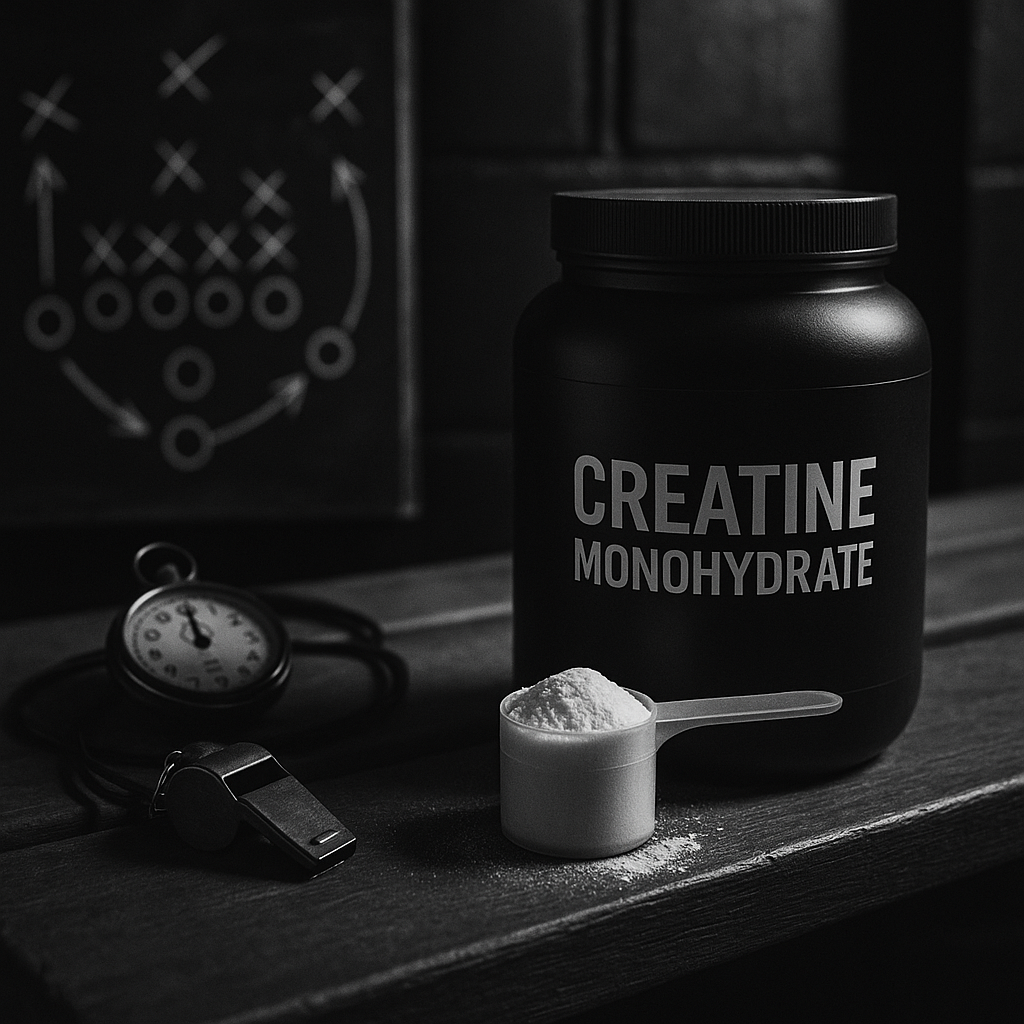
Creatine for Mental Performance: What Athletes Overlook
Athletes obsess over speed and strength but often overlook the brain. Creatine doesn’t just fuel muscles — it supports cognitive stamina when decisions matter most. Here’s how to use it for reaction time and clarity under pressure.
Key Takeaways
- Creatine monohydrate supports brain energy, helping decisions under fatigue and pressure.
- Daily 3–5 g creatine monohydrate is the evidence-based maintenance dose.
- Loading (20 g/day for 5–7 days) is optional; consistency matters more for cognition.
- Vegetarians/vegans and high workloads may see larger cognitive benefits.
- Time it when you’ll remember it; pre- or post-workout both work — stay consistent.
- Choose Canadian products with an NPN; aim for pure monohydrate with third‑party testing.
- Pair with good sleep, hydration, and simple game-day routines for a sharper edge.
The overlooked edge: cognitive performance on game day
In the final minutes of competition, a split-second read can decide the outcome — recognizing a trap, choosing the right outlet, or staying composed under pressure. While creatine is best known for muscle power, it’s also a key player in brain energy. Your neurons rely on the same phosphocreatine system that powers sprints, buffering ATP so thinking doesn’t bog down when the game gets messy or you’re running on little sleep.
The practical question for athletes: can creatine help with reaction time, decision-making, and cognitive sharpness when you’re fatigued? The emerging answer is encouraging. Studies in sleep deprivation, oxygen stress, and low-creatine diets suggest creatine can support tasks like rapid information processing and working memory — exactly the skills you call on in playmaking and defensive reads.
If you already take creatine for strength or speed, you may be leaving extra performance on the table by not thinking about the brain. If you don’t, the threshold to try is low: creatine monohydrate is well studied, affordable, and simple to dose. Below, we outline how it works, what the research says, and a game-day routine you can put into practice.
How creatine supports brain energy and decision-making
Creatine’s role is straightforward: it helps regenerate ATP — the energy currency used for every neural impulse and synaptic reset. In the brain, ATP demand spikes during complex tasks: tracking multiple moving players, updating a play in working memory, or inhibiting a risky pass. Under fatigue (heat, sleep loss, back-to-back shifts), phosphocreatine stores can become limiting, and cognitive performance tends to falter.
Supplementing creatine monohydrate increases total creatine and phosphocreatine in tissues, including the brain. That extra buffer may sustain signal fidelity and processing speed when conditions are stressful. It’s not a stimulant; you won’t feel a “jolt.” Instead, think steadier focus, fewer slips in judgment when tired, and quicker recovery between demanding mental efforts.
Mechanistically, this aligns with athlete needs: short, high-intensity bursts of cognition (reading a forecheck), sustained attention over a match, and resilience during overtime. The gold-standard daily dose is 3–5 g of creatine monohydrate. Loading is optional. For more on protocols, see our guides on the loading phase and when to take creatine.
What the research says on reaction time and fatigue
The strongest consensus around creatine remains in muscular performance, but cognitive findings are increasingly practical for athletes. In a double-blind crossover trial, creatine improved performance on demanding cognitive tasks in people with low dietary creatine (e.g., vegetarians), suggesting a ceiling effect — the lower you start, the more you may gain. Reviews also note benefits in scenarios where brain energy is stressed, such as sleep deprivation and hypoxia, with improvements reported in reaction time and working memory on lab tasks.
What does that mean for game day? Don’t expect superhuman reflexes. Instead, expect a higher “floor” under fatigue: fewer late-game mistakes, slightly quicker reads on fast-changing plays, and steadier focus after travel or short sleep. Not all studies show benefits, especially in well-rested omnivores doing simpler tasks, so the effect is context-dependent. That’s typical in nutrition science and consistent with creatine’s mechanism — it shines when energy demand outpaces supply.
For deeper background, see the International Society of Sports Nutrition’s position stand supporting monohydrate as the gold-standard form, and explore our curated picks in best creatine and detailed product notes in our supplements review.
Dosing and timing for a sharper mind
The most reliable plan is simple and sustainable:
- Daily maintenance: Take 3–5 g/day of creatine monohydrate. That’s the ISSN-supported sweet spot for most adults. If you prefer precision, ~0.03 g/kg/day lands in the same range for many athletes.
- Optional loading: 20 g/day split into 4 doses for 5–7 days saturates stores faster. This isn’t required for cognitive support; steady daily dosing reaches the same endpoint in ~3–4 weeks.
- Timing: Choose the time you’ll remember. Pre- or post-workout are both fine. Some athletes like post-exercise with a carb/protein snack. During travel or double-headers, consider splitting into 2–3 smaller doses to minimize GI upset.
- Form: Stick to creatine monohydrate. It’s the most studied, cost-effective form. Fancy variants haven’t reliably outperformed it.
Use our creatine calculator to personalize dosing. For more nuance on timing, visit when to take creatine, and for loading details, see creatine loading.
Game-day application: drills, travel, and hot environments
To translate lab findings into play, layer creatine into routines that protect cognitive stamina:
- Practice to game transfer: Use decision-heavy drills (small-area games, variable constraints) late in practice when you’re tired. Creatine won’t replace coaching, but it can help you hold execution quality as fatigue mounts.
- Travel weeks: Time zones and short sleep strain mental performance. Keep creatine daily, prioritize hydration (500–750 mL water on waking and around training), and anchor sleep with daylight exposure. This supports steadier reaction time and mood.
- Heat and back-to-back play: Hot environments and congested schedules raise brain energy demand. Creatine helps buffer, but basics matter: aggressive cooling, electrolytes, and simple carbohydrate availability during long matches.
- With caffeine? Many athletes pair modest caffeine with creatine. Evidence doesn’t show a harmful interaction for cognition; test in practice to confirm GI comfort and jitters are manageable.
For product picks that travel well and dissolve cleanly, see our best creatine list, and for brand-by-brand notes (mixability, verified purity), explore our supplements review. For broader strategy, our guides library covers hydration, timing, and recovery routines.
Safety, who benefits most, and buying in Canada
Creatine monohydrate has a strong safety profile in healthy adults when used at recommended doses. The main side effects are mild GI upset (often solved by smaller doses with food) and small increases in body mass from intracellular water — usually a positive for performance, though weight-class athletes may need to plan around it. If you have kidney disease or are on nephroactive medications, consult a clinician first.
Who may notice more cognitive benefit? Athletes with low dietary creatine (vegetarian/vegan), those under heavy training loads, during sleep restriction or travel, and in hot or hypoxic environments where brain energy demand spikes.
Canadian buying tips: Look for products with a Natural Product Number (NPN) on the label and transparent third-party testing. Pure, unflavoured creatine monohydrate is cost-effective and easy to stack. Start with 3–5 g/day and reassess after 3–4 weeks. For brand suggestions and price-per-serving comparisons, see best creatine and the in-depth review.
Creatine for Cognitive Edge — At a Glance
- 3–5 g/day Evidence-based daily maintenance dose
- 20 g/day × 5–7 d Optional loading to saturate faster
- 0.03 g/kg/day Body-weight–based maintenance alternative
- Monohydrate Gold-standard form supported by ISSN
- NPN on label Quick check for Canadian compliance
Frequently Asked Questions
Can creatine actually improve reaction time and decision-making?
Evidence suggests creatine can support tasks like reaction time and working memory, especially under fatigue, sleep loss, hypoxia, or in people with low baseline creatine (e.g., vegetarians). It’s not a stimulant; expect a steadier cognitive “floor” rather than a dramatic boost.
Do I need to load creatine for cognitive benefits?
No. Loading (20 g/day for 5–7 days) saturates stores faster, but a consistent 3–5 g/day reaches the same endpoint in 3–4 weeks. If your season is underway, you can simply start with maintenance dosing.
What’s the best time of day to take creatine for mental performance?
Consistency beats timing. Take it at a time you’ll remember — pre- or post-workout, or with a meal. Some athletes split the dose to reduce GI upset during travel or heavy training weeks. See our guide on timing at /when-to-take-creatine.
Is creatine safe for teen athletes and students?
Creatine has a strong safety profile in healthy individuals at recommended doses. For minors, decisions should involve parents/guardians and a qualified healthcare professional. Emphasize sleep, nutrition, and hydration first, with creatine as an optional add-on.
Will creatine make me feel bloated or slow on court?
Creatine increases intracellular water, which can raise body mass slightly. Most athletes don’t feel “puffy,” and many see performance benefits. If you compete in weight-class sports or are sensitive to scale changes, avoid loading and use 3–5 g/day, planning weigh-ins accordingly.
Does caffeine interfere with creatine’s cognitive effects?
There’s no consistent evidence that moderate caffeine blunts creatine’s benefits for cognition. Many athletes pair them successfully. Test your routine in practice to confirm GI comfort and avoid jittery dosing close to bed.