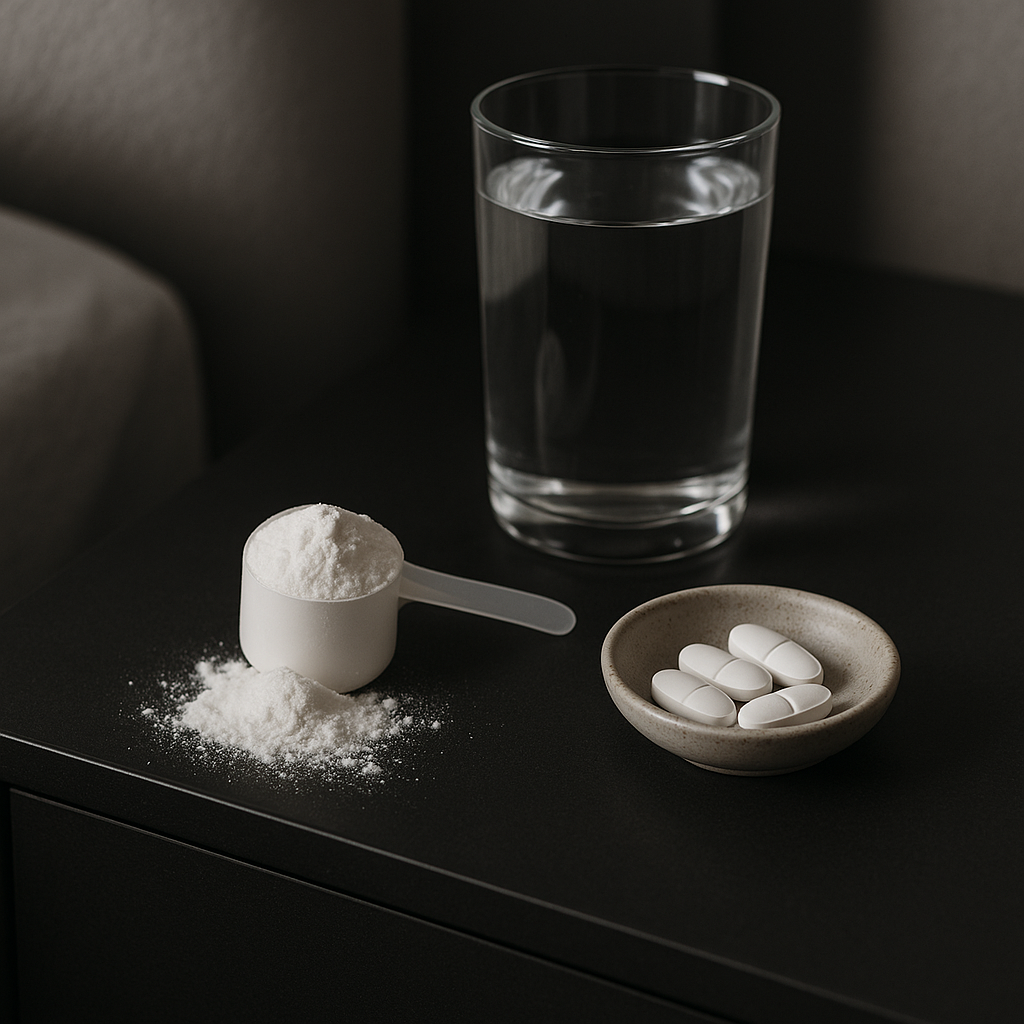
Creatine and Melatonin: Recovery-Focused Night Stack
Curious about taking creatine with melatonin before bed? This guide shows how a simple night stack can support sleep quality, next‑day training, and brain energy—without overcomplicating your routine.
Key Takeaways
- Creatine monohydrate 3–5 g/day remains the gold standard; timing is flexible, including bedtime.
- Melatonin 0.5–3 mg taken 30–60 minutes before bed can help sleep onset for many adults.
- No evidence of harmful interactions between creatine and melatonin in healthy adults.
- If nocturnal urination is an issue, take creatine with the evening meal instead of lights-out.
- Skip loading if you prefer—3–5 g/day saturates muscles and brain stores in ~3–4 weeks.
- Choose Canadian products with an NPN and third‑party testing; stick to creatine monohydrate.
- Stay hydrated and be cautious with melatonin if pregnant, on medications, or driving soon after.
Why a night stack makes sense
If you already take creatine, you know the basics: consistency beats timing, and simple creatine monohydrate works best. Pairing it with melatonin at night is less about squeezing “extra gains” out of creatine and more about aligning habits with how you actually recover—during sleep. Melatonin can help with sleep onset and circadian rhythm cues, while creatine supports cellular energy stores that your body and brain draw on around the clock.
There isn’t a magic synergy proven between the two, but the combination can be practical: you anchor your daily creatine dose to an existing bedtime routine, while melatonin (when appropriate) helps you wind down and fall asleep. For athletes and shift workers, there’s also a rationale for brain energy support overnight and into the morning, especially after heavy training or short sleep.
- Keep it simple: 3–5 g creatine monohydrate daily; melatonin only if you need help with sleep timing.
- Canadian context: Choose products with an NPN (Natural Product Number) and consider third‑party tested options.
- Flexible timing: If taking creatine right before bed bothers your stomach or increases bathroom trips, shift it to dinner—consistency is what matters. For more on timing, see When to Take Creatine.
What the science says about creatine, melatonin, and sleep
Creatine: The International Society of Sports Nutrition (ISSN) continues to support creatine monohydrate as the gold standard for performance and recovery, with typical maintenance at 3–5 g/day. Loading (e.g., ~20 g/day for 5–7 days) speeds saturation but isn’t required. While research focuses on strength and power, creatine also supports brain energy metabolism, which may be relevant when sleep is short or training stress is high.
Melatonin: A hormone secreted by the pineal gland, melatonin helps signal biological night and can shorten sleep onset for many adults when taken 30–60 minutes before bed. It’s commonly used for jet lag and circadian rhythm adjustment (e.g., shift work).
Together: There’s no strong evidence that creatine directly enhances melatonin’s effects (or vice versa). However, creatine doesn’t act like a stimulant and generally won’t disrupt sleep. Some evidence suggests creatine can support aspects of cognition under sleep restriction, likely through phosphocreatine’s role in ATP buffering in the brain.
- For dosing and options, see our Best Creatine guide and full Creatine Supplements Review.
- If you prefer a faster ramp-up, learn about the Creatine Loading Phase.
Timing: does bedtime creatine matter?
The short answer: not much. Creatine works by saturating muscle and brain stores over days to weeks, so the exact clock time is far less important than taking it every day. That said, bedtime can be a convenient anchor—especially if you already keep a water glass and supplements on your nightstand.
Practical pointers for nighttime use:
- Pair with food if sensitive: If creatine on an empty stomach causes mild GI upset, mix 3–5 g into a yoghurt or a small bedtime snack.
- Hydration and bathroom trips: If a big pre-bed shake wakes you to urinate, move creatine to dinner or take it after your evening training session.
- No stimulant effect: Creatine doesn’t raise heart rate or act like caffeine. Most people won’t notice any sleep disruption.
- Travel and shift work: Keep creatine timing aligned with your new sleep window. Melatonin may help shift the clock; creatine timing can simply follow your chosen bedtime.
If you want a deeper dive on timing research and real-world trade-offs, visit When to Take Creatine.
How to build your night stack
Here’s a simple, recovery-focused routine that works for most Canadian lifters and endurance athletes:
- Creatine monohydrate: 3–5 g once daily. Mix with water or a small snack 30–90 minutes before bed—or move to dinner if you’re prone to nighttime bathroom trips. Monohydrate remains the most studied and cost‑effective form.
- Melatonin (optional): Start low at 0.5–1 mg, 30–60 minutes before bed. If needed, titrate to 2–3 mg. More is not necessarily better; higher doses can cause next‑day grogginess for some.
- Consistency beats complexity: Take creatine daily; consider melatonin only when sleep timing needs help (e.g., jet lag, early start, shift change). Many adults don’t need melatonin every night.
- Loading (optional): If you want faster saturation, follow a short loading phase. Otherwise, expect ~3–4 weeks at 3–5 g/day for full saturation. See our loading guide.
Layer in basics that amplify recovery: a dark, cool bedroom; a regular wind‑down; and balanced evening nutrition. For personalized dosing (by body mass and goals), try our Creatine Calculator and browse step‑by‑step Guides.
Safety, side effects, and who should adjust
Creatine: Supported by decades of research and the ISSN as safe for healthy adults at standard doses (3–5 g/day). Common, mild side effects include temporary water retention and, rarely, GI discomfort. People with diagnosed kidney disease or those advised by a clinician to restrict creatine should avoid or get medical clearance.
Melatonin: Generally well tolerated short‑term. Potential effects include daytime sleepiness, vivid dreams, and interactions with certain medications (e.g., anticoagulants, some antihypertensives, immunosuppressants). Avoid before activities requiring alertness (e.g., late‑night driving).
- Interactions: No evidence of harmful interaction between creatine and melatonin in healthy adults.
- Life stages: Pregnant or breastfeeding individuals, and adolescents, should consult a healthcare professional before using melatonin. Creatine use in adolescents should also be supervised by a knowledgeable clinician or coach.
- Hydration: Maintain normal fluid intake, especially in hot environments or during heavy training.
When in doubt, speak with your primary care provider or sports dietitian—ideally bringing your product labels and doses. The goal is better sleep and training—not guesswork.
Smart shopping in Canada
Choosing the right products keeps your stack simple and effective:
- Look for an NPN: Canadian natural health products should display a Natural Product Number on the label. You can verify licences in the Licensed Natural Health Products Database (LNHPD).
- Go with monohydrate: Creatine monohydrate offers the best evidence and value. Skip exotic forms that haven’t matched monohydrate in head‑to‑head data.
- Third‑party testing: Consider products tested by programs like Informed Choice or NSF Certified for Sport.
- Reasonable melatonin doses: Choose 1 mg or 3 mg tablets so you can tailor the dose. Avoid mega‑doses unless advised by a clinician.
To compare top picks and pricing, see our Best Creatine and full Creatine Supplements Review. For timing strategies across training styles, visit When to Take Creatine and our practical Guides.
Night Stack at a Glance
- 3–5 g/day Creatine monohydrate maintenance (ISSN-supported)
- 0.5–3 mg Typical melatonin starting range, 30–60 min pre-bed
- 3–4 weeks Muscle saturation without loading
- NPN Canadian approval marker to look for on labels
Frequently Asked Questions
Will creatine keep me awake if I take it at night?
Unlikely. Creatine is not a stimulant and does not act like caffeine. Most people notice no change in sleep when taking 3–5 g at night. If bathroom trips or mild stomach upset disturb your sleep, move your dose to dinner or after your evening workout.
Is it safe to take creatine and melatonin together?
In healthy adults, there is no evidence of harmful interactions between creatine and melatonin. Creatine supports cellular energy stores, while melatonin helps with sleep timing. If you take prescription medications, are pregnant or breastfeeding, or have a medical condition, consult your healthcare provider first.
What melatonin dose should I start with in Canada?
Start low—0.5–1 mg taken 30–60 minutes before bed. Increase to 2–3 mg only if needed. Higher doses can cause next‑day grogginess for some. Melatonin is best used for short‑term sleep timing issues (e.g., jet lag) rather than as a permanent nightly aid without clinical guidance.
Do I need a creatine loading phase if I take it at night?
No. Loading simply saturates stores faster. If you prefer a minimalist approach, take 3–5 g/day at a consistent time (night is fine) and expect full saturation in roughly 3–4 weeks. If you want quicker results, consider a short loading phase, then return to maintenance.
I wake up to pee after taking creatine at bedtime—what should I change?
Reduce fluid volume near lights‑out and take creatine with dinner or earlier in the evening. You can also mix creatine into a small snack rather than a large shake. The key is daily consistency, not the exact clock time.