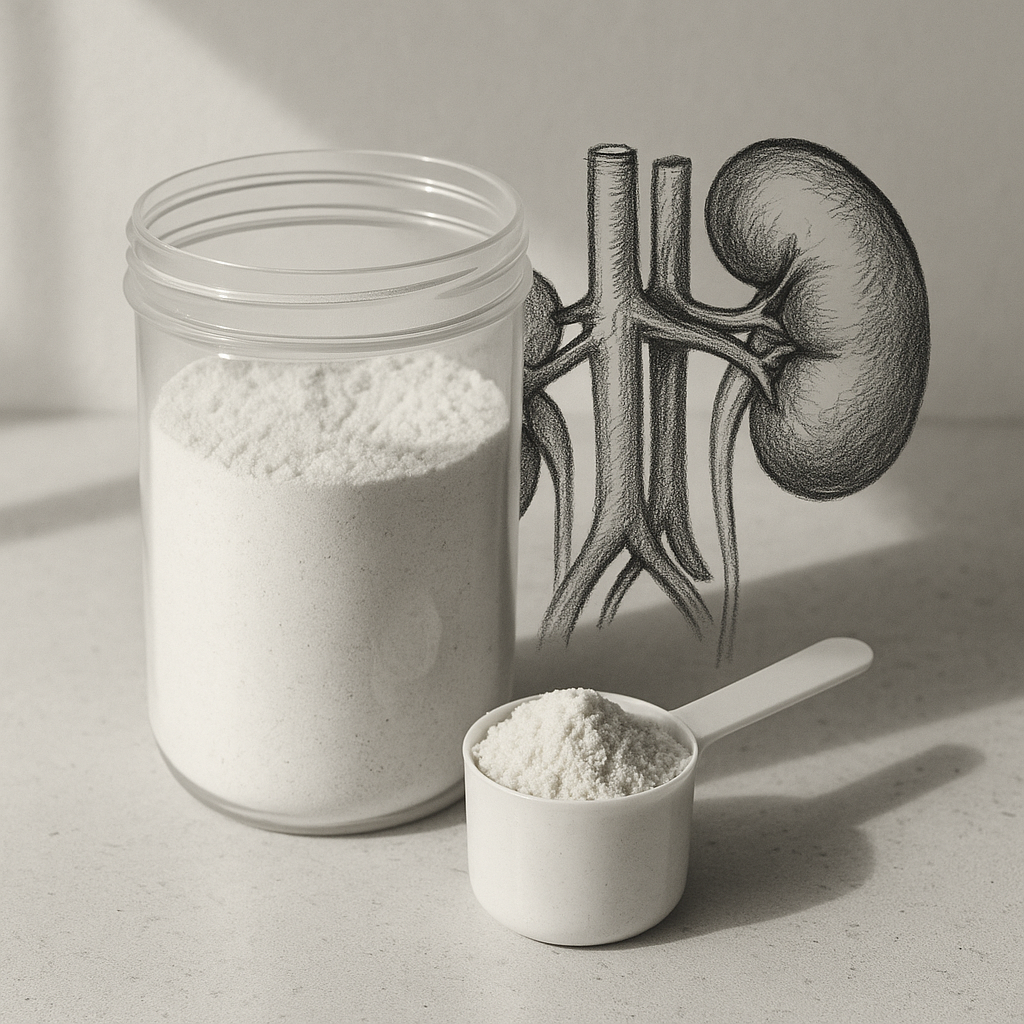
Creatine and Kidney Health: Reading the Science Honestly
If you’re wondering whether creatine is safe for your kidneys, you’re not alone. We explain why creatinine rises on creatine isn’t the same as kidney harm, review up-to-date studies, and offer clear steps for those with pre-existing kidney concerns in Canada.
Key Takeaways
- Creatine supplementation can raise blood creatinine—a harmless effect that does not indicate kidney damage in healthy adults.
- Long-term studies (up to 5 years) in healthy people consistently show no sign of kidney harm from recommended creatine use.
- Anyone with pre-existing kidney disease or risk factors should consult a doctor before starting creatine.
- Health Canada regards creatine as safe for healthy adults at standard doses (3–5 g/day).
- Bloodwork can misinterpret creatinine rises—be open with your health care provider about your supplement routine.
- Choose reputable Canadian creatine brands, and follow <a href='/guides'>guideline-informed dosing</a>.
- See our <a href='/creatine-loading-phase'>loading phase guide</a> or <a href='/when-to-take-creatine'>timing advice</a> for science-backed protocols.
Why Creatinine Rises on Creatine—And Why It Doesn’t Mean Kidney Damage
Creatinine is a waste product your muscles produce, and it’s normally filtered by the kidneys. Creatine, one of Canada’s most widely used fitness supplements, naturally breaks down into creatinine in your body. When you supplement with creatine—even at safe, science-backed doses like 3–5 grams per day—your blood creatinine level can rise slightly.
This rise in creatinine is normal and predictable. However, some doctors or lab interpretations may mistakenly flag your results as a marker of kidney dysfunction. This is simply your body processing extra creatine, not evidence of kidney harm. Importantly, top organizations like the International Society of Sports Nutrition (ISSN) confirm that a modest creatinine rise from supplementation does not indicate any renal (kidney) injury in healthy people.
- Don't be alarmed if you see a flagged creatinine value after starting creatine—context is key.
- If you need bloodwork soon after starting creatine, always mention your routine to your healthcare team.
What Long-Term Studies in Healthy People Actually Show
Canadian supplement users deserve the facts: hundreds of clinical studies, including large, peer-reviewed reviews, find no evidence that creatine supplementation damages healthy kidneys. Most studies use doses of 3–5 grams per day, the gold standard supported by Health Canada and global authorities.
For example, a review published by the ISSN evaluated years of creatine use in athletes and non-athletes of all ages. No increase in kidney dysfunction, chronic kidney disease, or negative lab markers was found when people without pre-existing kidney issues followed standard dosing.
- Multiple double-blind, placebo-controlled trials have lasted 1 year or longer—with no harm found in healthy adults.
- Even in older populations, creatine has not increased rates of kidney problems over placebo.
For summaries of leading Canadian and international products, see our creatine supplements review page.
Who Should Genuinely Be Cautious with Creatine?
While most healthy Canadians can safely use creatine at recommended doses, some individuals should exercise caution. If you have a history of kidney disease, diabetes, uncontrolled high blood pressure, or are at risk of kidney issues, consult a physician before using creatine. Creatine has not been well studied in people with pre-existing kidney or metabolic diseases, and it’s always wise to prioritize your safety and get professional advice.
- Those with chronic kidney disease (CKD) or a family history of kidney problems
- People taking nephrotoxic (kidney-stressing) medications
- Anyone with unexplained swelling, changes in urination, or lab abnormalities
- Teens and older adults with comorbidities (seek medical clearance)
For most other adults—including active gym-goers, athletes, and those over 50—there is strong evidence for safety. Still, it’s always best practice to disclose your supplement use to your care team.
How to Talk to Your Doctor About Creatine and Kidney Tests
If you’re on creatine and your doctor orders bloodwork, bring it up proactively. Here’s a simple conversation guide:
- Be specific: Share your daily dose (usually 3–5 g), product brand, and any recent changes.
- Explain creatinine context: Let your doctor know that mild, predictable creatinine rises are normal and not harmful without other abnormal test findings.
- Ask about additional kidney markers: If your creatinine is a little above the reference range, tests like eGFR (adjusted for supplement use), urine albumin, and cystatin C are more reliable for detecting actual kidney stress.
If your physician needs further information, feel free to share key professional reviews or links such as the ISSN position statement. Clear and open communication is the best tool for navigating your health together.
Canadian Context—What Health Canada and Canadian Experts Say
In Canada, creatine monohydrate has been classified as a Natural Health Product and is regulated accordingly. Health Canada supports daily doses of up to 5 grams for healthy adults.
- Labels must be in English and French, and reputable local brands follow rigorous purity testing.
- Look for supplements with a Canadian NPN (Natural Product Number) for guaranteed safety and compliance.
As of 2026, no new safety signals or recalls specific to kidney health have been identified by Health Canada’s adverse event database for monohydrate use (our recommended products all comply with these standards). Always buy from established brands and avoid anecdotal online sources or unlicensed powders.
For best outcomes, follow evidence-based creatine guides for dosing, timing, and brand selection.
Myths vs. Reality—Clearing Up Common Creatine Kidney Fears
The fear that creatine is inherently unsafe for kidneys often stems from anecdotal stories, misinterpreted lab results, or confusion with anabolic steroids. Here’s what the science actually tells us:
- Myth: Creatine increases risk of acute kidney injury (AKI) or kidney stones.
Fact: Dozens of studies in healthy users show no such harm at standard doses (learn more about safe timing). - Myth: If creatinine rises, your kidneys are being damaged.
Fact: Mild rises are expected and harmless for most—context matters. - Myth: All online kidney scare stories are based on published science.
Fact: Most are anecdotes, not supported by controlled human data.
Stick with reputable Canadian products, be open with your doctor, and rely on large-scale published data over hearsay.
Putting It Into Practice—Safe Creatine Use for Canadians
If you’re healthy, use a reputable, Health Canada-registered creatine supplement, and follow the gold-standard dose of 3–5 grams daily, there is no credible evidence of kidney harm. Share your supplement routine with your healthcare provider, especially if you plan bloodwork or have personal risk factors.
- Track any unusual symptoms (e.g., swelling, new-onset fatigue), and confirm with your doctor that creatine is still right for you.
- Read our loading phase and science-based guide for the best results with minimal risks.
With honest communication and evidence-based habits, Canadians can enjoy the well-established benefits of creatine—while keeping their kidney health front and centre.
Creatine and Kidney Health: What Science Finds
- 0% Increase in kidney dysfunction in healthy users (ISSN review, up to 5 years)
- 3–5 g Standard safe daily creatine dose supported by Health Canada
- 150+ Peer-reviewed human trials on creatine safety
- Harmless Typical creatinine rise explained by extra creatine—not damage
Frequently Asked Questions
Does creatine cause kidney damage in healthy adults?
No—large, high-quality studies consistently show that in healthy people using standard doses (3–5 g/day), creatine does not cause kidney damage. Mild rises in blood creatinine are expected and unrelated to actual kidney function decline.
Should I stop taking creatine before blood tests?
Not necessarily, but you should disclose your creatine use to your doctor when doing bloodwork. This helps them interpret your results, as increased creatinine may reflect your supplement rather than true kidney stress.
Is creatine safe for people with kidney disease or at risk?
People with known kidney disease, diabetes, or risk factors should consult a healthcare provider before using creatine. There is not enough long-term safety data for these groups, so professional supervision is essential.
What kind of creatine is safest for kidneys?
Creatine monohydrate is the most studied, safest, and best-tolerated form. Health Canada and scientific organizations recommend it over other less-researched forms.
Can creatine cause kidney stones?
There is no strong evidence linking creatine use to increased risk of kidney stones in healthy individuals, particularly if you stay well-hydrated. Most concerns are based on myth or non-controlled anecdotes.