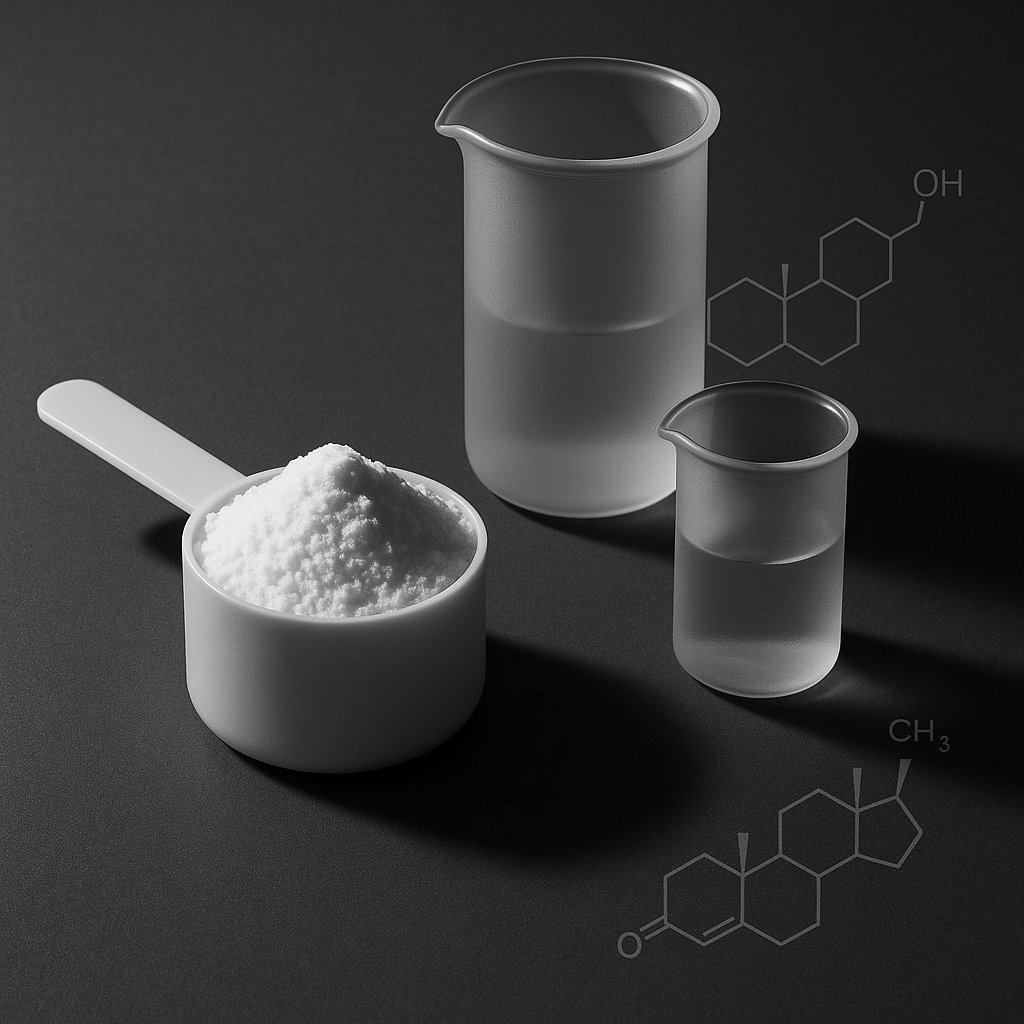
Creatine and Hormonal Health: What Men and Women Should Know
Does creatine raise testosterone, spike DHT, alter estrogen, or lower cortisol? We cut through the myths with up-to-date evidence and clear guidance for men and women. Learn what creatine actually does—and doesn’t do—to your hormones.
Key Takeaways
- Creatine monohydrate does not meaningfully change resting testosterone or estrogen in healthy adults.
- One small study found higher DHT after a loading phase; most research shows no consistent DHT change or hair-loss outcome.
- Creatine does not act like a steroid and isn’t a hormonal supplement; it fuels cellular energy (phosphocreatine system).
- Standard dosing: 3–5 g/day of creatine monohydrate; loading is optional. See our calculator for your plan.
- Women can use creatine across the lifespan; no evidence it raises estrogen. Use caution in pregnancy/breastfeeding.
- Creatine may blunt some exercise stress responses without chronically suppressing cortisol; overall endocrine effects are minimal.
- In Canada, choose creatine with an NPN and third‑party testing; monohydrate is the gold standard.
Creatine is not a hormone or steroid
Creatine sits squarely in the energy, not hormone, category. Inside your cells, creatine helps regenerate ATP via the phosphocreatine system—especially during short, high-intensity efforts. That’s why it reliably improves strength, repeated sprints, and lean mass when paired with training. But unlike anabolic steroids or prohormones, creatine does not convert to or mimic testosterone, estrogen, or other hormones.
Misinformation often comes from conflating performance gains with endocrine effects. Better training quality can transiently affect normal workout-related hormone fluctuations, but that is not the same as creatine changing your baseline hormone production. The consensus from sports nutrition bodies is that creatine monohydrate is the gold standard for efficacy and safety, with no meaningful adverse endocrine effects in healthy users.
- Bottom line: Creatine helps muscles do more work; it’s not a hormonal supplement.
- Typical maintenance dosing is 3–5 g/day of creatine monohydrate. Use our creatine calculator to tailor a plan.
- If you’re curious about timing, see When to Take Creatine. For loading details, visit Creatine Loading Phase.
Testosterone and DHT: what the data say
Testosterone: Across controlled studies, creatine monohydrate does not consistently increase resting testosterone levels in men or women. Some training sessions can temporarily raise testosterone on their own—regardless of creatine use—but long-term supplementation has not shown a reliable elevation in baseline testosterone.
DHT (dihydrotestosterone): A single small, short trial in male rugby players reported higher serum DHT after a loading phase, with levels still within clinical reference ranges. This finding has not become a consistent theme across the wider literature, and the study did not measure hair outcomes. To date, there is no direct clinical evidence that creatine supplementation causes hair loss.
- If you’re sensitive about hair, know that the DHT data are limited and mixed. Focus on dose consistency (3–5 g/day) rather than aggressive loading if you prefer a conservative approach.
- Choosing unflavoured creatine monohydrate from a reputable Canadian brand is your best bet. See our picks at Best Creatine in Canada and full reviews at Creatine Supplements Review.
In short, creatine supports training adaptations without reliably moving resting testosterone, and the DHT question rests largely on a single small study that has not been robustly replicated.
Estrogen, women, and life stages
For women, a common worry is whether creatine raises estrogen or disrupts menstrual cycles. Current human research does not show creatine increasing estrogen or altering menstruation. Instead, creatine’s value appears to come from better cellular energy availability, which can aid resistance training, sprint performance, and possibly some aspects of cognition—areas of interest across the menstrual cycle, during perimenopause, and beyond.
Women also tend to have slightly lower baseline intramuscular creatine stores than men, which may make them particularly responsive to supplementation. That doesn’t change the dose target: most women do well with 3–5 g/day of creatine monohydrate, with or without an initial loading phase. Vegetarians and vegans—regardless of sex—often see notable benefits because dietary creatine intake is usually lower.
- Pregnancy and breastfeeding: There isn’t enough high‑quality evidence to recommend routine use. Talk to your healthcare provider before considering creatine during these periods.
- Perimenopause and menopause: Creatine may support training outcomes and daily energy availability; it is not a hormone therapy and does not replace medical management of menopausal symptoms.
- Explore how to time your routine at When to Take Creatine and see step‑by‑step dosing in our Guides.
Cortisol, stress, and recovery
Cortisol rises and falls naturally throughout the day and in response to training. Creatine is not a cortisol‑lowering drug, and there is no solid evidence that it chronically suppresses cortisol in healthy people. Some studies suggest creatine may blunt parts of the exercise‑induced stress response—likely by improving high‑intensity energy supply and reducing perceived effort—but findings are mixed, modest, and well within normal physiology.
What matters practically is that creatine helps you perform more quality work and recover better, which can indirectly influence how you feel during demanding weeks of training. Those effects come from energy support at the muscle and brain level, not from rewiring your endocrine system.
- Do not expect creatine to fix stress, poor sleep, or overreaching. Keep fundamentals tight: sleep 7–9 hours, fuel adequately, and periodize training.
- Pair creatine with balanced protein and carbohydrate intake to support recovery. Our product picks at Best Creatine in Canada focus on monohydrate for proven benefits.
- If you’re curious about whether a loading phase could speed results, see Creatine Loading Phase.
How to dose and time creatine (men and women)
The evidence-supported playbook is simple and the same for most adults:
- Maintenance: 3–5 g/day of creatine monohydrate. Consistency matters more than timing.
- Optional loading: ~20 g/day split into 4 doses for 5–7 days, then 3–5 g/day. Loading saturates muscles faster but isn’t required; a daily 3–5 g approach reaches saturation in a few weeks.
- Timing: Take it when you’ll remember—morning coffee, post‑workout shake, or with a meal. See practical tips at When to Take Creatine.
- Hydration: Drink water as usual; creatine draws fluid into muscle, which is normal. Early weight gain of ~0.5–1.5 kg is typically water, not fat.
Who might adjust? Larger athletes may gravitate toward 5 g/day; smaller individuals can sit at 3 g/day. Vegetarians/vegans often respond robustly to standard doses. If you have kidney disease, a history of renal issues, or are on medications that affect kidney function, talk to your healthcare provider first.
Use our Creatine Calculator to personalize your plan. For product comparisons and forms, see Creatine Supplements Review and our top picks at Best Creatine.
Buying creatine safely in Canada
In Canada, look for simple, well‑tested products. The research consensus backs creatine monohydrate as the gold standard for efficacy, value, and safety. Avoid proprietary blends or exotic forms that raise cost without demonstrating superior outcomes.
- Check for an NPN: A Natural Product Number signals the product is licensed by Health Canada. You can search the Licensed Natural Health Products Database (LNHPD) to verify listings.
- Third‑party testing: Choose brands that publish purity/heavy‑metal tests or use recognized verifications.
- Ingredients: Unflavoured, single‑ingredient creatine monohydrate keeps things simple. Mix with water or a shake.
- Budget: Creatine is one of the most cost‑effective supplements. Our curated options are at Best Creatine in Canada, with deeper comparisons in Creatine Supplements Review.
For a step‑by‑step buying and dosing walkthrough, explore our Guides. When in doubt—especially if you have medical conditions or take prescription drugs—consult your clinician before starting.
Creatine and Hormones at a Glance
- 3–5 g/day Evidence-based daily dose for most adults
- 95% Approximate share of body creatine stored in skeletal muscle
- 0.5–1.5 kg Typical early water-weight increase, not fat gain
- 1 small RCT Reported higher DHT after loading; most studies show no change
Frequently Asked Questions
Does creatine raise testosterone?
No. Across controlled trials, creatine monohydrate does not consistently increase resting testosterone in healthy adults. Training itself can cause short-lived hormonal fluctuations, but long-term creatine use has not shown a reliable elevation in baseline testosterone.
Will creatine cause hair loss by increasing DHT?
Current evidence does not show that creatine causes hair loss. One small study in rugby players reported higher DHT after a loading phase, but levels stayed within normal ranges and hair outcomes were not measured. Most studies have not replicated this finding.
Does creatine affect estrogen or menstrual cycles?
There’s no evidence that creatine increases estrogen or disrupts menstrual cycles. Women can use standard doses (3–5 g/day). If you are pregnant or breastfeeding, consult your healthcare provider—data are insufficient for routine use in those periods.
Is creatine a cortisol-lowering supplement?
No. Creatine does not chronically suppress cortisol. Some research suggests it may blunt parts of the exercise-induced stress response by improving energy availability, but overall endocrine effects are small and within normal physiology.
What’s the safest form and dose in Canada?
Choose creatine monohydrate with an NPN and third-party testing. The standard, evidence-based dose is 3–5 g/day. Loading (about 20 g/day for a week) is optional. If you have kidney disease or take related medications, speak with your clinician first.