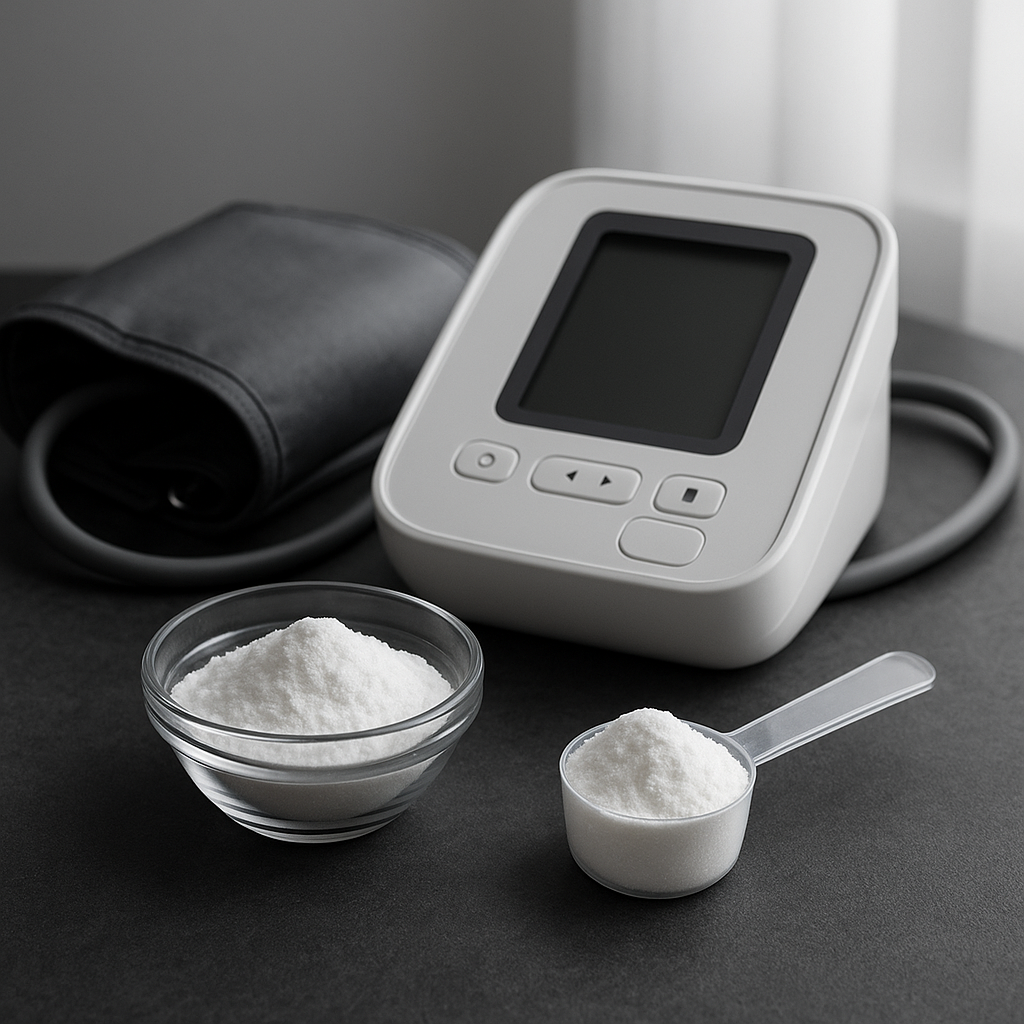
Creatine and High Blood Pressure: What You Need to Know
Curious whether creatine affects blood pressure? The short answer: research in healthy adults generally shows no meaningful change in resting BP. Here’s how to use creatine wisely if you have hypertension, what to watch for with common medications, and a simple plan to discuss with your doctor.
Key Takeaways
- Most studies in healthy adults show no consistent rise in resting blood pressure from creatine monohydrate.
- Stick to creatine monohydrate, 3–5 g per day; avoid stimulant-heavy blends if you manage hypertension.
- If you take ACE inhibitors, ARBs, or diuretics, ask your clinician how creatine might affect lab interpretation (serum creatinine) and hydration.
- Track home BP for 1–2 weeks before and after starting creatine; keep a log to share with your doctor.
- Consider pausing creatine 3–7 days before kidney function bloodwork to avoid confounding results—confirm timing with your provider.
- Choose Canadian-licensed products (NPN) with simple ingredients and minimal sodium.
- Prioritize hydration, especially in heat or long workouts, and reassess if BP rises or you feel unwell.
Does creatine raise blood pressure?
For most healthy adults, creatine monohydrate does not appear to raise resting blood pressure. The best available sports nutrition guidance, including the International Society of Sports Nutrition (ISSN), considers creatine one of the most studied and generally safe performance supplements when used as directed. Typical maintenance dosing is 3–5 g per day, and creatine’s main physiologic effect is to increase intramuscular phosphocreatine stores—not to stimulate the cardiovascular system.
It’s common to gain 1–2 kg in the first weeks due to increased water in muscle. That water shift is localized and, by itself, hasn’t been shown to consistently elevate blood pressure in trials. Where confusion arises is with pre-workout blends: stimulants like caffeine, yohimbine, or high-sodium mixes can raise blood pressure acutely. That’s why we recommend choosing a plain creatine monohydrate product rather than a stimulant-heavy formula.
If you manage hypertension, pair creatine with good measurement habits. Hypertension Canada advises standardized home monitoring to understand your true baseline. Track consistently, then review results with your clinician. For more on timing and practical use, see our guides on when to take creatine, loading vs. no loading, and our evidence-based guides.
Who should be cautious and why
While creatine is broadly safe for healthy adults, a cautious approach is smart if you have cardiovascular or kidney considerations. People with uncontrolled hypertension, a history of chronic kidney disease (CKD), or those on multiple medications affecting kidney function should speak with a clinician before starting. Creatine is metabolized to creatinine, which can raise the lab value of serum creatinine without harming the kidneys. This can make it harder to interpret kidney function, especially when your care team is titrating blood pressure medications.
Other situations to pause or delay creatine:
- Recent changes to BP medications (e.g., just started an ACE inhibitor/ARB or diuretic) where baseline labs and home BP are still being established.
- Heat waves, intense training camps, or physically demanding work where dehydration risk is high—get your hydration and electrolyte plan dialed first.
- Using stimulant-containing pre-workouts or high-sodium products that could confound blood pressure readings—opt for stimulant-free, low-additive creatine.
If any new or worsening symptoms occur—headache, chest discomfort, unusual shortness of breath, or sustained BP elevation—stop the supplement and contact your healthcare provider.
Creatine and common blood pressure medications
Creatine does not have well-documented, direct pharmacologic interactions with antihypertensives, but there are practical considerations:
- ACE inhibitors/ARBs (e.g., ramipril, lisinopril, valsartan): These can cause an expected, small rise in serum creatinine when started or up-titrated. Because creatine can also raise measured creatinine (without harming kidney filtration), ask your clinician whether to pause creatine 3–7 days before labs or to use alternative markers (e.g., cystatin C or an enzymatic creatinine assay).
- Thiazide and loop diuretics (e.g., hydrochlorothiazide, furosemide): Diuretics increase fluid losses. Creatine draws water into muscle but doesn’t dehydrate you by itself. Still, with heavy sweating or heat, combine diuretics + training + inadequate fluids and you might feel crampy or light-headed. Emphasize steady hydration and monitor how you feel.
- Calcium channel blockers and beta blockers: No specific concerns unique to creatine are known. Monitor home BP as you normally would.
- Potassium-sparing agents (e.g., spironolactone, eplerenone): Since kidney function and potassium are monitored with these drugs, avoid confounding labs; coordinate the timing of bloodwork if you use creatine.
One more practical tip: frequent or high-dose NSAIDs can elevate BP and stress the kidneys. If you use them for training aches, discuss safer pain strategies with your clinician.
How to use creatine safely if you have hypertension
The simplest, evidence-based approach is creatine monohydrate, 3–5 g daily. A loading phase (e.g., 20 g/day divided for 5–7 days) saturates faster but isn’t required; you can reach full saturation in a few weeks with daily maintenance dosing. Learn more in our loading guide and use our creatine calculator if you prefer a weight-based estimate.
Product tips for Canadians:
- Choose a licensed Natural Health Product (look for an NPN on the label) with minimal ingredients—ideally just creatine monohydrate.
- Avoid blends with stimulants or high sodium. See our current picks in Best Creatine in Canada and full supplement reviews.
- Take with food or after training if you’re prone to mild GI upset. Timing is flexible; consistency matters most. See When to Take Creatine.
- Hydration: most people do well by adding a glass (~250–500 mL) of water around workouts and drinking to thirst through the day, especially if you’re on a diuretic or training in heat.
If you’re new to creatine, start at 3 g/day for a week, confirm BP remains stable, then consider moving to 5 g/day as needed.
Build a simple monitoring plan
A little structure goes a long way. Before starting creatine, collect a 7-day home BP baseline using proper technique (seated, back supported, feet on floor, correct cuff size, and a short rest before readings). Hypertension Canada provides clear instructions for accurate measurement.
- Week 0 (baseline): Record two readings, morning and evening, for 7 days. Note meds, caffeine, and workouts.
- Week 1–2 (after starting creatine): Continue the same schedule. Watch for sustained changes rather than single spikes.
- Symptoms & weight: Track any dizziness, headaches, unusual fatigue, or rapid weight changes beyond expected 1–2 kg water gain.
- Share the log: Bring your BP and symptom log to your next appointment or send via your clinic’s portal.
If you see a consistent upward shift in home BP or feel unwell, pause creatine and contact your clinician. Reintroduce only once your care team is comfortable with a plan.
How to talk to your doctor: a practical checklist
A short, focused conversation helps you get a clear yes/no and a monitoring plan.
- Your goals: Strength, recovery, or training volume—why you want to use creatine.
- Your health snapshot: Recent home BP averages, current diagnoses, and any kidney or cardiovascular history.
- Medication list: Include doses of BP meds, any diuretics, and over-the-counter NSAIDs or stimulants.
- The product label: Brand, form (monohydrate), dose (3–5 g/day), and that it’s a licensed NHP (NPN).
- Lab plan: Ask whether to pause creatine before kidney function tests, and whether alternative markers (e.g., cystatin C) are appropriate.
- Monitoring plan: Propose 1–2 weeks of home BP tracking before/after starting. Offer to send the log.
- Stop rules: Agree on symptoms or BP thresholds that should trigger you to stop and check in.
Bringing this structure shows you’re approaching supplementation thoughtfully—and helps your clinician tailor advice to your situation.
Creatine + BP at a glance
- 3–5 g/day Evidence-based creatine maintenance dose
- Monohydrate Gold standard form supported by ISSN
- 2–4 weeks Typical time to saturate without loading
- Stimulant-free Avoid BP swings from pre-workout blends
- Home BP log Track 1–2 weeks before and after starting
Frequently Asked Questions
Does creatine raise blood pressure?
In healthy adults, studies generally do not show a meaningful increase in resting blood pressure with creatine monohydrate at standard doses. If you manage hypertension, choose stimulant-free products and monitor your home BP for 1–2 weeks before and after starting to be sure it’s stable for you.
Is creatine safe with ACE inhibitors, ARBs, or diuretics?
There’s no well-established direct interaction, but creatine can raise the lab value of serum creatinine, which may complicate kidney function monitoring when you use these medications. Ask your clinician whether to pause creatine before labs or to use alternative markers, and prioritize hydration if you’re on a diuretic.
Will creatine hurt my kidneys or make my creatinine look abnormal?
Long-term studies in healthy users have not shown kidney harm from creatine monohydrate when taken as directed. However, creatine can raise measured serum creatinine without reducing true kidney function. That’s why coordinating timing around bloodwork can be helpful, especially if you have CKD risk or are starting BP meds.
Should I avoid the loading phase if I have high blood pressure?
Loading isn’t necessary. You can take 3–5 g/day and reach similar muscle saturation in a few weeks. If you and your clinician prefer the slow-and-steady approach while monitoring BP, skip loading and focus on consistent daily dosing.
What type of creatine should I buy in Canada?
Choose a licensed Natural Health Product (look for an NPN) that lists only creatine monohydrate. Avoid added stimulants or unnecessary sodium. Our team’s current picks and deeper reviews are at /best-creatine and /creatine-supplements-review.