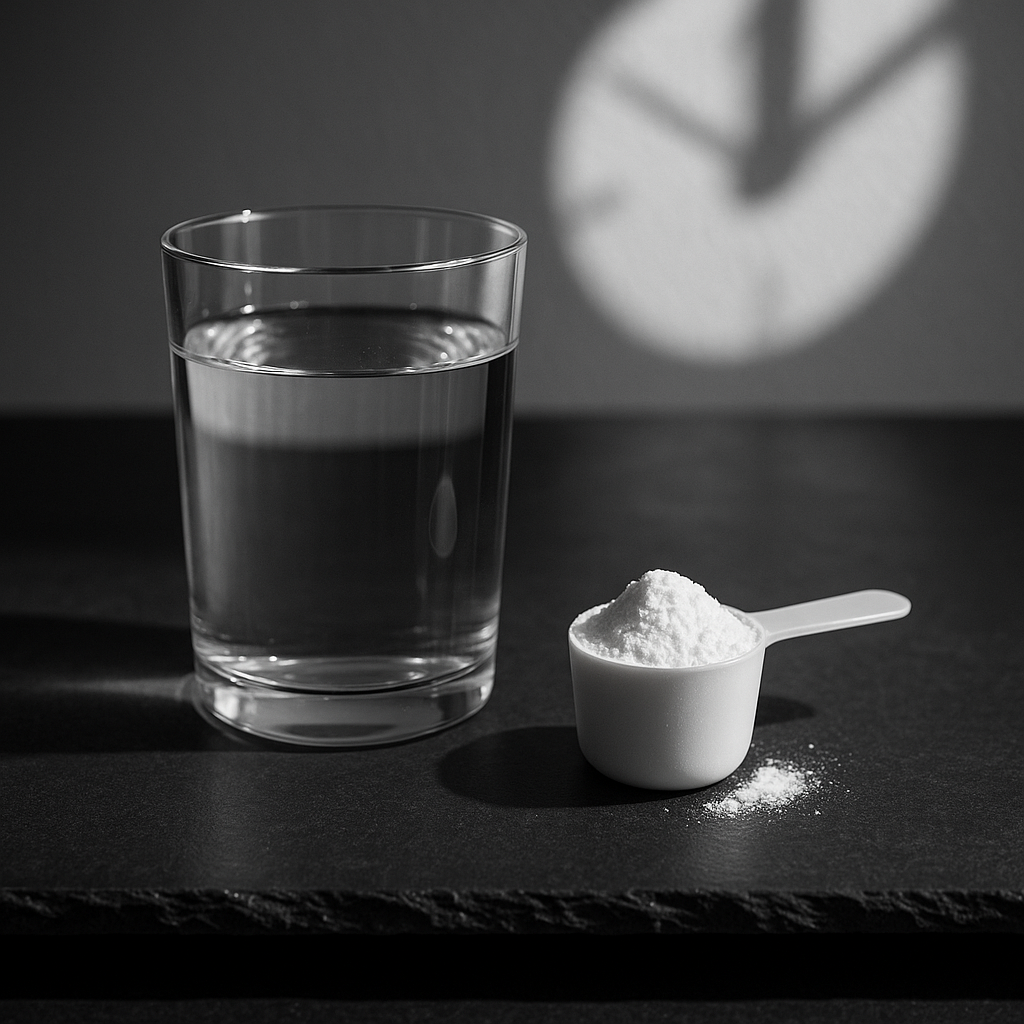
Taking Creatine While Fasting: What You Need to Know
Can you take creatine while fasting? Yes—when used correctly. Here’s how fasting influences creatine transport, what insulin really does, and practical timing options for IF, from 16:8 to OMAD. Clear, Canadian guidance inside.
Key Takeaways
- Pure creatine monohydrate has 0 calories and won’t raise insulin; most IF styles allow it in the fasted window.
- Consistency beats timing: 3–5 g/day (ISSN-supported) saturates muscle over time, with or without a carb ‘insulin boost’.
- If you want an extra nudge, take creatine with your first meal; otherwise pre- or post- fasted training with water works well.
- Loading is optional: 20 g/day in 4 x 5 g for 5–7 days, then 3–5 g/day—do the loading doses in your eating window if preferred.
- Hydration matters during fasting: pair creatine with water and sodium/electrolytes (unsweetened if you keep a strict fast).
- Choose Canadian NPN-listed creatine monohydrate and third-party tested options; see our reviews and best picks.
- Use our calculator to plan dosing and a simple weekly routine you can stick to.
Why creatine fits most fasting plans
Intermittent fasting (IF) and creatine can play nicely together. Pure creatine monohydrate is calorie-free, flavourless, and doesn’t raise blood sugar or insulin. That means most fasting styles—from 16:8 to time-restricted morning fasts—allow creatine during the fasted window. The key is consistency: building and maintaining elevated muscle creatine stores depends far more on taking it daily than on micromanaging the clock.
For strength, power, and lean mass, creatine monohydrate remains the gold standard. The International Society of Sports Nutrition (ISSN) supports a simple maintenance intake of 3–5 g per day. A brief loading phase (20 g/day split into 4 doses for 5–7 days) can fill stores faster, but it’s optional. You’ll still saturate stores in a few weeks with maintenance alone.
Bottom line: if fasting helps you train, recover, or manage nutrition, you don’t need to choose between IF and creatine. Pick an approach you’ll stick with. If you’d like finer timing guidance, see our protocol breakdown in When to Take Creatine and consider our Creatine Dose Calculator to map out your week.
Insulin, uptake, and the creatine transporter
Creatine gets into muscle cells via the SLC6A8 creatine transporter, which depends on sodium and is influenced by cellular energy status. Insulin can support creatine uptake by shifting ions and transport dynamics, and studies show that taking creatine with carbohydrate (and sometimes protein) can modestly increase creatine retention in the short term. That said, you do not need a carb ‘insulin spike’ to benefit—daily creatine monohydrate alone still saturates muscle over time.
What does fasting change? During a fast, insulin is low, but the transporter still functions. Many lifters who train fasted take creatine with water pre- or post-workout and make excellent progress, especially once muscle stores are already topped up. If you prefer to chase any potential insulin-assisted edge, simply take your creatine with your first meal of the day or your post-workout meal during the eating window.
The practical priority remains steady intake: aim for 3–5 g daily. If you want faster saturation without breaking a morning fast, you can load within the eating window (see Creatine Loading Phase) and then return to maintenance.
Does creatine break a fast?
For most people practicing IF for body composition or training, no. Pure creatine monohydrate powder provides zero calories, doesn’t affect blood glucose, and minimally affects insulin. From a metabolic fasting perspective, creatine is compatible with the fasted window. Two caveats:
- Strict/clean fasts: Some people limit intake to only water, black coffee, or plain tea for reasons like gut rest, spiritual practice, or unflavoured autophagy protocols. In that case, you may choose to take creatine in your eating window.
- Additives matter: Flavoured powders, blends with carbohydrate, or sweetened electrolyte mixes can technically break a fast. If you’re strict, use plain, unflavoured creatine monohydrate with water.
If your goal is maximizing uptake via insulin, simply dose creatine with your first meal or post-workout shake inside the feeding window. If your priority is holding a clean fast, take your daily 3–5 g right when your window opens. For more on daily timing trade-offs, visit When to Take Creatine.
Timing strategies for 16:8, OMAD, and fasted training
Here are IF-compatible ways to keep creatine simple and effective:
- 16:8 (train fasted in the morning): Take 3–5 g with water pre- or post-workout to keep the habit. If you want the potential insulin assist, take the same dose again (or instead) with your first meal.
- 16:8 (train during eating window): Dose creatine with your pre- or post-workout meal/shake. Consistency trumps timing.
- OMAD (one meal a day): Stir 3–5 g into your single meal. If loading, split 20 g/day into small servings across that window (e.g., with appetizers, main, and post-meal tea) to reduce GI discomfort.
- 5:2 or extended fasts (24–36 h): It’s fine to pause for a day, but better to keep the streak with plain creatine and water. If you prefer a strict water-only fast, catch up by staying consistent before and after.
Want a step-by-step? See our protocol guides and the Loading Phase explainer for faster saturation options that stay within your eating window.
Hydration, electrolytes, and GI comfort while fasted
Creatine pulls more water into muscle, which is a feature—not a bug—but you’ll feel better if you mind hydration during a fast. In Canadian winters (dry air) and summer heat waves, this becomes even more important. Practical tips:
- Water first: Take creatine with a full glass of water. If you’re new to fasting, add an extra glass during your fasting window.
- Electrolytes: Sodium helps retention and can reduce headaches or fatigue. Use unsweetened electrolytes or a pinch of salt in water if you maintain a strict fast. If sweetness is fine in your plan, low/no-calorie mixes can work too.
- Split doses: If 5 g on an empty stomach bothers you, try 2–3 g twice daily or move your dose closer to your opening meal.
- Choose monohydrate: It’s the most studied and budget-friendly form. Micronized powders mix better and may sit easier for some people.
For product guidance that fits Canadian availability and NPN listings, explore our picks in Best Creatine and hands-on notes in Creatine Supplements Review.
Dosing, a simple 4-week plan, and a Canadian buyer’s checklist
Dosing options: Either load (20 g/day split into 4 x 5 g for 5–7 days) then maintain at 3–5 g/day, or skip loading and take 3–5 g/day consistently (saturation in ~3–4 weeks). During fasting, you can place all doses in your eating window if you prefer, or keep maintenance in the fasted window with water.
4-week example (16:8):
- Week 1: Load during your eating window (4 x 5 g with meals/snacks). If you opt out of loading, start 3–5 g/day.
- Weeks 2–4: Maintain 3–5 g/day. If you train fasted, take it pre- or post-workout with water; otherwise, take it with your first meal.
Canadian buyer’s checklist:
- Form: Creatine monohydrate (micronized is a plus).
- Regulatory: Look for an NPN (Natural Product Number) on the label (Health Canada). Check the LNHPD if you’re unsure.
- Quality: Third-party tested; Creapure® is a well-known raw material. Canadian brands like Allmax, PVL, Kaizen Naturals, and Canadian Protein commonly offer monohydrate options.
- Plan your dose: Use our calculator and read When to Take Creatine for routine ideas.
Who should be cautious? If you have kidney disease, are pregnant/breastfeeding, or take prescription medications affecting kidney function, speak with a healthcare provider. For most healthy adults, creatine monohydrate at recommended doses is well supported by evidence and major sports nutrition bodies.
Creatine + Fasting at a Glance
- 3–5 g/day ISSN-supported maintenance dose
- 20 g/day × 5–7 d Common loading protocol (optional)
- ~3–4 weeks Time to saturate without loading
- 0 kcal Pure creatine monohydrate (unflavoured)
Frequently Asked Questions
Will creatine break my fast?
Pure, unflavoured creatine monohydrate is calorie-free and does not meaningfully raise insulin, so it fits most fasting protocols. If you follow a very strict water-only fast for personal reasons, take your dose in the eating window instead.
Is it better to take creatine with my first meal to boost uptake?
Co-ingesting creatine with carbohydrate and/or protein can increase short-term creatine retention, but daily consistency is more important. If it helps adherence or you want a potential nudge, take it with your first meal; otherwise, any consistent time works.
Can I take creatine before a fasted workout?
Yes. Many athletes take 3–5 g with water pre- or post-workout while fasted without issues. If you experience stomach discomfort, split the dose or move it closer to your feeding window.
Is loading compatible with intermittent fasting?
Yes. You can complete the loading phase (4 × 5 g/day) entirely within your eating window. If you prefer not to load, maintenance-only dosing will still saturate stores over ~3–4 weeks.
Which creatine should Canadians buy for fasting routines?
Choose unflavoured creatine monohydrate with an NPN on the label and, ideally, third-party testing. Micronized powders dissolve easily in water and suit fasted use.