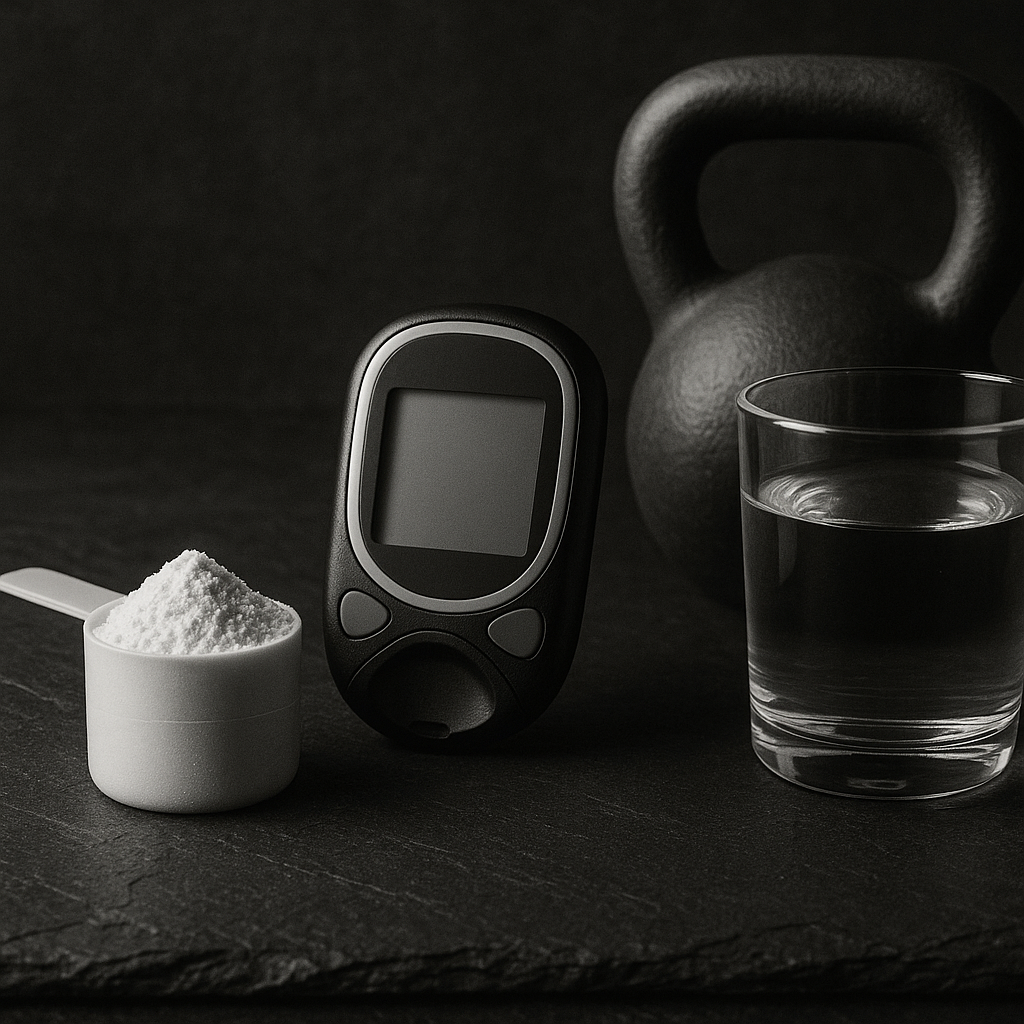
Creatine and Diabetes: Glucose Metabolism and Muscle Health
Can creatine help people with type 2 diabetes train harder, preserve muscle, and support glucose control? We review what the science says about GLUT4, insulin sensitivity, and safety—plus how to talk to your care team in Canada.
Key Takeaways
- Creatine monohydrate is the gold standard; 3–5 g/day is a typical maintenance dose.
- Benefits for glucose control are most evident when creatine is paired with regular exercise.
- Creatine may augment training-induced GLUT4 activity and muscle glycogen handling.
- Maintaining or gaining muscle helps insulin sensitivity and daily glucose management.
- Discuss kidney health, medications, and labs (A1C, eGFR) with your clinician before starting.
- Choose an NPN-licensed creatine product in Canada; consider third-party tested options.
- Timing is flexible; many take creatine with a meal or post-workout to aid consistency.
Why creatine is on the diabetes radar
Creatine monohydrate is best known for improving high‑intensity exercise performance and helping build or maintain lean mass. For people living with type 2 diabetes (T2D), those same effects matter: stronger training sessions, more muscle, and better daily function can support glucose management. The International Society of Sports Nutrition (ISSN) recognizes creatine monohydrate as the gold standard form, with a typical maintenance dose of 3–5 g per day. A short loading phase (e.g., ~20 g/day split into 4 doses for 5–7 days) is optional, not required.
Why might creatine be relevant for glucose health? Two reasons stand out. First, maintaining muscle mass increases the body’s primary sink for glucose disposal. Second, creatine can enhance training quality and may augment exercise‑induced adaptations linked to glucose transporter (GLUT4) activity and muscle glycogen handling. Importantly, creatine is not a treatment for diabetes and does not replace medications, medical nutrition therapy, or physical activity guidelines.
In Canada, creatine is sold as a Natural Health Product; look for an NPN on the label and buy from reputable retailers. If you’re new to creatine, our practical guides cover when to take creatine, the optional loading phase, and choosing quality products in best creatine and the full supplements review.
GLUT4, insulin sensitivity, and where creatine fits
GLUT4 is the primary glucose transporter in skeletal muscle that moves to the cell surface in response to insulin and muscle contractions. Regular exercise increases GLUT4 content and function, improving how muscles take up glucose. Creatine doesn’t act like a diabetes drug; instead, emerging human and mechanistic research suggests it may support the adaptations you earn from training—potentially helping muscles store more glycogen and enhancing the stimulus for GLUT4 translocation when you exercise.
Practically, this means any glucose‑related benefit from creatine is most likely when it is paired with consistent physical activity, especially resistance training and intervals that recruit fast‑twitch fibres. On rest days, creatine continues to saturate muscle phosphocreatine stores so you can hit higher quality reps tomorrow. Athletes and everyday exercisers often notice better set‑to‑set performance, which compounds into more training volume over weeks—one plausible route to better insulin sensitivity.
If you’re starting out, align creatine with the habits that move A1C the most: progressive resistance training (2–3+ days/week), regular walking and movement breaks, and nutritious meals. See our program-friendly primers in guides, and use the creatine calculator if you’d like help planning a loading phase or splitting doses.
What clinical studies in type 2 diabetes suggest
Small randomized trials in adults with T2D suggest creatine, when combined with structured exercise, can improve training performance and may provide modest improvements in glycemic control (e.g., insulin sensitivity indices or A1C) versus exercise alone. While findings are encouraging, sample sizes are limited and results vary; creatine should be viewed as an adjunct to a well-designed program rather than a standalone glucose‑lowering strategy.
On the safety side, a double‑blind trial in T2D reported that creatine supplementation alongside exercise and routine care did not impair kidney function in participants with normal baseline renal labs and medical oversight. This aligns with the ISSN position stand noting strong overall safety data for creatine monohydrate in healthy individuals and clinical populations when used as directed.
Bottom line for Canadians: if you have stable T2D and normal kidney function, creatine appears compatible with supervised training and usual diabetes care. Still, discuss it with your physician or pharmacist, particularly if you take metformin, SGLT2 inhibitors, GLP‑1 receptor agonists, or insulin. Your team can decide on appropriate lab monitoring and help you integrate creatine without disrupting your plan.
Muscle mass, strength, and functional health in T2D
People with T2D face a higher risk of muscle loss (sarcopenia), especially with aging, physical inactivity, or weight‑loss efforts. That matters because lower muscle mass and strength are linked with reduced insulin sensitivity, mobility challenges, and cardiometabolic risk. The most reliable way to counter that trend is progressive resistance training plus adequate protein. Here, creatine is a well‑supported add‑on: meta‑analyses in older adults show that creatine combined with resistance training leads to greater gains in lean mass and strength versus training alone.
Even if you’re not chasing personal records, practical benefits add up: more force on the pedals during brisk walks or cycling, easier stair climbs, and better capacity to perform daily tasks. Those improvements can translate to higher overall activity—another lever for better glycemic control.
If you’re new to lifting, begin with 2–3 sessions per week covering major muscle groups (e.g., leg press or squats, rows, presses, hinges, core). Creatine at 3–5 g/day fits neatly into this plan. For timing ideas and habit stacking, see when to take creatine, and browse starter routines and checklists in our guides.
How to use creatine if you have diabetes
Form: Choose creatine monohydrate. It’s the best‑studied, most affordable option. In Canada, look for an NPN on the label and consider third‑party testing for purity.
- Dose: Maintenance is 3–5 g/day. A loading phase (~20 g/day in 4 divided doses for 5–7 days) can saturate muscles faster but isn’t mandatory. Learn more in our loading guide.
- Timing: Any time works; many take creatine with a meal or post‑workout for convenience. See when to take creatine.
- Hydration: Stay well hydrated, especially if you use SGLT2 inhibitors or train in heat.
- Consistency: Daily intake matters more than timing. If you miss a day, just resume your usual dose.
- With food: Taking creatine with a mixed meal (carbohydrate + protein) may be gentler on the stomach and fits naturally around training.
- Product choice: Our picks in best creatine and full review can help you compare Canadian options.
For personalized dosing help, including whether loading makes sense for your goals, try the calculator. Keep your broader plan front‑and‑centre: resistance training, daily movement, adequate protein, and your prescribed diabetes medicines.
What to discuss with your doctor and pharmacist
Creatine can fit into many diabetes care plans, but coordination with your healthcare team is wise. Bring this checklist to your next visit:
- Kidney health: Share your latest eGFR and urine ACR. Creatine is generally avoided if you have moderate‑to‑severe chronic kidney disease unless a specialist advises otherwise. Note that serum creatinine may rise slightly without indicating harm.
- Medications: Discuss metformin, SGLT2 inhibitors (extra hydration and sick‑day rules), GLP‑1 receptor agonists (GI tolerance), and insulin (monitor for lower training‑day needs).
- Monitoring plan: Agree on when to recheck A1C, fasting lipids, and renal labs after starting creatine (e.g., at your routine follow‑up).
- Training plan: Align creatine with a safe, progressive exercise program. Ask about resistance training clearance if you have complications (e.g., advanced retinopathy, neuropathy, cardiovascular disease).
- Dose & product: Confirm 3–5 g/day creatine monohydrate, choose an NPN‑licensed product, and review any allergies or additives to avoid.
If you’re pregnant, breastfeeding, under 18, or managing active complications, seek individualized advice. For step‑by‑step help implementing creatine and training, see our practical guides.
Creatine + T2D: Fast Facts
- 3–5 g/day Standard maintenance dose of creatine monohydrate
- Monohydrate Gold-standard form with strongest evidence
- With exercise Most consistent glucose and fitness benefits
- NPN on label Indicates a product licensed by Health Canada
- ~1–2% body mass Typical early water-weight uptick in some users
Frequently Asked Questions
Can creatine lower my blood sugar or A1C?
Creatine is not a diabetes medication. In small trials, people with type 2 diabetes who combined creatine with structured exercise saw modest improvements in measures like insulin sensitivity or A1C versus exercise alone. Your core levers remain medication adherence, nutrition, and regular activity.
Is creatine safe to take with metformin, insulin, or SGLT2/GLP-1 therapies?
There are no well-documented harmful interactions, but creatine may help you train harder and could nudge insulin sensitivity upward. Monitor glucose closely, especially around workouts, and discuss it with your clinician—dose adjustments to diabetes meds might be needed with changes in activity.
Will creatine damage my kidneys?
In people with normal kidney function, creatine monohydrate has a strong safety record, and a randomized trial in type 2 diabetes did not find kidney impairment with supervised use. Creatine can raise serum creatinine slightly without indicating harm. If you have kidney disease, seek specialist advice before using it.
Do I need to load creatine if I have diabetes?
No. Loading (about 20 g/day for 5–7 days) saturates muscles faster, but a simple 3–5 g/day routine reaches the same endpoint over a few weeks. Choose the approach you can sustain and coordinate with your care team. See our loading explainer for details.
When should I take creatine for best results?
Timing is flexible. Many people take it with a meal or after workouts to build a consistent routine and reduce stomach upset. What matters most is daily adherence. If you miss a dose, resume your usual schedule—no need to double up.
Will creatine cause low blood sugar during workouts?
Creatine itself doesn’t cause hypoglycemia. However, better training sessions and improved insulin sensitivity can change glucose needs. Check levels before/after activity, carry fast-acting carbs if you use insulin or sulfonylureas, and work with your team on an exercise plan.