Creatine and Crohn's Disease: Energy and Muscle in IBD
Crohn’s disease can drain energy and erode lean muscle. Creatine supports cellular energy and strength—but what about gut tolerability? Here’s what the (limited) research says, how to dose 3–5 g/day without loading, and how Canadians with IBD can choose a gentler creatine.
Key Takeaways
- For IBD, skip loading; start at 1 g/day and build to 3–5 g/day as tolerated.
- Creatine monohydrate is the gold standard; choose micronized powder or capsules.
- Take creatine with meals and split doses to reduce GI upset.
- Evidence in Crohn’s is limited; benefits are best established for muscle and strength, not inflammation.
- Pause during severe diarrhea or dehydration and resume in remission.
- Buy Canadian NPN‑licensed creatine and consider third‑party tested Creapure.
- Discuss use with your GI team, especially if you have kidney concerns.
Why creatine is on the radar in Crohn’s disease
Living with Crohn’s often means battling fatigue, unintentional weight loss, and loss of lean muscle. Inflammation, reduced appetite, steroid use, and malabsorption can all chip away at strength and function—making everyday activities, rehab, and sport harder. Creatine isn’t a cure for IBD, but it’s one of the most studied supplements for supporting cellular energy and muscle performance.
Creatine works by topping up phosphocreatine in muscle and other tissues, buffering short bursts of energy (think climbing stairs, lifting groceries, or resistance training). The International Society of Sports Nutrition (ISSN) identifies creatine monohydrate as the gold standard, with strong evidence for strength and modest lean mass gains when paired with training. Typical maintenance is 3–5 g/day.
For Canadians with Crohn’s, two practical questions drive the decision: can creatine help protect or rebuild muscle, and will it upset a sensitive gut? This guide summarizes what the limited research suggests, how to dose for GI comfort, and how to choose a gentler creatine form. If you’re new to timing and dosing, our quick primers can help: When to Take Creatine, Creatine Loading (and Why You Might Skip It), and our at‑a‑glance Guides.
What the research actually shows
First, the caveat: there are no robust, long‑term randomized trials of creatine in Crohn’s disease. Most high‑quality evidence for creatine addresses exercise performance, strength, and lean mass in generally healthy or clinical populations outside of IBD. That said, creatine’s core biology—supporting ATP regeneration and cellular energy—has led researchers to explore potential roles beyond sport.
Preclinical work and broad reviews of creatine biology suggest it may influence cellular energetics, oxidative stress, and membrane stability—factors that are relevant to barrier tissues like the gut. A comprehensive review of creatine’s pleiotropic effects discusses these mechanisms across health and disease contexts, though not specific to Crohn’s outcomes. Importantly, this is hypothesis‑generating, not proof of clinical benefit for IBD symptoms or remission.
Practically, that means Canadians with Crohn’s can consider creatine as a muscle and performance support tool—especially during resistance training—while recognizing the evidence for anti‑inflammatory benefits in IBD is preliminary. Safety data for monohydrate at 3–5 g/day is strong in diverse populations per ISSN. As always, coordinate with your GI team and a registered dietitian, prioritize disease control, and use creatine as one piece of a broader plan that includes nutrition and training.
GI tolerability: dosing strategies for sensitive guts
Creatine is generally well tolerated, but large single doses or aggressive loading can cause bloating or loose stools in some people. If you live with Crohn’s, a gentle, stepwise approach can help you gauge tolerance without flaring GI symptoms.
- Skip the loading phase. You can reach full muscle saturation over ~3–4 weeks on maintenance alone. See why in our loading explainer.
- Start low, go slow. Begin with 1 g/day with a meal for 3–4 days. If comfortable, add 0.5–1 g every few days up to 3–5 g/day.
- Split the dose. Try 1–2 small servings (e.g., 1.5–2.5 g with breakfast and dinner) rather than one bolus.
- Pair with food. Taking creatine with meals—especially those containing carbs and protein—can improve comfort and uptake.
- Hydrate. Aim for steady fluids across the day. During active diarrhea, consider pausing until you’re stable and rehydrated.
- Time flexibly. Consistency matters more than clock time. If curious, see When to Take Creatine.
If repeated tries still cause GI discomfort, consider micronized creatine monohydrate or capsules instead of a gritty powder. And if you’re in a flare with significant diarrhea, press pause—your priority is disease control and hydration.
Choosing a creatine form for IBD
The simplest choice is still the best: creatine monohydrate. It’s the most studied, effective, and cost‑efficient form. For sensitive digestions, consider the following when comparing products:
- Micronized monohydrate: Finer particles can mix better in water and may feel easier on the stomach.
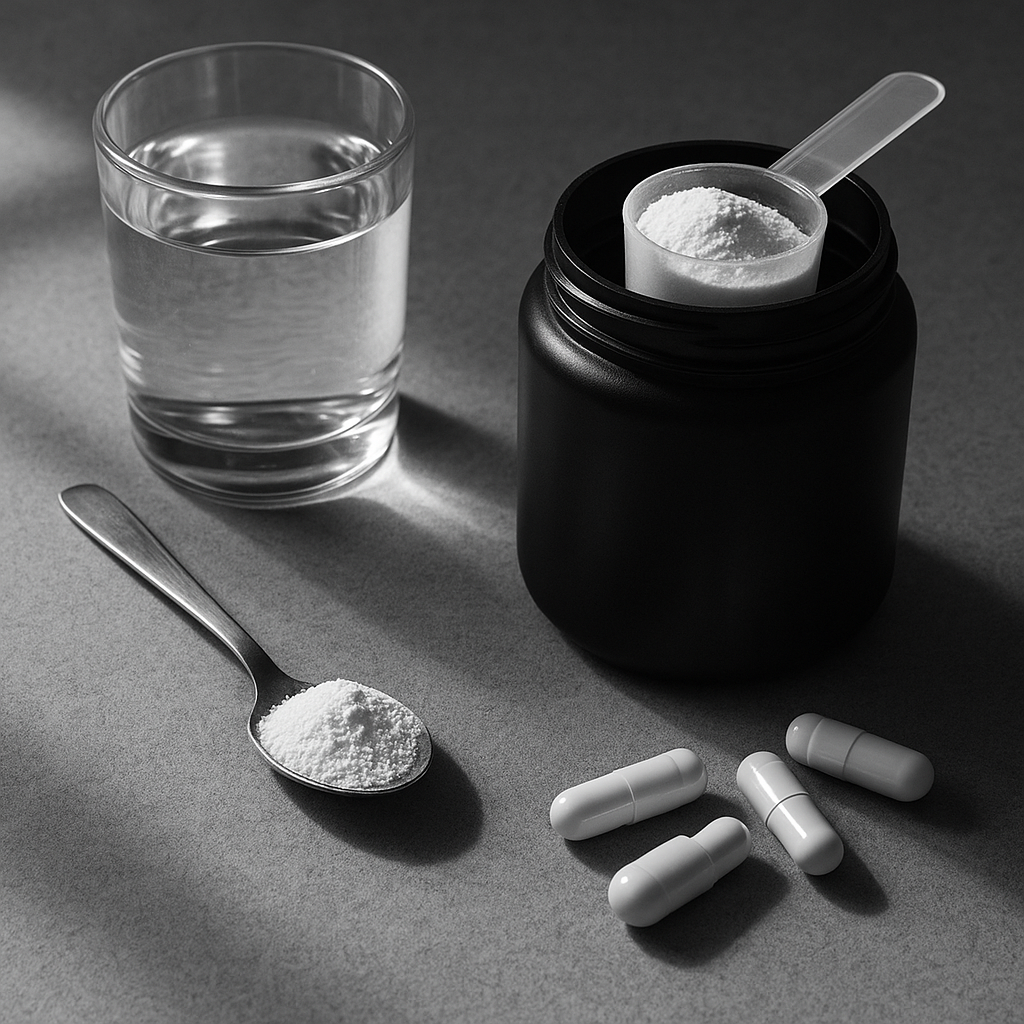
- Capsules vs powder: Capsules (often vegetable‑based/HPMC) can simplify dosing and reduce grittiness; powders are more economical.
- Minimal ingredients: Look for a clean label—ideally just creatine monohydrate. Avoid unnecessary sweeteners, dyes, or multi‑stimulant blends.
- Creapure option: Some products use Creapure (a German‑made monohydrate known for purity). Not required, but a quality signal.
- Evidence check: Variants like creatine HCl or “buffered” creatine aren’t proven superior to monohydrate for outcomes that matter. Stick with what’s supported.
- Canadian compliance: In Canada, look for an NPN (Natural Product Number) on the label. You can verify it in the Licensed Natural Health Products Database.
To see our favourites and how we rate purity, price, and pill vs powder, explore Best Creatine in Canada and our in‑depth Creatine Supplements Review.
Safety, medications, and a Canadian checklist
At typical intakes of 3–5 g/day, creatine monohydrate is broadly considered safe for healthy adults per the ISSN. For Crohn’s disease, add a few extra checks:
- Kidney health: If you have a history of kidney disease or reduced kidney function, discuss creatine and monitoring with your care team before starting.
- Medications: No well‑documented interactions with common IBD therapies (e.g., mesalamine, biologics) are established, but always confirm with your pharmacist or GI specialist.
- Hydration status: Creatine draws water into muscle. During severe diarrhea or vomiting, pause supplementation until rehydrated and stable.
- Stop‑rules: New, persistent GI cramping, worsening diarrhea, or any unusual symptoms—stop and reassess with your clinician.
- Quality: Choose a product with an NPN and, if possible, third‑party testing. Minimal additives are a plus for sensitive guts.
- Dose planning: Use our simple Creatine Calculator to map a low‑and‑slow ramp to 3–5 g/day without loading.
Remember: creatine complements but cannot replace medical therapy, nutrition support, or iron/B12 repletion when needed. Keep your GI team looped in, especially around flares, procedures, or changes in kidney labs.
Pairing creatine with training and nutrition
Creatine works best when paired with a smart plan to rebuild or maintain muscle. In remission or stable phases, consider a gentle progression of resistance training (e.g., 2–3 sessions/week focusing on major muscle groups) guided by a physiotherapist or qualified trainer. Small, consistent steps beat sporadic hard pushes—especially with fatigue.
- Protein pattern: Anchor meals with quality protein sources and distribute intake across the day to support muscle protein synthesis. A registered dietitian can tailor targets to your tolerance and disease activity.
- Carb support: Carbs help fuel training and may aid creatine uptake. Choose tolerated options (e.g., rice, oats, potatoes, ripe bananas) and adjust fibre during flares.
- Electrolytes & fluids: Hydration matters for performance and GI comfort. Consider an electrolyte beverage on heavier training days.
- Recovery: Sleep and stress management are essential. In IBD, training should flex around disease activity—more volume in remission, maintenance during sensitive stretches.
Looking for a primer on timing and routines? Start with When to Take Creatine and browse our practical Guides. Layer creatine (3–5 g/day), consistent training, and dietitian‑guided nutrition to tip the balance back toward strength.
Creatine for IBD: Quick Facts
- 3–5 g/day Evidence‑based maintenance dose for most adults
- No loading needed Reach saturation in ~3–4 weeks without a loading phase
- Monohydrate Gold‑standard form with strongest safety and efficacy data
- With meals Pairing creatine with food may improve GI comfort
Frequently Asked Questions
Is creatine safe if I have Crohn’s disease?
Creatine monohydrate at 3–5 g/day is widely considered safe for healthy adults, and there’s no evidence it worsens IBD. Human trials specifically in Crohn’s are limited, so discuss with your GI team—especially if you have kidney concerns or are in an active flare.
Will creatine worsen diarrhea or cause cramping?
High single doses can cause GI discomfort in some people. To reduce risk, skip loading, start at 1 g/day, take it with meals, and split the dose. If you’re experiencing severe diarrhea or dehydration, pause until you’re stable.
Should I do a creatine loading phase with IBD?
No. Loading isn’t necessary and can increase the chance of GI upset. A steady 3–5 g/day reaches similar muscle saturation over a few weeks with better tolerability.
Does creatine interact with mesalamine, steroids, or biologics?
There are no well‑documented interactions with common IBD medications. Still, coordination with your pharmacist and GI specialist is prudent, and kidney function should be considered on an individual basis.
Which creatine form is best for a sensitive gut?
Creatine monohydrate remains the best‑supported choice. Consider micronized powder or capsules, and choose products with an NPN and minimal additives. Alternatives like HCl aren’t proven superior for outcomes that matter.