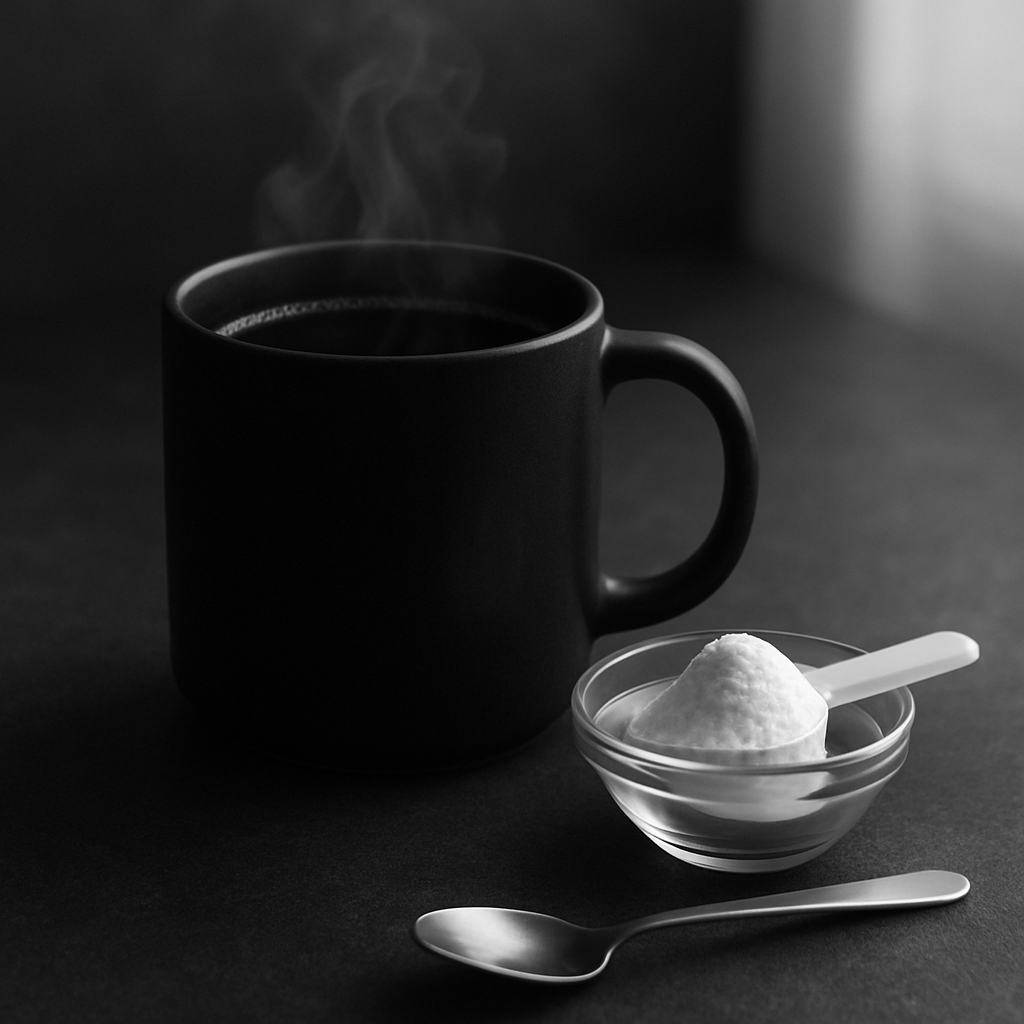
Creatine and Coffee: Can You Mix Them?
Heard that coffee cancels creatine—or that hot drinks destroy it? Here’s what an older study really found, what today’s consensus says, and a simple, barista-proof way to mix creatine into your morning cup without losing benefits.
Key Takeaways
- Creatine monohydrate (3–5 g/day) remains the gold standard; coffee doesn’t cancel it for most people.
- One small 1990s study suggested interference; broader evidence and position stands do not show a consistent negative interaction.
- Hot coffee won’t meaningfully degrade creatine if you mix and drink shortly after.
- If you’re cautious, separate caffeine and workouts while taking creatine anytime daily to maintain saturation.
- Use unflavoured creatine monohydrate; dissolve in a little warm water first for a smoother coffee mix.
- Aim for total daily caffeine within Health Canada’s guidance (generally ≤400 mg for healthy adults).
- Track how you feel. If GI upset occurs, reduce coffee strength, split doses, or take creatine with food.
Why this question keeps coming up
Creatine and coffee are two of the most-used performance aids on Canadian gym floors and in rinks. Creatine monohydrate is backed by decades of research for strength, power, and lean mass when taken consistently at 3–5 g/day. Coffee’s caffeine can sharpen alertness and perceived effort. Put them together, and a long-standing debate pops up: does caffeine cancel creatine?
The concern traces back to an older, small study that hinted at interference when caffeine was taken during a short creatine-loading protocol. Since then, a much larger body of work—including position stands—has found no consistent, real-world blunting of creatine’s benefits from caffeine or coffee for most people. That’s good news for morning-coffee loyalists.
Another persistent myth is that hot drinks destroy creatine. Chemistry matters here: creatine can slowly convert to creatinine in solution, especially at high heat and over long periods. But mixing into a hot beverage and drinking promptly doesn’t meaningfully reduce its effectiveness.
Below, we break down the science, clear up the heat-stability myth, and give a practical, step-by-step guide to mixing creatine with your morning brew—plus timing tips and Health Canada caffeine guidance. If you’re new to dosing, our creatine tools and guides can help: see Creatine Calculator, When to Take Creatine, and the Loading Phase explainer.
What the science says on caffeine + creatine
The idea that caffeine negates creatine largely stems from one 1990s study in which participants loaded creatine and consumed caffeine during testing. Results suggested impaired muscle relaxation benefits under that specific protocol. Mechanisms proposed included opposing effects on muscle relaxation time or mild GI distress from combining both.
Since then, broader evidence and consensus statements have emphasized that creatine’s primary benefits come from consistent saturation of muscle stores—not from any acute timing trick. The International Society of Sports Nutrition (ISSN) position stand affirms creatine monohydrate’s safety and efficacy with typical maintenance at 3–5 g/day, without a prohibition on caffeine. A more recent JISSN review on common creatine questions likewise notes no clear, consistent evidence that caffeine meaningfully blunts creatine’s ergogenic effects across studies.
Practically, many athletes use both successfully. If you want to be cautious, avoid taking caffeine and creatine together immediately before testing sessions that rely on subtle measures like muscle relaxation time. For everyday training, the simplest plan is: keep creatine daily (anytime that fits your routine) and use caffeine strategically around key workouts.
- Bottom line: One older study raised a flag; the current weight of evidence does not support a general “coffee cancels creatine” rule.
Hot coffee and creatine stability
Does heat destroy creatine? Not in any practical sense for your morning mug. Creatine monohydrate is more stable as a dry powder and will slowly convert to creatinine once dissolved—faster with very high temperatures, low pH, and long standing times. But a typical cup of hot coffee (even near brewing temperature) mixed and consumed within a short window won’t meaningfully degrade your 3–5 g dose.
Key points to keep in mind:
- Mix and drink soon: Add creatine to your hot drink and consume within a reasonable timeframe rather than letting it sit for hours.
- Warm helps dissolve: Creatine dissolves better in warm liquids. Many people pre-dissolve in a small amount of warm water, then top up with coffee to avoid grit.
- Coffee acidity: Coffee is mildly acidic, but that alone doesn’t instantly degrade creatine. Time-in-solution is the bigger factor.
If you prefer iced coffee, you can also shake creatine into cold brew; it may take more agitation to dissolve. For more on forms and quality, see our Canadian-focused picks and testing notes in Best Creatine and our Creatine Supplements Review.
How to mix creatine into coffee
Here’s a simple, barista-proof method that preserves effectiveness and tastes fine in most brews.
- Choose the right form: Use creatine monohydrate, unflavoured. It’s the gold standard for efficacy, value, and availability in Canada.
- Measure your dose: Maintenance is typically 3–5 g once daily. If you’re loading (optional), see our step-by-step at Creatine Loading Phase.
- Pre-dissolve: Stir your creatine into 50–100 mL of warm water until mostly dissolved. This reduces grit and clumps.
- Combine with coffee: Pour into your hot coffee, stir 10–20 seconds. Add milk or a non-dairy option if you like; it doesn’t hinder creatine.
- Drink soon: Enjoy within the next few minutes—no need to rush, just avoid letting it sit for hours.
- Adjust strength if needed: If you notice GI upset, use a milder brew, add more fluid, or take creatine with breakfast instead.
Pro tip: If texture still bugs you, a small handheld frother or shaker bottle (vent lid for hot liquids) can fully disperse the powder. For dosing help and body-mass-based estimates, try our Creatine Calculator.
Timing coffee, creatine, and training
Creatine works by saturating muscle over days to weeks, not by a precise pre-workout spike. That’s why the ISSN supports taking it at any time of day that you can stick with, typically 3–5 g/day. Coffee (caffeine) is different: it’s acute. Most people feel it best when taken 30–60 minutes before key sessions.
- Everyday plan: Take creatine at a consistent time (morning coffee works great). Use coffee/caffeine around important workouts as desired.
- Cautious plan: If you want to respect the older study’s concern, separate caffeine from creatine or from test-day warm-ups by 1–2 hours. You’ll still maintain creatine saturation.
- GI and hydration: Combining strong coffee and a new creatine routine can unsettle some stomachs. Start with lower caffeine, take creatine with food, and hydrate. Creatine does not cause dehydration; habitual caffeine users show minimal diuretic effect during training.
For deeper timing nuances and whether to dose pre- or post-workout, see When to Take Creatine and our practical Guides.
Canadian context: safety and quality
For Canadians, the main priorities are dose, form, and product quality—more than fine-grained timing with coffee.
- Form and dose: Choose creatine monohydrate. Maintain at 3–5 g/day. A short loading phase (about 0.3 g/kg/day split doses for 5–7 days) is optional if you want faster saturation.
- Caffeine guidance: Health Canada generally cites up to 400 mg/day caffeine for healthy adults (lower for pregnancy or youth). Track total intake from coffee, tea, energy drinks, and pre-workouts.
- Quality checks: Look for clear labels, lot numbers, and—ideally—third-party testing. In Canada, many reputable monohydrate powders are available; avoid proprietary blends that obscure dose.
- Sport compliance: Creatine is permitted by sport bodies. If you compete under anti-doping rules, choose products with third-party certifications to reduce contamination risk.
Need help choosing? We maintain up-to-date picks and testing notes in Best Creatine and our hands-on Creatine Supplements Review. If you’re changing caffeine habits or have health conditions, consult your clinician or a Canadian dietitian for tailored advice.
Creatine + Coffee Quick Facts
- 3–5 g/day Creatine monohydrate maintenance dose (ISSN-supported)
- ≤400 mg/day General adult caffeine guidance (Health Canada)
- Anytime Creatine works via saturation—dose when you’ll remember
- Hot cup OK Mix and drink soon; heat alone won’t ruin creatine
- Monohydrate Gold standard form for efficacy and value
Frequently Asked Questions
Does coffee or caffeine cancel out creatine?
Not in a consistent, practical way for most people. An older, small study suggested interference under a specific protocol, but broader evidence and expert position stands do not show a general negative interaction. The key is taking creatine daily to keep muscles saturated.
Will hot coffee destroy creatine or turn it into creatinine?
Creatine can slowly degrade in solution—faster with high heat, acidity, and long standing times. But mixing into a hot beverage and drinking soon after won’t meaningfully reduce your dose. Pre-dissolving in a little warm water can improve texture.
What’s the best time to take creatine if I drink coffee every morning?
Any time you’ll remember is best. Many people take 3–5 g with their morning coffee. If you’re cautious about the old study, separate caffeine and creatine by 1–2 hours, especially before key tests. You’ll still maintain saturation and benefits.
Can creatine plus coffee cause dehydration or cramps?
Creatine does not cause dehydration and may increase total body water. Caffeine can be mildly diuretic, but habitual users show little fluid loss during exercise. Stay hydrated as usual, and adjust coffee strength if you notice GI discomfort.
Is creatine with milk or cream in coffee okay?
Yes. Dairy or non-dairy creamers don’t reduce creatine’s effectiveness. If anything, a bit of extra fluid and food can make the combo gentler on your stomach.
Should I load creatine if I’m already drinking coffee daily?
Loading is optional. If you want faster saturation, you can load for 5–7 days, then maintain at 3–5 g/day. Coffee doesn’t change that plan—just keep daily intake consistent.