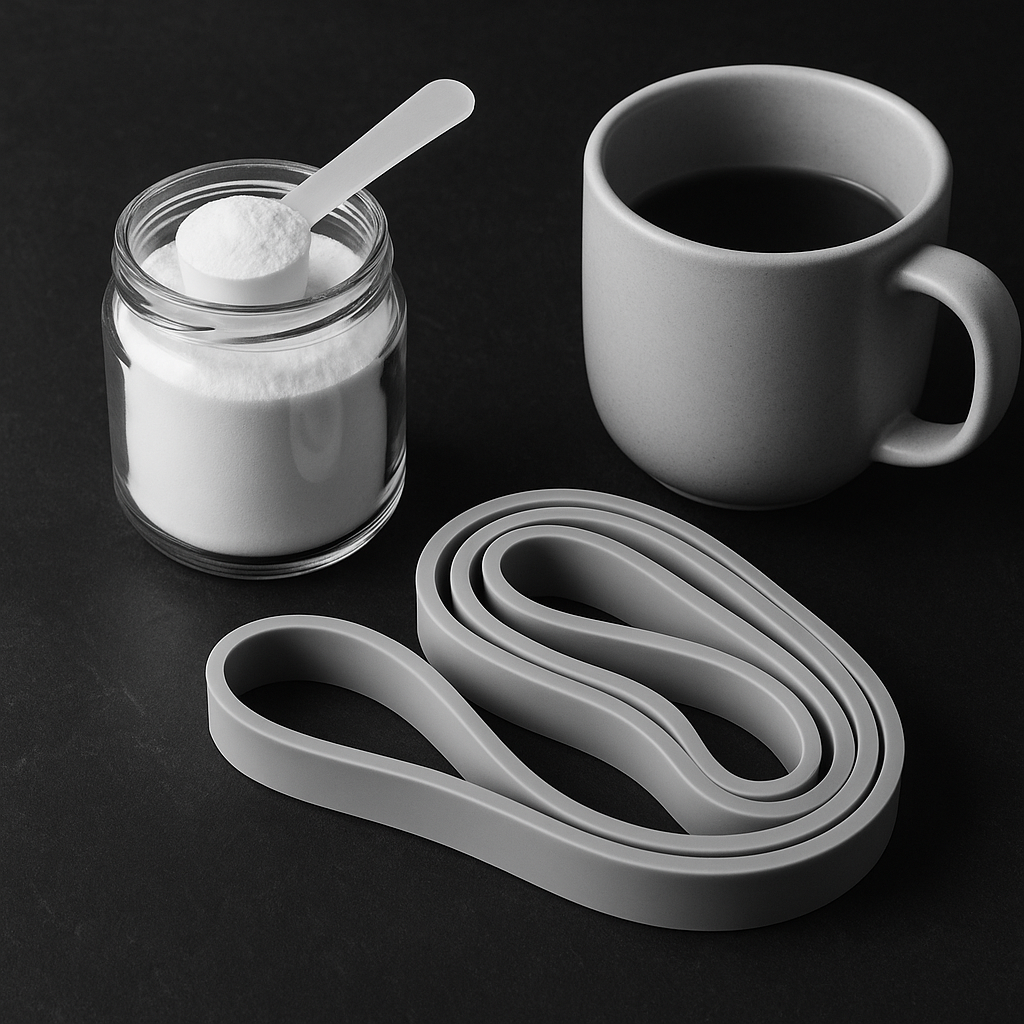
Creatine and Arthritis: Can It Help Muscle Without Hurting Joints?
Arthritis often shrinks activity levels and erodes muscle — but does creatine help rebuild strength without flaring joints? We unpack what research shows for rheumatoid and osteoarthritis, how to take creatine safely, and what Canadians should discuss with their care team.
Key Takeaways
- Creatine monohydrate is the gold standard; 3–5 g/day supports strength when paired with training.
- Direct RA/OA trials are limited; strongest evidence is in older adults where creatine plus resistance training improves strength and lean mass.
- No evidence creatine worsens joint pain or swelling; it draws water into muscle, not joints.
- If you have kidney disease or take nephrotoxic meds, speak with your rheumatology/primary care team before using creatine.
- Loading (20 g/day for 5–7 days) is optional; a steady 3–5 g/day reaches the same muscle levels over several weeks.
- Prioritize low-impact strength work 2–3 days/week; creatine works best with consistent training.
- Choose simple, third‑party tested creatine monohydrate from Canadian retailers; look for clear dosing and, when applicable, an NPN.
Why arthritis patients consider creatine
Arthritis changes how we move. In rheumatoid arthritis (RA), inflammation and fatigue can limit training time. In osteoarthritis (OA), pain often trims back walking and strength work. Over time, that reduced activity chips away at muscle, making daily tasks—stairs, groceries, standing from a chair—feel harder. That’s where creatine enters the conversation: it helps muscles recycle energy for short, repeated efforts, and it can support gains from resistance training.
For most adults, the evidence-based approach is creatine monohydrate at 3–5 g per day. An optional loading phase (about 20 g/day in 4 doses for 5–7 days) saturates muscles faster, but a steady daily dose reaches the same destination in a few weeks. The International Society of Sports Nutrition (ISSN) identifies creatine monohydrate as the gold standard for efficacy and safety.
For Canadians, practical steps matter: choose a simple, single-ingredient powder from a trusted retailer, look for clear labeling (some products display a Natural Product Number, or NPN), and pair your supplement with a joint-friendly plan. If you’re brand-shopping, see our guides to formulations and value at Best Creatine in Canada and our in-depth Creatine Supplements Review. And if timing or loading is on your mind, our quick reads When to Take Creatine and Creatine Loading Phase can help you decide.
What the evidence says on inflammation and arthritis
Does creatine calm inflammation—or could it irritate already sore joints? The direct research in RA and OA is still limited. Most of what we know comes from broader creatine science in athletes and older adults: creatine reliably improves high‑intensity exercise performance and, with resistance training, adds lean mass and strength. A stronger muscle system can offload stressed joints and make activities less painful.
On the inflammatory side, several studies in exercise contexts suggest creatine may attenuate some markers of muscle damage and stress after hard efforts. There are also mechanistic clues—such as improved cellular energy buffering and cell hydration—that could support healthier muscle function under inflammatory conditions. However, these findings don’t translate 1:1 to autoimmune activity in RA or cartilage changes in OA, so we should avoid overpromising.
Bottom line: creatine is not an arthritis medication and won’t replace disease‑modifying therapies or targeted pain management. But by helping you train a bit better and recover a bit more, it can be a useful adjunct to a program that already includes evidence‑based exercise, sleep, and medical care. If you’re optimizing your routine, our curated starting points live in Creatine.ca Guides.
Older adults, muscle function, and the joint health context
Even without arthritis, aging brings gradual losses in muscle mass and power. Multiple human trials show that older adults who combine creatine monohydrate with progressive resistance training gain more strength and lean mass than training alone. Those improvements can translate into meaningful function: easier chair stands, better grip, and more confident walking pace—capacities that matter if you’re managing OA or flares in RA.
While relatively few trials enroll people with physician‑diagnosed arthritis specifically, the logic is practical. Stronger quadriceps can stabilize the knee; better glute strength can ease hip and back workload; and small increases in power often make daily tasks feel safer. None of this turns creatine into a painkiller, but it does underline why a muscle‑first strategy is worth pursuing alongside your rheumatology plan.
If you’re new to strength work, start light and progress gradually. Many Canadians benefit from a few sessions with a physiotherapist or certified exercise professional, especially after joint injections or surgery. Pair this with a simple regimen—3–5 g creatine daily—and track outcomes you care about (stairs, walking time, pain ratings). Our Creatine Dose Calculator can help you personalize dosing within standard ranges.
Safety, kidneys, meds, and what Canadians should know
Creatine monohydrate has one of the strongest safety profiles in sports nutrition when used as directed. The ISSN reports that healthy individuals taking recommended doses show no harmful effects on kidney, liver, or cardiovascular markers in long‑term studies. That said, arthritis care often includes medications and comorbidities that deserve extra caution.
- Kidney health: If you have known kidney disease, past abnormal kidney labs, or take medications that affect the kidneys, consult your rheumatology/primary care team before starting creatine. Creatine can raise serum creatinine (a lab marker) without indicating damage, which can be confusing on paper.
- Medications: There are no well‑documented interactions between creatine and common RA/OA drugs (e.g., methotrexate, biologics, NSAIDs). Still, individual risk varies—coordinate with your pharmacist and clinicians.
- Joints and swelling: Creatine pulls water into muscle, not joints. There’s no evidence it worsens synovitis or OA swelling. Minor weight gain (often 0.5–1.5 kg) reflects increased muscle and water within muscle.
- Quality matters: Choose plain creatine monohydrate with third‑party testing. In Canada, buy from reputable retailers and look for transparent labels; some products display a Natural Product Number (NPN), indicating Health Canada authorization for sale as a natural health product.
If GI upset occurs, split your dose (e.g., 2 × 2 g), take with a meal, and stay hydrated. For a deeper dive on forms and brands, see Best Creatine and our Supplement Reviews.
How to use creatine if you have RA or OA
You don’t need a complicated protocol. Most people do well with 3–5 g creatine monohydrate daily, stirred into water, tea, or a smoothie. A loading phase—20 g/day in 4 divided doses for 5–7 days—is optional and may be less comfortable for those prone to GI upset; the slow‑and‑steady route reaches the same muscle levels in ~3–4 weeks.
- Timing: Take it when it’s easiest to remember. Some prefer alongside a meal or post‑workout, but total daily intake is what matters most. See When to Take Creatine for nuance.
- Consistency: Miss a day? Resume your usual dose—no need to “double up.”
- Pair with training: Creatine’s benefits show up when you regularly perform strength work. Even 2–3 short sessions/week can help.
- Hydration and electrolytes: Aim for steady fluid intake, especially around exercise.
- Form and flavour: Choose unflavoured monohydrate; avoid multi‑ingredient “preworkouts” if you’re monitoring blood pressure, sleep, or drug interactions.
Unsure about exact dosing for your body mass or whether to load? Use our simple dose calculator and skim our Loading Guide to pick a plan that suits your stomach and schedule.
A joint-friendly training blueprint to make creatine count
Creatine amplifies the returns you get from training, so your plan should be arthritis‑savvy and sustainable. Here’s a practical week to discuss with your clinician or physiotherapist:
- 2–3 strength sessions (20–35 min): Focus on major muscle groups with joint‑friendly moves: sit‑to‑stands or box squats, step‑ups, hip hinges, wall or incline push‑ups, rows, and calf raises. Use light to moderate loads and a smooth tempo. Progress by small steps—more reps, a thicker band, or a few extra kilograms.
- 2–4 low‑impact cardio sessions (15–30 min): Walking on forgiving surfaces, cycling, swimming, or pool walking can build capacity without excessive joint stress.
- Daily mobility and heat: Gentle range‑of‑motion work, plus heat before and ice after as needed.
- Flare strategy: On higher‑pain days, keep the habit (lighter sets, shorter walks), then resume progression when symptoms settle.
Major guidelines (e.g., the Osteoarthritis Research Society International and Arthritis Society Canada) encourage regular exercise as a core therapy. Pair that with 3–5 g/day creatine and patient pacing, and you’ll give yourself the best chance to build muscle without aggravating joints. For step‑by‑step help, browse our practical Guides.
Creatine + Joint-Friendly Training at a Glance
- 3–5 g/day ISSN-supported maintenance dose of creatine monohydrate
- 20 g/day × 5–7 d Optional loading phase (split into 4 doses/day)
- 5–15% Typical extra strength/power gains with training + creatine (ISSN)
- 2–3x/week Practical target for resistance training sessions in OA/RA programs
Frequently Asked Questions
Will creatine make my joints swell or worsen arthritis pain?
There’s no evidence that creatine increases joint swelling or worsens RA/OA symptoms. Creatine draws water into muscle cells—not into joints. Some people notice small, normal weight increases from muscle and intracellular water. If a new or unusual flare occurs, pause and speak with your care team.
Can I take creatine with methotrexate, biologics, or NSAIDs?
No strong drug interactions with creatine are established, but arthritis medications and comorbidities vary. If you use methotrexate, biologics, or frequent NSAIDs—or have had kidney or liver lab abnormalities—discuss creatine with your rheumatologist or pharmacist and consider monitoring labs after starting.
Is creatine safe for kidneys?
Research in healthy adults using recommended doses shows no harm to kidney function. Creatine can raise serum creatinine (a lab marker) without indicating damage. If you have kidney disease, diabetes with kidney involvement, or take nephrotoxic drugs, get personalized medical advice before using creatine.
Do I need to load creatine, or is a small daily dose enough?
Loading (about 20 g/day for 5–7 days) saturates muscles faster, but a steady 3–5 g/day reaches similar levels in 3–4 weeks. Many people with arthritis prefer the steady approach for GI comfort. Choose the method you’ll stick with consistently.
What type of creatine is best for arthritis?
Plain creatine monohydrate has the best evidence for efficacy and safety. Fancy forms are pricier without proven advantages. Look for a reputable Canadian retailer, third‑party testing, and clear dosing. Powder is easy to measure and mix into food or drinks.
Should I cycle off creatine?
There’s no evidence that healthy users need to cycle off. If you pause, muscle creatine gradually returns to baseline over weeks. People sometimes stop temporarily during medical workups to avoid confusing creatinine-based lab interpretations—ask your clinician what’s best for you.