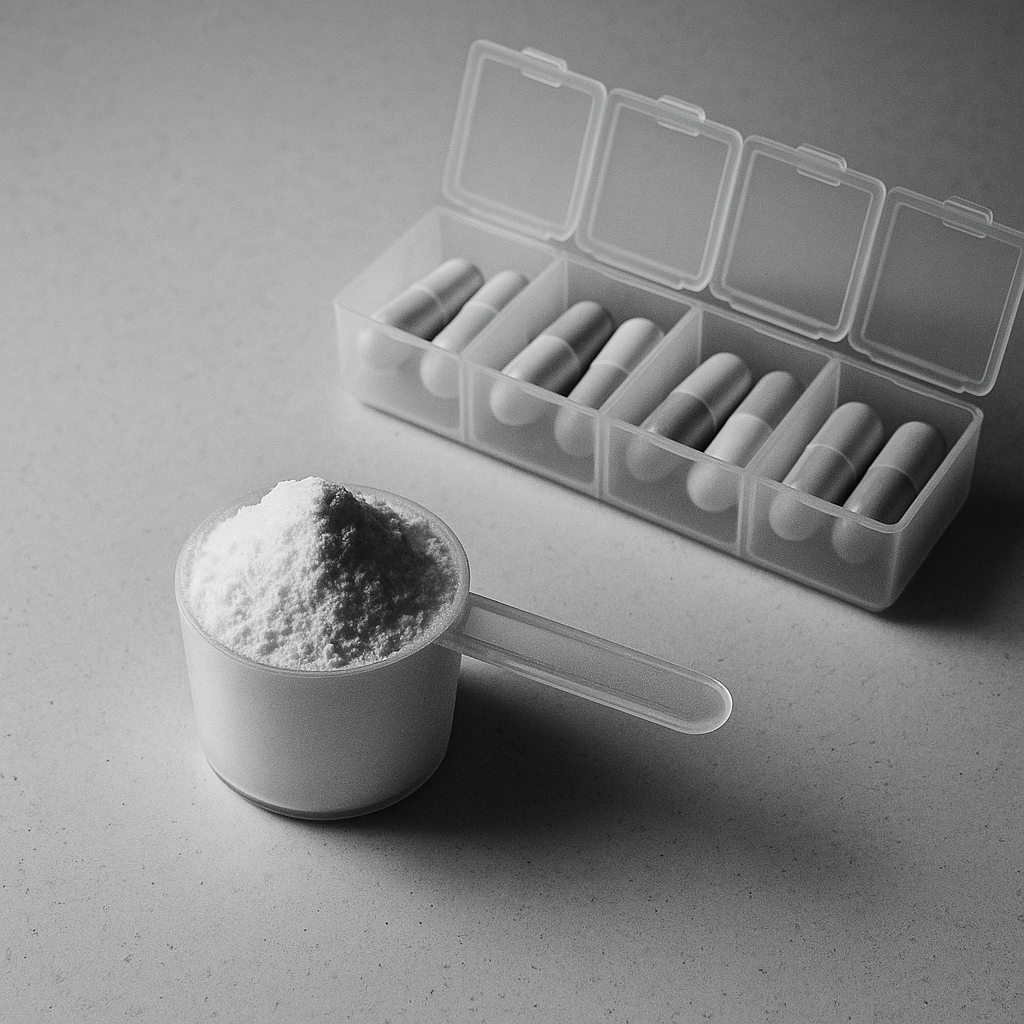
Creatine and Antidepressants: Can You Take Both?
Wondering if creatine can be taken with an SSRI or SNRI? The short answer: there’s no known serotonergic interaction, and early research suggests creatine may even help as an adjunct in depression. Here’s what the evidence and Canadian safety guidance say.
Key Takeaways
- No known direct interaction between creatine and SSRIs/SNRIs; creatine is not serotonergic.
- Small trials suggest 5 g/day creatine may speed antidepressant response in some people, but evidence is preliminary.
- Creatine monohydrate remains the gold standard; maintenance is typically 3–5 g/day.
- Discuss creatine with your prescriber; share your dose, brand, and any kidney or sodium concerns.
- Creatine can slightly raise serum creatinine without harming kidneys; interpret labs in context.
- If you have kidney disease, are older, or take diuretics/NSAIDs, ask about basic labs and hydration.
- Choose licensed Canadian products (NPN), and time creatine whenever it fits your routine.
The short answer: Can you take creatine with SSRIs or SNRIs?
If you take an SSRI or SNRI (for example, sertraline, escitalopram, venlafaxine, or duloxetine) and are considering creatine, the big picture is reassuring. Creatine is not a serotonergic compound and has no known direct pharmacodynamic interaction with SSRIs or SNRIs. In healthy adults, standard doses of creatine monohydrate are generally well tolerated, and major sports nutrition groups continue to support its safety profile.
Early clinical research has even explored creatine as an adjunct to antidepressants. While the evidence is still limited and not yet a standard of care, small trials suggest creatine may help accelerate symptom improvement for some people on SSRIs.
That said, safety is personal. If you have kidney disease, take medications that affect kidney function (e.g., frequent NSAID use), or are at risk for low sodium (hyponatremia)—which can occur with SSRIs in some older adults—discuss creatine with your prescriber first. A baseline check of kidney function and electrolytes can be sensible for higher-risk individuals.
For most healthy users, a maintenance dose of 3–5 g/day of creatine monohydrate is the evidence-based standard. You don’t need to coordinate it with your antidepressant dose; take it whenever you’re most consistent. For more on timing and optional loading, see our guides: When to Take Creatine and Creatine Loading Phase.
Why creatine might support mood and antidepressant response
Creatine’s best-known role is in muscles, but your brain also relies on the phosphocreatine system to buffer energy (ATP) during high demand. Depression has been linked to alterations in brain energy metabolism in some studies. By supporting phosphocreatine stores, creatine may help normalize cellular energy handling in regions tied to mood and motivation.
Unlike antidepressants, creatine doesn’t act on serotonin or norepinephrine receptors. Instead, its potential mood effects are thought to stem from improving neuronal energy availability and possibly influencing neuroplasticity through downstream pathways. Magnetic resonance spectroscopy studies have observed changes in brain high-energy phosphates with creatine use, aligning with this mechanism-based hypothesis.
What does this mean practically? If creatine contributes to more efficient brain energy metabolism, it could, in theory, complement SSRI/SNRI mechanisms—helping some individuals experience improvements a bit sooner or more robustly. But mechanisms aren’t guarantees. The current human evidence is promising yet preliminary, and creatine should be viewed as a possible adjunct, not a replacement for established depression treatments, psychotherapy, or lifestyle supports like sleep, activity, and nutrition.
For a broader primer on how creatine works, see our foundational guides: Creatine Guides, plus our picks for quality products in Best Creatine and our in-depth Creatine Supplements Review.
What the research says about creatine with SSRIs/SNRIs
The most cited clinical data come from small randomized and pilot studies evaluating creatine as an add-on to SSRI therapy. In one double-blind, placebo-controlled trial in women with major depressive disorder taking an SSRI, 5 g/day creatine monohydrate was associated with faster symptom improvement compared with placebo. Other small trials and open-label studies suggest potential benefits as augmentation, though sample sizes are modest and not all populations (e.g., men, older adults) are well represented.
Systematic reviews note that the signal is encouraging but that the evidence base remains limited: few trials, short durations, sex-specific samples in some cases, and heterogeneity in methods. As of today, major depression guidelines do not list creatine as a standard augmentation strategy. More large, diverse, and longer-term randomized trials are needed before routine clinical recommendations can be made.
Safety signals in these studies have generally been similar to creatine’s well-characterized profile in sports contexts—mostly mild gastrointestinal symptoms in some users. Importantly, no serotonergic adverse interaction has been identified. If you and your clinician decide to try creatine, agree on a time-limited trial (e.g., 8–12 weeks) with clear goals and monitoring, and continue all prescribed treatments unless advised otherwise.
Safety, side effects, and interaction checklist
Creatine’s safety profile: In healthy adults, creatine monohydrate is among the most studied supplements. Typical maintenance doses of 3–5 g/day are considered safe, and an optional short loading phase (e.g., ~20 g/day divided for 5–7 days) can saturate stores faster. The International Society of Sports Nutrition (ISSN) supports creatine’s safety when used as directed.
- Kidneys and labs: Creatine can raise serum creatinine (a breakdown product) without harming kidneys. This can confound lab interpretation. If you have kidney disease or risk factors, discuss baseline and follow-up labs with your prescriber.
- Hydration and GI: Minor water weight and occasional bloating or loose stools can occur, especially with large single doses. Split doses and take with food to minimize GI issues.
- Hyponatremia risk: SSRIs can rarely cause low sodium, especially in older adults. Creatine itself doesn’t lower sodium, but ensure adequate fluid and electrolyte intake if you’re at risk. Seek medical advice for symptoms like headache, confusion, or nausea.
- Blood pressure and heart rate: Creatine is not known to raise blood pressure; SNRIs can. Monitor as recommended by your clinician.
- Bipolar disorder: Evidence for creatine in bipolar depression is limited; discuss carefully with your prescriber if you have a bipolar diagnosis.
- Pregnancy/breastfeeding and youth: Data are limited; avoid or use only under medical guidance.
There is no known serotonergic mechanism for creatine and no signal for serotonin syndrome. Still, combine supplements and prescriptions thoughtfully—especially if you also use NSAIDs, diuretics, or have chronic conditions.
Dosing, timing, and choosing products in Canada
Dose: Maintenance is typically 3–5 g/day of creatine monohydrate. A loading phase is optional and not required for mood or performance benefits in the long run. If you load, try 20 g/day split into 4 doses for 5–7 days, then return to 3–5 g/day. See our step-by-step: Creatine Loading Phase.
Timing: Take creatine at a time you’ll remember—morning coffee, with a meal, or post-workout. It does not need to be taken with your SSRI/SNRI or at a specific hour. For pros and cons of different timings, see When to Take Creatine.
Form and quality: Choose creatine monohydrate—the gold standard for efficacy, safety, and value. Look for a Canadian product with an NPN (Natural Product Number) on the label to confirm it’s licensed by Health Canada. Many reputable powders are unflavoured and mix well with water or yogurt. For top picks and testing notes, visit Best Creatine and our independent Creatine Supplements Review.
Practical tips: Start at 3 g/day if you’re GI-sensitive and move up to 5 g/day as tolerated. Use our Creatine Calculator to personalize loading and maintenance based on body size and goals.
How to talk to your prescriber and what to monitor
Bringing your clinician into the loop is the safest way to add creatine to an antidepressant regimen. A concise script helps: “I’m considering creatine monohydrate at 3–5 g/day. I take [drug, dose]. I don’t have kidney issues, but I want to make sure this is appropriate and see if we should check any labs.”
- Share details: The exact supplement (brand, NPN), planned dose, timing, and any other medications (e.g., NSAIDs, diuretics, lithium) or health conditions.
- Agree on goals and a timeline: For example, 8–12 weeks to assess energy, mood, and any side effects—without changing your antidepressant unless advised.
- Monitoring: If you’re higher-risk (kidney disease, older age, polypharmacy), discuss baseline eGFR, creatinine, and sodium, plus blood pressure if you’re on an SNRI.
- Red flags: Persistent GI distress, unexplained swelling, severe headache or confusion (seek urgent care for suspected hyponatremia), or any mood destabilization in bipolar spectrum conditions.
Most people won’t need special timing relative to their SSRI/SNRI. Consistency matters more than the clock. Keep notes on symptoms, sleep, and activity so you and your clinician can make an informed go/no-go decision after the trial period.
Creatine + SSRIs/SNRIs at a Glance
- 3–5 g/day Evidence-based daily maintenance dose
- 5 g/day in trials Dose commonly used in SSRI augmentation studies
- Monohydrate Gold-standard form for safety and efficacy
- No serotonergic action Creatine doesn’t act on serotonin pathways
Frequently Asked Questions
Can creatine cause serotonin syndrome with my SSRI or SNRI?
There is no known serotonergic mechanism for creatine, and clinical studies have not identified a serotonin syndrome signal when creatine is combined with SSRIs. Creatine works through cellular energy systems rather than serotonin or norepinephrine receptors. If you experience concerning symptoms after starting any new supplement, contact your prescriber.
Should I load creatine if I’m on an antidepressant?
Loading is optional. A short loading phase (about 20 g/day split for 5–7 days) saturates stores faster, but taking 3–5 g/day from the start reaches similar levels over a few weeks. If you’re GI-sensitive or prefer a gentler approach, skip loading and focus on daily consistency.
Will creatine worsen anxiety or sleep?
Creatine is not a stimulant, and most people do not notice increased anxiety. A small subset may get mild GI upset if they take large doses at once. If you find it disrupts your routine, take smaller doses earlier in the day with food and evaluate over 1–2 weeks.
Can creatine affect my blood tests?
Yes. Creatine can slightly raise serum creatinine (a breakdown product), which may look like reduced kidney function even when kidneys are healthy. Clinicians familiar with creatine account for this when interpreting labs. If you have kidney disease or risk factors, ask about baseline and follow-up tests.
Do I need to time creatine around my antidepressant dose?
No. Creatine does not require specific timing relative to SSRIs/SNRIs. Take it when you’re most likely to remember—often with a meal or after training. Consistency over weeks is what matters for benefit.
Is creatine safe with alcohol or NSAIDs while on an SSRI/SNRI?
Moderate alcohol and occasional NSAID use are common, but both can affect hydration and, in some cases, kidney function. Combine them thoughtfully: hydrate, avoid binge drinking, and limit frequent NSAID use. If you have kidney or cardiovascular risks, discuss with your prescriber.