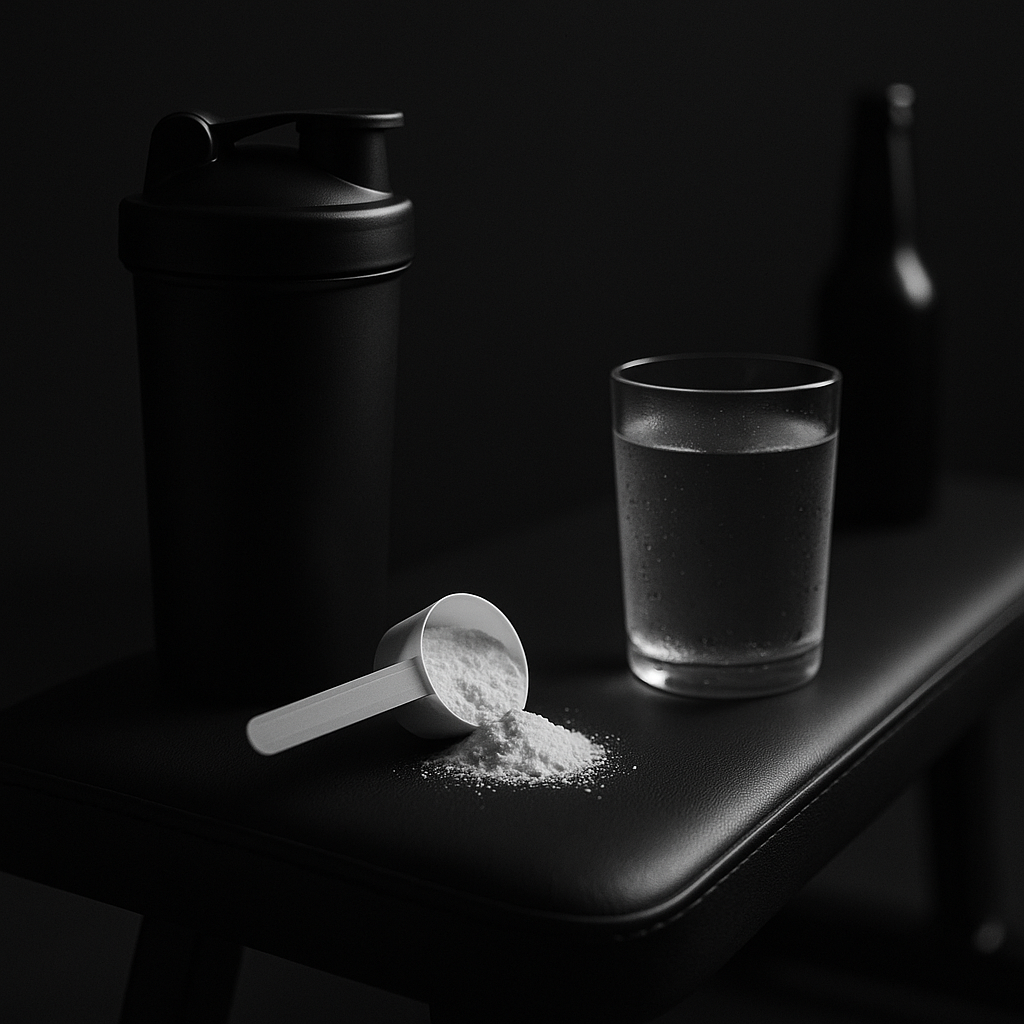
Can You Drink Alcohol and Still Benefit From Creatine?
You don’t have to live like a monk to see benefits from creatine. Here’s what alcohol really does to muscle protein synthesis and recovery, how much is too much, and a realistic plan for weekend athletes in Canada.
Key Takeaways
- Creatine monohydrate works on consistency: 3–5 g per day, every day.
- Alcohol doesn’t deactivate creatine, but it can blunt post-workout muscle protein synthesis and hydration.
- Acute drinking after training is the most disruptive window; separate workouts, protein, and alcohol by several hours.
- Chronic heavy drinking undermines training quality, recovery, and nutrition—bigger risk than an occasional drink.
- Canada’s guidance: 0–2 drinks per week minimizes alcohol-related health risk.
- On nights you drink, front-load protein, fluids, and your creatine dose earlier in the day.
- Choose creatine monohydrate; skip fancy blends and stay within 3–5 g/day for maintenance.
Creatine and alcohol 101
Short answer: yes, you can drink alcohol occasionally and still benefit from creatine—if you keep your training, sleep, and daily creatine intake consistent. Creatine monohydrate remains the gold standard, with an evidence-based maintenance dose of 3–5 g per day and an optional loading phase of ~20 g/day for 5–7 days. That protocol is supported by the International Society of Sports Nutrition (ISSN). Creatine works by saturating intramuscular stores over time; one night out doesn’t flush it away.
Where alcohol enters the picture is recovery, not the creatine molecule itself. Alcohol can acutely disrupt muscle protein synthesis after hard training, interfere with hydration status, and nudge you toward poorer sleep and food choices—factors that matter for actual performance and physique outcomes. Chronic heavy drinking compounds those effects by reducing training quality and overall health.
Practically, your priorities are simple: pick creatine monohydrate, dose it daily (3–5 g), and plan alcohol away from your most important training and recovery windows. If you do choose a loading phase, see our guide to creatine loading. For timing tips, visit when to take creatine.
What happens after a drink on training day
The most sensitive time to drink is the hours after a tough workout. Research shows that post-exercise alcohol ingestion can significantly impair myofibrillar protein synthesis even when protein is consumed—meaning you may build less muscle from that session. Alcohol is also a diuretic, which can worsen fluid losses from training and make it harder to restore normal hydration.
None of this means your creatine stopped working. It means the adaptation to that specific workout may be smaller if you drink soon after. To stack the deck in your favour on days you’ll have a drink:
- Finish training earlier, and eat a protein-rich meal first.
- Take your creatine dose with water (or a meal) before alcohol.
- Rehydrate: alternate alcoholic beverages with a glass of water.
- Avoid “liquid dinner”: keep a balanced meal in the mix.
If it’s a milestone session (max testing, key long run, heavy lower body day), consider deferring alcohol to a rest day so you get the most growth and performance return from the work you did.
How much is too much?
From a health lens, Canada’s current guidance states that the risk of alcohol-related harms increases with each additional drink. The level of risk is lowest at 0–2 standard drinks per week. In a sport setting, the practical threshold is even tighter when you care about progress: the more you drink, the more you erode training quality, sleep, appetite, and recovery—even if you’re still taking creatine.
Occasional, modest drinking (e.g., a couple of drinks on the weekend) won’t purge creatine from your muscles or make supplementation pointless, as long as you keep your daily 3–5 g dose and train consistently. By contrast, chronic heavy drinking can undermine liver and muscle health, impair adherence to training and nutrition, and eclipse any small edge creatine provides.
Practical guardrails for athletes and lifters:
- Plan important sessions on days you won’t drink.
- If you do drink, keep it modest and pair it with a meal and water.
- Don’t skip your creatine on off days—steady intake matters for saturation. Use our creatine dose calculator if you’re unsure where to start.
Smart dosing and timing when you sometimes drink
Keep your supplementation simple and evidence-based. Choose creatine monohydrate—it’s widely studied, affordable in Canada, and reliably effective. Most people do well with 3–5 g per day taken at any time; consistency beats precision. A short loading phase (~20 g/day in 4 x 5 g servings for 5–7 days) speeds saturation but isn’t mandatory.
On days you’ll have alcohol:
- Take creatine earlier, ideally with a meal or post-workout shake, well before your first drink.
- Mix creatine with water or a non-alcoholic beverage—don’t stir it into alcohol.
- Pair with normal nutrition: protein, carbs, and electrolytes support recovery more than timing tricks.
Want help picking a product? See our Canadian picks in creatine supplements review and our curated list of best creatine. For timing nuances, visit when to take creatine; for loading pros and cons, see our loading guide.
Hydration, electrolytes, and recovery nutrition
Creatine helps draw water into muscle cells, which is one reason many lifters report feeling “fuller” in the gym. Alcohol, on the other hand, increases urine output and can leave you under-hydrated after a sweat session. That combo doesn’t cancel creatine, but it can leave you feeling flat and cramp-prone if you don’t plan your fluids.
Build a simple recovery routine for nights out:
- Hydration: Have water with electrolytes after training and alternate water with alcoholic drinks later.
- Protein first: Eat a protein-rich meal within a couple of hours post-workout to support muscle repair.
- Carbohydrates: Refill glycogen with balanced carbs; alcohol isn’t a refuel strategy.
- Creatine consistency: Take your usual 3–5 g dose with your recovery meal or shake—earlier than the first drink.
Set expectations: creatine is not a hangover antidote. It’s an ergogenic that works over weeks and months. The basics—sleep, hydration, and food quality—do more to protect your gains when social plans collide with training.
The weekend athlete playbook
If your reality is a Friday lift, Saturday social, and a Sunday jog, you can still move the needle. Here’s a realistic template:
- Friday: Train earlier. Post-workout meal with protein and carbs. Take creatine (3–5 g). If drinking later, set a water bottle reminder and keep portions modest.
- Saturday: If you drank, shift to a lower-intensity session (easy aerobic, mobility, technique work). Prioritize a protein-rich breakfast and fluids. Take your creatine as usual.
- Sunday: Resume normal training if you’re well-rested and hydrated; otherwise, extend easy work and get to bed early.
Red flags to downshift or rest: headache that worsens with activity, dizziness, unusually high heart rate at easy efforts, or persistent GI upset. Remember, consistency is the performance compound interest. Stay on your daily creatine, nudge the week toward more green lights than red ones, and let the months add up. For more practical how‑tos, browse our training and supplement guides.
Creatine + Alcohol at a Glance
- 3–5 g/day Evidence-based creatine maintenance dose
- 20 g/day × 5–7 days Optional creatine loading phase
- 0–2 drinks/week CCSA: lowest alcohol health risk range
- Monohydrate Gold-standard creatine form (ISSN-supported)
Frequently Asked Questions
Does alcohol cancel out creatine?
No. Alcohol doesn’t neutralize creatine or purge it from your muscles. The concern is that drinking—especially soon after training—can blunt muscle protein synthesis and hydration, reducing the benefit you get from that specific workout.
Is it okay to take creatine before drinking?
Yes. Take your usual 3–5 g dose with water and a meal earlier in the day. Avoid mixing creatine into alcoholic beverages. Pair with protein and fluids to support recovery before any drinks.
Should I pause creatine if I’m going out this weekend?
No. Creatine works through steady muscle saturation, so daily consistency matters more than micro‑timing. Keep taking 3–5 g per day—even on rest days or when you plan to drink modestly.
Will a night of binge drinking erase my gains?
One heavy night won’t erase months of work, but binge drinking can impair recovery, sleep, and training quality for several days. Rehydrate, eat well, train easier the next day, and return to your normal routine promptly.
Does alcohol make you more likely to cramp if you use creatine?
Alcohol’s diuretic effect can worsen dehydration, which may increase cramp risk during or after exercise. Creatine itself is not linked to higher cramping risk when used as directed; focus on fluids and electrolytes if you drink.
What’s the best creatine for someone who drinks occasionally?
Creatine monohydrate. It’s the most studied, widely available in Canada, and effective at 3–5 g/day. Fancy blends aren’t necessary; consistency and smart recovery habits matter more.