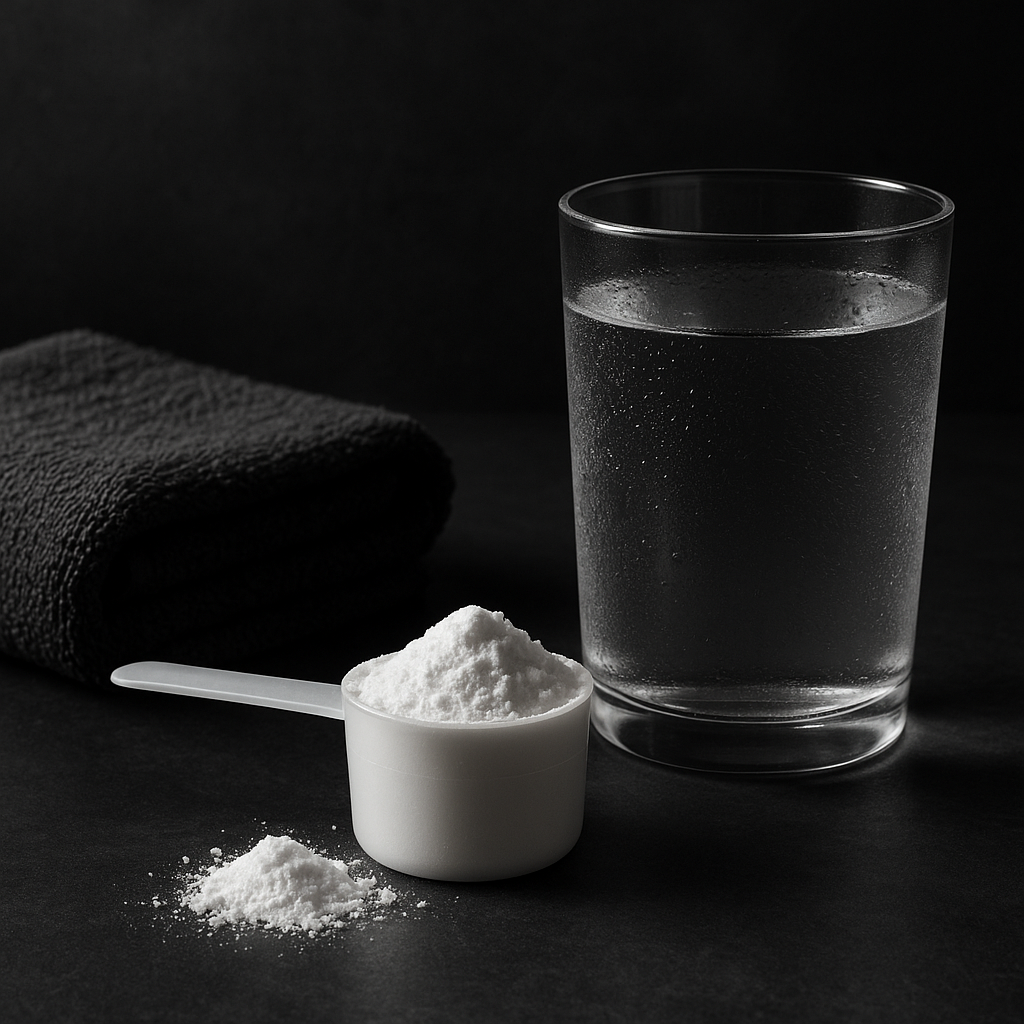
Creatine and Water Retention: What's Actually Happening
Does creatine really cause 'bloat'? The answer depends on where the water goes—and why that's usually good news. We break down the science behind creatine, intramuscular water retention, and how to spot the difference between healthy hydration and unwanted fat gain, all in a Canadian context.
Key Takeaways
- Creatine leads to increased intramuscular water—not subcutaneous 'bloat'—in most healthy adults.
- Water retention is a sign creatine is working as intended to improve muscle hydration and performance.
- Weight gain from creatine is typically water, not fat, especially when diet is controlled.
- Intramuscular water can enhance strength and muscle fullness, not puffiness.
- Standard doses (3–5 g/day) minimize visible water retention after the initial loading phase.
- Stay consistent with hydration and monitor your body composition for best results.
- Canadian consumers can rely on creatine monohydrate, the most studied, cost-effective form.
Understanding Creatine Water Retention: The Science
When Canadians begin supplementing with creatine, they often notice a slight and rapid increase in weight—typically in the range of 1–2 kg in the first week, especially if using a loading phase. But what’s actually happening? The mechanism is refreshingly straightforward: creatine draws water into your muscle cells. That’s intramuscular hydration, not 'bloat' around the waistline.
Research backed by the International Society of Sports Nutrition (ISSN) and Health Canada’s Natural Health Products Database consistently shows that creatine monohydrate is both effective and safe for this process. The increase in muscle cell water is not a sign of excess body fat or dangerous fluid retention, but rather improved cellular function—meaning your muscles are primed for better performance and recovery.
- Key point: Standard doses (3–5 g/day) increase muscle cell volume without significant health risks in healthy adults.
- Water retention in the muscles can lead to a fuller, firmer appearance—not the soft, puffy look often associated with subcutaneous water or fat gains.
Intramuscular Water vs 'Bloat': Debunking Myths
The term 'bloat' is tossed around in gym conversations and supplement forums—but rarely with scientific accuracy. The kind of water retention you get from creatine is intramuscular, meaning it’s stored within your muscle cells. This is different from subcutaneous water, which sits just beneath the skin and is responsible for the puffy look many want to avoid.
Multiple controlled studies demonstrate that creatine’s water-pulling effect is overwhelmingly intramuscular when used appropriately.
- Subcutaneous water retention can occur due to excess sodium or hormonal fluctuations, but not typically because of creatine.
- Genuine bloating, especially in the abs or face, is seldom seen with standard creatine protocols at 3–5 g/day.
If you do notice puffy skin, check other causes—like changes in sodium intake, carbohydrate load, or hormonal shifts—before blaming creatine.
How to Tell Water Retention from Fat Gain
It’s surprisingly easy to mistake water weight for fat gain when starting creatine. Here’s how to tell the difference:
- Timecourse: Water weight spikes quickly—often in the first week or two. Fat gain happens much slower, sometimes over months of excess calorie intake.
- Feel: Muscles may appear fuller or tighter on creatine, while fat gain feels softer and covers muscle definition.
- Impact of Diet: If you haven’t significantly increased calories, fast weight gain is likely water.
- Performance: If you’re hitting new strength or endurance targets, that’s typically an effect of better muscle hydration, not just extra body mass.
Tools like our creatine weight calculator can help you estimate expected water weight changes specific to your starting weight and dosing strategy.
Is Creatine Water Retention a Problem?
For most Canadians, creatine-related water retention is not a problem—it’s actually a sign that supplementation is working as intended. Athletes and lifters benefit from fuller, better-hydrated muscles, which can mean stronger lifts and improved recovery.
- There is no evidence supporting the idea that water retention harms healthy adults, so long as creatine is used as directed.
- The Natural Health Products Directorate of Health Canada lists creatine as safe for adults at recommended doses.
- Competitive physique athletes may tighten dosing near competitions to shed excess water for appearance, but for the majority, the benefits outweigh any temporary weight increase.
If you’re tracking your body composition and maintaining daily hydration, any effect on the scale is usually manageable and transitory.
How Long Does Creatine Water Weight Last?
The initial spike in water weight—up to 1–2 kg—is most noticeable in the first 7–14 days, especially if you used the loading phase (20 g/day for 5–7 days). After that, most users plateau at their new baseline, as muscle cells become saturated.
Continuing with a maintenance dose of 3–5 g/day keeps muscles topped up without ongoing weight gain. If you stop taking creatine, any extra water is gradually lost over a week or two as stores deplete. There is no lasting effect, and your body composition returns to pre-supplementation levels unless your diet has also changed.
The bottom line: increased water retention is short-lived and self-limiting, with no lasting drawbacks for most healthy adults.
Tips for Managing Water Retention on Creatine
If you're concerned about visible water retention or want to minimize any 'soft' appearance, consider the following tips:
- Stay hydrated: Adequate water intake helps your body regulate fluid balance.
- Monitor sodium: Excess sodium can magnify water retention beneath the skin—watch dietary salt, especially pre-competition.
- Stick with monohydrate: Creatine monohydrate is the best studied, safest, and most cost-effective form for Canadians.
- Use steady daily doses: After loading, maintain 3–5 g/day and avoid unnecessary cycling.
- Track your body composition: Use weight, measurements, and photos—not just the bathroom scale—to monitor changes from creatine use.
Minor body weight fluctuations are normal and almost always reflect water, not fat, with healthy supplementation. Find our full supplement picks at creatine supplement reviews.
Final Thoughts: A Canadian Perspective on Creatine and Water
For Canadians weighing creatine supplementation, understanding water retention helps you set realistic expectations. The science is clear: water drawn into muscle cells improves athletic potential and does not contribute to health risks or unwanted fat gain in healthy adults.
Whether you’re buying from trusted local brands or international labels, look for creatine monohydrate and stick with recommended doses. Use body composition tools, stay hydrated, and trust the short-term water weight jump as a positive sign your supplementation is working. And—if you have any doubts, consult with your local dietitian or healthcare provider familiar with Canadian Health guidelines.
Creatine Water Retention: Quick Stats
- 1–2 kg Average initial water weight gain during the loading phase
- 3–5 g/day Recommended maintenance dose for Canadian adults
- 85–95% Water retained within muscle cells (not under the skin)
- 1–2 weeks Typical time for water weight increase to plateau
Frequently Asked Questions
Does creatine cause visible bloating?
For most users, creatine does not cause visible stomach or facial bloating. The water is stored inside muscle cells (intramuscular), making muscles appear fuller rather than puffy. Visible subcutaneous bloating is rare with the recommended daily dose.
Is creatine water retention dangerous for my health?
No. Research and Health Canada both support creatine as safe in healthy adults. Water retention is an expected, beneficial effect—not a form of harmful edema. Only those with kidney issues or underlying health concerns should consult a doctor.
Will I lose the water weight if I stop taking creatine?
Yes. When you stop supplementing, your body gradually returns to its normal water balance within 1–2 weeks, and any extra water stored in muscle cells disappears.
How can I minimize water retention while taking creatine?
Focus on consistent, moderate daily dosing; stay hydrated; watch sodium intake; and choose creatine monohydrate. Avoid the temptation to over-supplement or frequently cycle on and off, as these can influence fluid levels unpredictably.
How do I know if new weight is from water, not fat?
Water weight appears quickly—within days of starting creatine—while fat gain accumulates slowly. If you stay at or near your regular diet, and your muscles feel firmer or performance improves, that new weight is almost certainly from increased muscle hydration.