Creatine for Brain Health: What Reddit Is Saying (and What the Science Actually Shows)
A wave of Reddit discussions claims creatine can slow Alzheimer's, eliminate brain fog, and treat depression. The science is more nuanced — and the dosage gap between gym use and brain benefit is a detail most headlines bury entirely. Here is the honest read.
Key Takeaways
- Creatine does cross the blood-brain barrier, but transport is inefficient at standard 3–5 g/day gym doses.
- An early Alzheimer's trial reported ~30% slower cognitive decline with creatine — but the dose was 20 g/day and the sample was under 40 participants.
- Meaningful increases in brain creatine levels appear to require 20–30 g/day, according to spectroscopy data — not the 5 g dose used for muscle benefits.
- Real-world cognitive benefits (brain fog, mental fatigue under stress) are commonly reported at standard doses — particularly in sleep-deprived and menopausal populations.
- Depression studies used 5 g/day and showed mixed results; some trials showed benefit, particularly in women, but the evidence is not yet conclusive.
- Anyone considering 20 g/day for brain benefits should do so with medical supervision — GI distress and kidney stress at that dose are real considerations.
Why Reddit is suddenly full of creatine brain health claims
Over the past year, a new category of creatine discussion has surged across Reddit's health and longevity communities. The headlines circulating in threads read like breakthrough announcements: creatine slows Alzheimer's progression by 30%, creatine reverses brain fog in menopausal women, creatine improves sleep-deprived cognition, creatine as a depression treatment.
Some of these claims are grounded in real — if preliminary — research. Others are plausible extrapolations from mechanism. And some are straightforward misreadings of small, exploratory trials. What makes the creatine brain health debate worth taking seriously is that the mechanism is solid: your brain uses the same phosphocreatine energy system as your muscles. Neurons have high energy demands, and they maintain phosphocreatine reserves for exactly the same reason muscles do — fast-access ATP regeneration under acute energy demand.
The question is not whether creatine can affect brain function. The mechanism says it should. The questions are: how much creatine reaches the brain at typical supplement doses, and how large are the effects worth expecting?
Those are much harder questions, and the Reddit discussions — even the better-informed ones — often skip past them to the headline result. This piece doesn't.
Does creatine actually cross the blood-brain barrier?

Yes — but the transport is inefficient. The brain has its own creatine transporter (SLC6A8), and creatine from the bloodstream does cross the blood-brain barrier. The brain also synthesises some of its own creatine, meaning it isn't entirely dependent on dietary intake. This combination means brain creatine levels are partially buffered from what you eat or supplement.
The key finding from magnetic resonance spectroscopy studies: supplementing with 3–5 g/day of creatine — the standard gym dose — produces measurable but modest increases in brain creatine. The effect is real, but the increase is much smaller, proportionally, than what you see in muscle tissue.
The reason is twofold:
- The blood-brain barrier is selective. Creatine transport into the brain is slower and more tightly regulated than into muscle, where uptake is rapid and sodium-dependent.
- The brain has baseline creatine synthesis. Unlike skeletal muscle (which cannot synthesise creatine and is entirely dependent on dietary/supplemental sources), the brain can make its own. This means supplementation is filling a tank that is already partially full.
Reddit threads that cite cognitive benefits at 5 g/day are not necessarily wrong — there are real-world reports of improved mental clarity — but they are working with a modest and variable effect. The more dramatic results in published research tend to come from much higher doses, which raises a different set of questions.
The Alzheimer's claim: what the 30% figure actually means
The most dramatic claim circulating on Reddit is a controlled trial showing creatine supplementation slowed cognitive decline in early Alzheimer's patients by approximately 30% compared to placebo. Reddit threads cite this result regularly — often as evidence that standard creatine supplementation can prevent dementia.
The finding is real, and if it replicates, it is genuinely significant. But three details that Reddit discussions often omit:
1. The dose was 20 grams per day, not 5
The trial dose was 20 g/day — four times the standard muscle performance dose. This is not a detail buried in the methods section; it is the entire point. At that dose, brain creatine levels increase substantially, as spectroscopy data confirm. At 5 g/day, the increase is much more modest. You cannot extrapolate the 30% result to standard gym supplementation without accounting for the dose.
2. The sample size was small
Multiple threads flagged this correctly: the study had fewer than 40 participants. Exploratory trials like this are hypothesis-generating — they establish whether an effect is plausible and worth investigating at scale — not definitive. A 40-person trial can absolutely produce real results, but the uncertainty bands are wide and a single contrary result can overturn the finding.
3. It is early-stage, not confirmed
Alzheimer's research is littered with interventions that showed promise in small trials and failed in large Phase III studies. Creatine's mechanism makes its involvement in brain energy metabolism plausible, but plausible mechanisms have not reliably predicted clinical outcomes in dementia research. The finding is worth watching; it is not yet a reason to take 20 g/day prophylactically.
The community's more measured voices make this case well. The ones who treat the 30% figure as a reason to immediately double or quadruple their dose are moving faster than the evidence warrants.
Real-world cognitive benefits people actually report — and where they're strongest
Separate from the dramatic Alzheimer's headlines, a consistent thread of real-world cognitive benefit reports runs through community discussions. These are not claims of dementia prevention — they are more modest observations about mental energy, focus under stress, and brain fog reduction. And they are worth taking seriously, because the mechanism supports them.
The most compelling category: sleep-deprived cognition. A study that used 20 g/day of creatine showed maintained cognitive performance in severely sleep-deprived subjects — a well-designed trial with a clear mechanistic explanation. When the brain is running low on fast-access energy (as happens under sleep deprivation), elevated phosphocreatine reserves provide a meaningful buffer. This finding has some replication support and a plausible dose-response relationship.
The second compelling category: creatine for menopause-related brain fog. Community reports here are striking in their consistency. Multiple threads include women describing creatine as transformative for mental clarity during perimenopause and menopause — not because creatine is a hormonal intervention, but because the declining oestrogen environment affects brain energy metabolism, and creatine's mechanism directly addresses that deficit. "I don't work out, and only take creatine to combat the brain fog of the menopause years. It works amazingly well" is a representative comment from a thread with hundreds of upvotes and numerous similar anecdotes.
This lines up with emerging research on creatine for menopause showing cognitive benefits that may be independent of its muscle performance effects. The mechanism is the same — brain phosphocreatine reserves — but the population that benefits most may be different from the gym-use case.
The third category: cognitive performance under acute mental stress — complex problem-solving, sustained focus tasks, and situations requiring rapid working memory access. Several studies find creatine improves performance on these tasks in populations with lower baseline brain creatine (vegetarians, older adults, sleep-deprived subjects). The effect is smaller or absent in well-rested, meat-eating young adults who already have high baseline brain creatine.
The dosage gap: why 5 g for muscles does not equal enough for brain
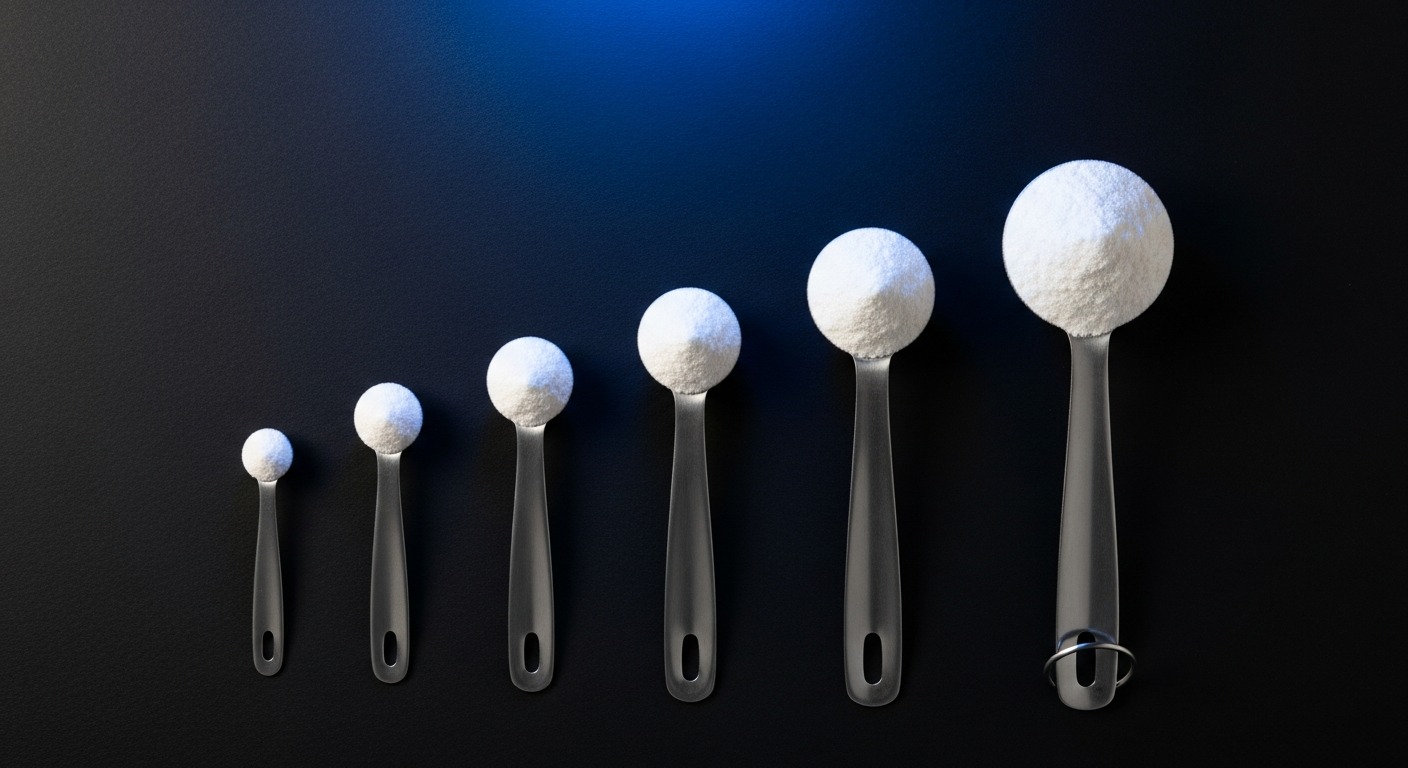
This is the detail most creatine brain health discussions get wrong, and it matters enormously for setting realistic expectations. The clinical evidence for different brain-related effects uses a range of doses:
| Application | Dose used in research | Evidence quality |
|---|---|---|
| Muscle performance | 3–5 g/day | Robust — hundreds of trials |
| Sleep deprivation cognition | 20 g/day | Good — multiple studies |
| Alzheimer's (early stage) | 20 g/day | Preliminary — small samples |
| Depression | 5 g/day | Mixed — some positive, not conclusive |
| General cognitive enhancement | 5–20 g/day | Variable — baseline matters enormously |
The pattern is clear: the most dramatic brain benefits are associated with 20 g/day, not the standard 5 g gym dose. The reason is the blood-brain barrier transport issue: meaningful brain creatine elevation requires either very high doses over extended periods, or a population with very low baseline brain creatine levels.
Depression research is an interesting exception. Several trials have found benefits at 5 g/day — particularly in women and when combined with antidepressants — suggesting the mood-related mechanism may operate at lower thresholds than the cognitive ones. But even here, the evidence is mixed enough that it would be premature to recommend creatine as a depression treatment. Creatine's role in mood regulation remains an active research area.
The bottom line: if you're taking 5 g/day for gym performance and also hoping for cognitive benefits, you may experience modest improvements — particularly if you're sleep-deprived, vegetarian, or in your menopausal years. The benefit at 5 g is real but smaller than the headlines suggest. The dramatic trial results require dramatically higher doses, with correspondingly higher risk of GI distress and a need for medical oversight.
Who should be cautious about high-dose creatine for brain benefits
The appeal of 20 g/day to access the more dramatic brain benefits is understandable. But several populations need to approach this with care or not attempt it without medical supervision:
People with kidney disease or reduced kidney function
This is the firm contraindication. At 20 g/day, the kidneys are filtering substantially more creatinine than at 5 g/day. For healthy kidneys, this is manageable — the evidence at even 20 g/day is reassuring for kidney health in otherwise healthy adults. For compromised kidneys, this is a genuine risk. CKD, a single functioning kidney, or any history of kidney disease are absolute contraindications to high-dose creatine. Consult a nephrologist before any supplementation if relevant.
People prone to GI distress
This is not a safety issue but a practical one. At 20 g/day — particularly when taken all at once — creatine causes stomach cramping, loose stools, and diarrhoea in many people. The studies that used 20 g/day typically split the dose across 4–5 servings throughout the day to reduce GI load. Even with splitting, some people cannot tolerate the dose. If you're considering a higher dose, starting with 10 g/day split into two doses and increasing gradually is a more realistic approach.
Anyone without medical oversight at therapeutic doses
Twenty grams a day is a therapeutic dose, not a supplement dose. At that level, creatine is functioning more like a pharmaceutical than a gym supplement. Anyone considering it specifically for cognitive health or dementia prevention should do so with a doctor or neurologist who can monitor kidney function, track cognitive metrics properly, and evaluate the evidence in the context of their individual health picture.
The honest bottom line on creatine and brain health
The Reddit discussions on creatine brain health range from genuinely sophisticated to credulous headline-sharing. The truth sits somewhere between "creatine is the next Alzheimer's drug" and "standard gym creatine has no brain effects."
Here is what the evidence actually supports:
- Standard 3–5 g/day doses produce modest but real cognitive benefits, primarily in sleep-deprived populations, vegetarians with low baseline brain creatine, and menopausal women. For well-rested, meat-eating young adults, the cognitive effect at standard doses is minimal.
- The dramatic results (Alzheimer's, sleep deprivation) require 20 g/day, which is a meaningful increase in risk, GI burden, and cost. This is not a casual supplement upgrade — it is a therapeutic dose that requires medical oversight.
- The menopause brain fog reports are the most compelling real-world evidence for a cognitive benefit that may be accessible at moderate doses, and this is an area where clinical research is likely to catch up to community experience over the next few years.
- The depression signal is interesting but not yet actionable. Five grams per day combined with antidepressants may augment treatment response, but this is an area for discussion with a psychiatrist, not self-supplementation.
If you are already taking creatine for gym performance, you are likely getting some baseline cognitive benefit — particularly on hard training days, sleep-deprived days, and mentally demanding periods. That is a genuine bonus, even if it is smaller than the headlines suggest.
For a broader look at the community's take on creatine's core performance benefits and what 30 years of users have learned, read our companion piece on Reddit's creatine consensus. And to find your optimal daily dose by body weight, try our creatine dose calculator.
Creatine and brain health: the dosage reality
- 20 g/day Dose used in the Alzheimer's trial that showed ~30% slower cognitive decline — not the standard 5 g gym dose
- 5 g/day Dose showing benefit in some depression research and modest cognitive improvement in vulnerable populations
- ~30% Reported reduction in cognitive decline rate vs placebo in the early-stage Alzheimer's trial (small sample, preliminary)
Frequently Asked Questions
Does creatine help with brain fog?
Many people report reduced brain fog from standard 5 g/day doses — particularly women going through perimenopause or menopause, and people who are sleep-deprived. The mechanism is real: your brain uses the same phosphocreatine energy system as your muscles. The effect at standard gym doses is modest; the more dramatic results in research use 20 g/day.
What dose of creatine is needed for brain health benefits?
It depends on the specific benefit. Real-world cognitive improvements (brain fog, mental fatigue) are reported at standard 3–5 g/day. The major research findings on Alzheimer's and sleep deprivation used 20 g/day — substantially more than gym doses. Depression research has found some benefit at 5 g/day. There is no single universal brain dose.
Can creatine prevent Alzheimer's disease?
It is far too early to make that claim. One small trial showed creatine supplementation at 20 g/day slowed cognitive decline in early Alzheimer's patients by approximately 30% compared to placebo. That is a promising preliminary finding, but the study had fewer than 40 participants and has not yet been confirmed in larger trials. It is not a basis for widespread supplementation as dementia prevention.
Is it safe to take 20 g of creatine per day for brain benefits?
For healthy adults with no kidney issues, the evidence at 20 g/day suggests it is tolerable — but GI distress (cramping, loose stools) is common and doses should be split across the day. Anyone with kidney disease, a single kidney, or other kidney concerns should not attempt this without nephrologist oversight. Twenty grams is a therapeutic dose, not a supplement dose, and warrants medical supervision.
Does creatine for brain health work the same way as for muscles?
The underlying mechanism is the same — increasing phosphocreatine reserves for faster ATP regeneration. But the brain is harder to saturate than muscle. Skeletal muscle has high-capacity creatine transporters and cannot synthesise its own creatine, so it responds strongly to supplementation. The brain has lower-capacity transport across the blood-brain barrier and can partially synthesise its own creatine, so the supplemental effect is smaller and requires higher doses to meaningfully elevate brain creatine levels.
What is the Reddit community saying about creatine and cognitive decline?
Discussion is split. One camp is enthusiastic about the Alzheimer's and brain fog data, often overstating the strength of the evidence. A more sceptical camp correctly notes that the dramatic results use 20 g/day (not standard doses), that sample sizes in the brain research are small, and that the blood-brain barrier limits how much supplemental creatine actually reaches the brain at 5 g/day. The measured consensus: real but modest benefit at standard doses, more significant effects possible at higher doses with medical oversight.