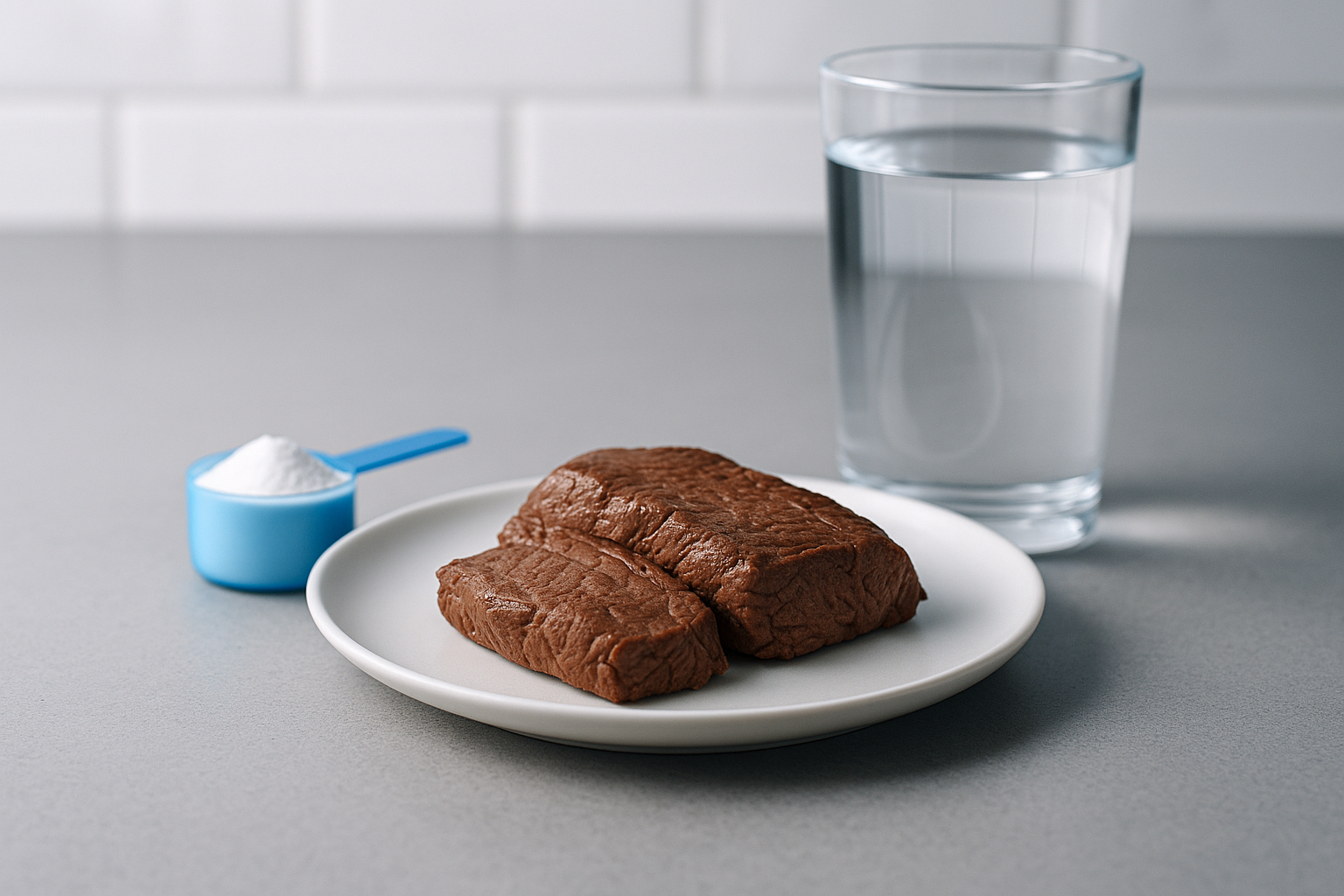
Review Highlights Meat as a Dietary Source of Creatine
A new review argues that optimally processed mammalian meat may better deliver protein, amino acids and bioactive compounds including creatine to infants and older adults. The paper is not a creatine supplementation trial, but it matters because it highlights where creatine naturally fits in protein-rich foods for groups with higher nutritional vulnerability.
Source: Food science of animal resources
Key Takeaways
- This paper is a review, not a clinical trial, so it does not show that creatine supplements improve outcomes in infants or older adults.
- The authors identify red meat as a natural source of creatine, taurine and carnitine alongside complete protein, iron, zinc and B vitamins.
- The central idea is that processing methods such as moderate heating, high-pressure processing, ageing and fruit enzymes may improve meat digestibility.
- The review focuses on infants and geriatric populations, who may have higher protein needs and more difficulty chewing, swallowing or digesting meat.
- For supplement users, the practical takeaway is context: dietary creatine exists in meat, but creatine monohydrate remains the most studied way to reliably increase creatine intake.
What the review actually found
This newly published review examines how mammalian meat could be made more nutritionally useful for two groups with distinct challenges: infants in early growth and older adults facing anabolic resistance, reduced appetite, and difficulties with chewing or digestion. Its headline message is straightforward: red meat naturally supplies complete protein, essential micronutrients, and bioactive compounds including creatine, and processing methods may improve how well those nutrients are delivered.
The paper discusses beef, pork, lamb, and goat, and notes that different cuts differ in amino acid profile. It also argues that texture matters. For infants and geriatric populations, softer, easier-to-chew meat may support intake and digestion better than tougher cuts. The authors highlight several processing strategies, including moderate-temperature thermal treatment, high-pressure processing, dry ageing or in-bag dry ageing, and fruit enzymes. In theory, these methods can unfold or partially break down proteins, increasing digestibility and producing free amino acids and short peptides under 3 kDa that are more easily absorbed in the small intestine.
For Creatine Canada readers, the key point is not that the paper discovered a new effect of creatine supplementation. It did not. Instead, it places creatine in its broader food context: meat is one of the main natural dietary sources of creatine, alongside other compounds relevant to muscle and function. If you are comparing food sources with supplements, our creatine guides explain how those routes differ in practicality and dose control.
Why creatine appears in this paper
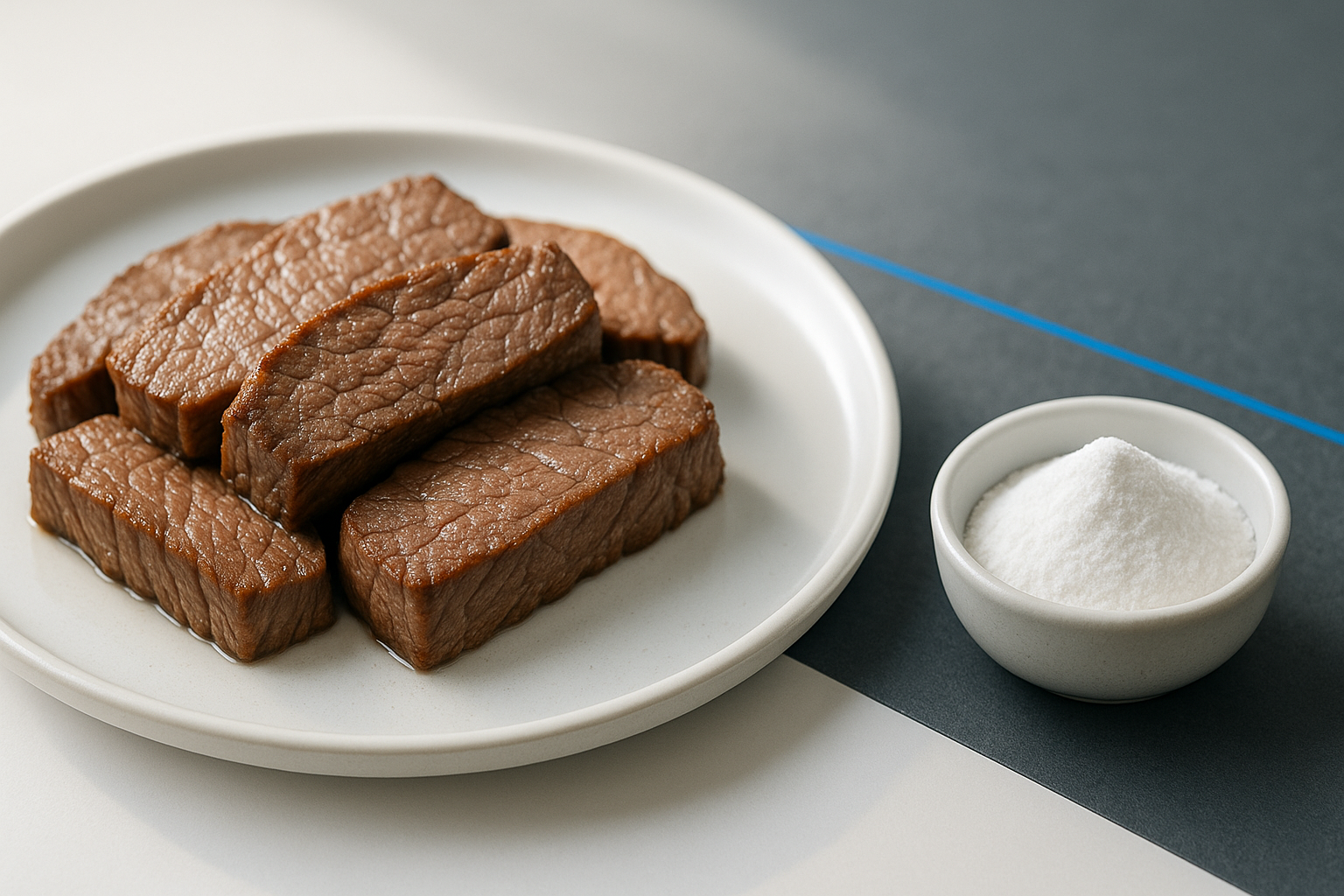
Creatine is mentioned here as one of several bioactive molecules present in red meat. That matters because the populations under discussion, especially older adults, often have nutrition-related barriers that could affect strength, function, and overall protein adequacy. Meat does not just supply amino acids; it also supplies compounds such as creatine, taurine, and carnitine that are not the main focus of most protein discussions.
Still, readers should be careful not to read more into the paper than it says. The review does not quantify how much creatine specific meat types or cuts provide, and it does not compare dietary creatine from meat with creatine monohydrate supplements in a controlled trial. It also does not show that a given processing method preserves, increases, or decreases creatine content. Its emphasis is mainly on improving digestibility and release of protein-derived amino acids and peptides.
That distinction is important in practice. Dietary creatine from meat contributes to total intake, but supplementation is usually used because it allows a known, repeatable dose. In mainstream sports nutrition, 3 to 5 g/day of creatine monohydrate is the standard maintenance intake, while a common loading protocol is about 20 g/day split into 4 doses for 5 to 7 days. Those evidence-based basics are reviewed in the ISSN position stand and summarised in our creatine dosage calculator.
How the source was designed and what it cannot prove
This source is a review article. That means it synthesises existing knowledge and proposes strategies, rather than testing a new intervention in people. Reviews can be useful for spotting patterns, identifying practical problems, and generating hypotheses. But they are not the same as a randomised trial, and this matters for how strongly we should interpret the claims.
Based on the abstract, the authors evaluate the nutritional composition and digestibility of different meat types and cuts, then discuss processing technologies that may improve protein intake in infants and older adults. What the review appears to do well is connect food science with clinically relevant nutrition barriers such as mastication, swallowing, digestion, and anabolic resistance.
Its limitations are equally clear. The abstract does not describe a meta-analysis, pooled effect sizes, or a defined intervention with measured clinical endpoints such as muscle mass, strength, cognition, or functional status. It also does not provide a direct test of creatine supplementation. So the article supports a plausible food-first framework, but it cannot establish that any specific processing method or meat choice will improve outcomes in real-world patients.
That is why it is best read as context, not as a reason to replace evidence-based creatine supplementation practices. If your goal is to increase creatine stores predictably, monohydrate remains the reference form supported by the strongest literature. Our best creatine rankings and creatine brand reviews focus on that better-studied supplement landscape.
What this means in practice for creatine users
For people who already take creatine or are considering it, this review does not change the core playbook. If you want a reliable creatine dose, supplements are still the simplest tool. Meat can contribute creatine naturally, but food intake varies by portion size, cooking method, appetite, cost, and tolerability. That matters even more in infants and older adults, where intake can be inconsistent.
What the review does add is a useful reminder: total nutrition matters more than any single compound. Older adults in particular may benefit when protein is not just present, but actually easy to eat, digest, and absorb. A softer meat texture, better palatability, and more digestible protein could make it easier to meet needs. In that context, creatine from meat is a bonus rather than the sole point.
Practically, that leads to three sensible takeaways:
- Do not treat this review as dosing guidance for supplements. It offers no new creatine dose recommendation.
- Use food and supplements for different jobs. Food provides protein, iron, zinc, B vitamins and some creatine; supplements provide precise creatine dosing.
- Consider the individual. For someone who struggles with appetite or chewing, a theoretically nutritious food is only useful if they can comfortably consume it.
If you are choosing a supplement, a plain monohydrate product from the creatine product catalog is still the evidence-based starting point. If you are planning intake around training or daily use, our creatine guides cover timing, loading, and maintenance without the marketing noise.
How it fits the broader creatine evidence
The broader literature on creatine is much stronger for supplementation than for trying to optimise creatine intake through specially processed meat. The most established finding is that creatine monohydrate can increase intramuscular creatine stores and support performance adaptations in certain contexts, particularly high-intensity training. It is also the most studied form for safety and efficacy.
That is why this review should be placed carefully within the evidence hierarchy. It contributes a food-science perspective: natural creatine in meat is part of the nutritional picture, and improving meat digestibility could help vulnerable populations access protein and related compounds more effectively. But it does not compete with the existing supplementation literature; it complements it.
The most useful external context comes from the International Society of Sports Nutrition and subsequent reviews addressing common misconceptions. Those sources consistently conclude that creatine monohydrate is the reference standard and is generally safe for healthy individuals when used appropriately. Readers who want the wider evidence base can review the JISSN review on common creatine questions or the broader Examine evidence summary.
In short, this paper expands the conversation around dietary creatine in food, especially for infants and older adults, but it does not overturn anything established about supplement best practice. It mainly reinforces that creatine lives within a bigger nutrition system that includes protein quality, digestibility, texture, and access.
Bottom line
This review makes a careful, useful point: mammalian meat is more than just protein, and processing techniques may help vulnerable groups get more nutritional value from it. Creatine is part of that story, particularly because meat is a natural dietary source. For infants and older adults, easier chewing, swallowing and digestion may matter as much as the raw nutrient content on paper.
But the paper does not test creatine supplements, does not establish clinical benefits from added dietary creatine, and does not provide a new reason to change evidence-based creatine dosing. If your question is whether to use creatine monohydrate, the answer still rests on the established supplementation literature, not on this review.
The practical takeaway is simple. Read this as a reminder that food structure and digestibility affect real-world nutrition, especially in populations with higher needs or lower intake. For reliably increasing creatine intake, supplementation remains the more precise tool. For overall nutrition, food quality and tolerability still matter enormously.
That balanced view is the right one: this is an interesting nutrition review with relevant creatine context, not a breakthrough in creatine supplementation science.
Creatine context from this review and the wider evidence
- <3 kDa Peptide size highlighted — The review notes short peptides under 3 kDa are easily absorbed in the small intestine.
- 3-5 g/day Typical maintenance dose — Mainstream creatine monohydrate maintenance intake in sports nutrition.
- ~20 g/day Common loading intake — Usually split into 4 doses daily for 5-7 days.
- 5-7 days Typical loading duration — Standard evidence-based loading window for creatine monohydrate.
Frequently Asked Questions
Does this study show that creatine supplements help infants or older adults?
No. This paper is a review about meat nutrition and processing, not a clinical trial of creatine supplements, so it cannot show that supplementation improves outcomes in either group.
What is actually new here for creatine readers?
What is new is the food-science framing. The review highlights meat as a natural source of creatine within a broader package of protein and micronutrients, and discusses processing methods that may improve digestibility for vulnerable populations.
Should I get creatine from meat instead of a supplement?
Not if your main goal is precise creatine dosing. Meat contributes dietary creatine, but supplements are easier to standardise, while meat is better viewed as part of an overall nutrition strategy.
Does processing meat increase its creatine content?
This review does not show that. Its focus is on improving protein digestibility and release of amino acids and small peptides, not on proving that creatine content rises with processing.
Does this paper change standard creatine dosing advice?
No. The standard evidence-based approach remains creatine monohydrate at about 3 to 5 g per day for maintenance, with optional loading of roughly 20 g per day split into 4 doses for 5 to 7 days.
Why are infants and older adults the focus of this review?
Because both groups can have higher protein needs or more difficulty using dietary protein effectively. Infants are growing rapidly, while older adults may face anabolic resistance, lower appetite, and chewing or swallowing challenges.