
Elite runner trial compares HIIT and CrossFit at altitude
A newly registered clinical trial will compare running-based HIIT with CrossFit training in elite distance runners living at moderate altitude. The study has not reported results yet, but it matters because it will test whether different high-intensity training styles drive distinct endurance, strength and blood-marker adaptations in a very specific population.
Source: ClinicalTrials.gov
Key Takeaways
- This ClinicalTrials.gov record describes a planned randomised trial, not published outcome data.
- Elite male middle- and long-distance runners aged 25 to 35 will train five days per week for six weeks.
- The comparison is between running-based HIIT and CrossFit, with pre/post treadmill, timed-run and blood-marker testing.
- Because creatine mainly supports high-intensity efforts and lean mass, any practical relevance depends on whether the CrossFit arm increases strength and power without compromising running performance.
- For now, the study does not change mainstream creatine guidance: creatine monohydrate remains the best-studied form, typically 3 to 5 g/day or a short loading phase of about 20 g/day split into four doses for 5 to 7 days.
What this trial is actually testing
The news here is not a breakthrough result. It is the launch of a targeted clinical trial asking a useful performance question in a hard-to-study group: elite male middle- and long-distance runners who live and train at roughly 1,400 metres above sea level.
According to the ClinicalTrials.gov entry, researchers will compare two supervised, high-intensity programmes over six weeks:
- Running-based HIIT, aimed at improving aerobic fitness and race performance
- CrossFit training, aimed at improving strength, power and selected physiological markers
Participants will be randomly assigned to one of those approaches, train five days per week, complete treadmill and timed-running tests before and after the intervention, and provide blood samples for selected markers.
That makes this an event-specific training study, not a creatine trial. Still, it is relevant to creatine users because creatine is most often discussed in the context of repeated high-intensity effort, power output and training quality. If CrossFit-style work produces different adaptations from running-specific HIIT in elite endurance athletes, that could affect how coaches think about gym-based intensity blocks, and how athletes think about supplements that support those sessions.
For readers new to supplementation, our creatine guides and creatine dosage calculator cover the basics. The key point for this article: this trial may eventually inform training context, but it does not yet show that creatine helps or hurts these runners.
Why distance runners should care about a CrossFit versus HIIT comparison
Distance runners already know that not all intensity is the same. Running-based intervals are highly specific to racing demands, while CrossFit-style sessions can add strength, explosiveness, trunk stability and broader neuromuscular stress. The practical question is whether that trade-off helps or hinders performance when the athletes are already elite.
That is why this trial is interesting. Recreational athletes can often improve from almost any sensible programme. Elite runners are different: they tend to need more precise training because their margin for improvement is small and the cost of non-specific fatigue is high.
If the running-HIIT arm improves treadmill measures and timed-run performance more than CrossFit, that would reinforce the classic specificity principle. If the CrossFit arm meaningfully improves strength and power without blunting endurance outcomes, that would support including more mixed-modality work in certain phases.
Where does creatine fit? In theory, creatine may be more relevant when training includes repeated sprints, heavy lifting, explosive circuits or dense interval work. That is because creatine helps replenish phosphocreatine, which supports very short, high-intensity efforts. It is less likely to directly transform steady-state endurance performance on its own. The broader evidence base, including the ISSN position stand, consistently places creatine monohydrate in the strength, power and high-intensity performance category first, with more conditional relevance for endurance athletes depending on training demands.
How the study is designed and why its limits matter
On paper, the design has some strengths. The trial is randomised, supervised and uses before-and-after testing. That is better than an informal training comparison because it reduces some bias and improves adherence. It also focuses on a clearly defined group: elite male runners aged 25 to 35 at moderate altitude.
But readers should be careful not to read too much into a registry entry. The record provided here does not report results, effect sizes or even the final number of participants in the summary text supplied. Without outcome data, there is nothing to conclude about which training style works better.
There are also built-in limits that will matter even after results appear:
- Very specific population: elite men only, so findings may not generalise to women, youth athletes or recreational runners.
- Short intervention: six weeks can capture early adaptation, but not a full season's worth of effects.
- Altitude context: training at about 1,400 metres may influence responses differently than sea level.
- Unknown programme details: until the full methods are published, it is hard to judge total training load, exercise selection and recovery balance.
For supplement readers, this is especially important. A training study can hint at where creatine might be useful, but unless creatine is directly tested, it cannot tell us whether supplementation improved outcomes. That is why it helps to compare new training news against broader evidence summaries and practical buying resources such as our best creatine rankings and creatine brand reviews.
What it means for creatine users right now
For now, this trial should not change anyone's creatine routine. It offers a potentially useful training comparison, but no creatine-specific evidence. The practical guidance still comes from the larger literature on creatine monohydrate.
The mainstream evidence-based approach remains straightforward:
- Maintenance option: 3 to 5 g of creatine monohydrate daily
- Loading option: about 20 g/day, usually split into 4 doses, for 5 to 7 days, then a maintenance dose
Those numbers are well established in sports-nutrition practice and are summarised in sources such as the ISSN position stand and the review on common creatine questions and misconceptions. If you want a personalised estimate, use our creatine dosage calculator.
Who might care most in the context of this trial? Endurance athletes who include sprint work, gym lifting, hills, repeated accelerations or mixed-modality conditioning are the clearest candidates for potential relevance. In contrast, runners focused almost entirely on low-intensity volume and race-pace work may see less obvious day-to-day benefit from creatine, especially if they are highly sensitive to small body-mass changes.
Product choice still matters more than marketing claims. Creatine monohydrate remains the most studied form by a wide margin. If you are comparing options, our creatine product catalog and best creatine rankings can help you sort plain monohydrate products from more expensive alternatives that often have less evidence behind them.
How this fits the bigger evidence base on creatine and endurance
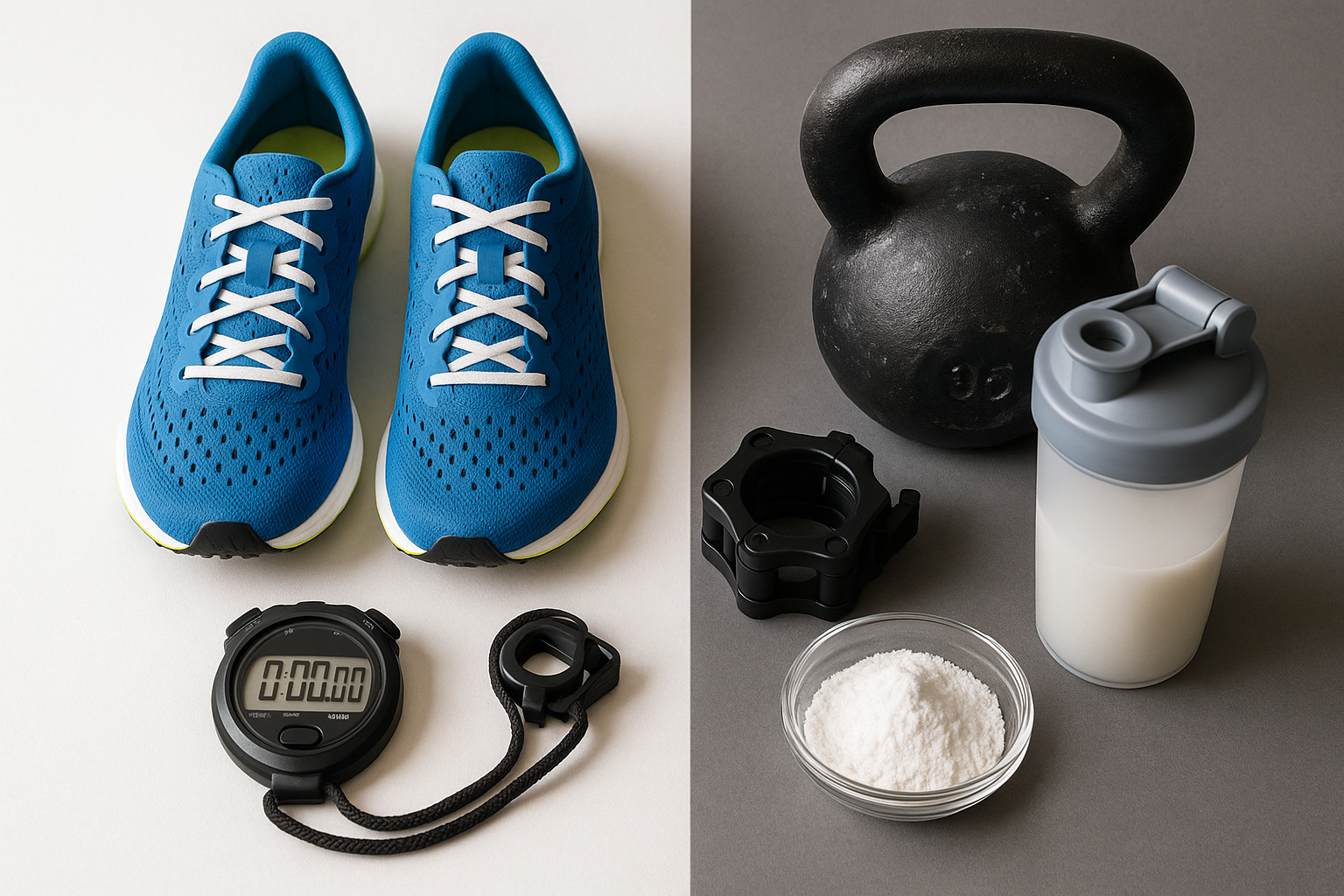
The wider evidence on creatine is much stronger for high-intensity exercise capacity, strength gains and lean-mass support than for pure endurance performance. That does not mean endurance athletes have nothing to gain. It means the benefit is usually indirect and context-dependent.
For example, creatine may help an endurance athlete:
- Maintain quality in repeated hard intervals
- Support heavy resistance training or explosive supplementary work
- Recover training capacity between intense efforts
But creatine is not a magic aerobic booster, and it should not be sold that way. In a runner whose programme is dominated by event-specific interval work, race-pace sessions and mileage, the most important driver of performance will still be the training itself.
That is what makes this registered trial relevant. It may help clarify whether a more mixed, CrossFit-style high-intensity block changes the adaptation profile compared with run-specific HIIT in elite runners at altitude. If it does, then creatine becomes a more interesting supporting tool for the athlete spending more time on explosive or repeated-power work. If not, creatine's role in this niche stays limited.
For readers who want the bigger scientific picture, the review on common questions and misconceptions about creatine is a useful companion source, and this JISSN review is one of the best evidence-based places to start. It aligns with what we cover throughout our creatine guides: match the supplement to the training demand, not the hype.
Bottom line for athletes and coaches
The important update is simple: a new randomised trial is set to compare running-based HIIT with CrossFit training in elite male distance runners at moderate altitude, using six weeks of supervised training plus performance and blood testing. That is a worthwhile question, especially because elite runners need highly specific programming.
What it does not provide yet is evidence that one approach is better, or any direct evidence about creatine supplementation. Until results are published, the most responsible reading is that this is a promising study to watch, not a basis for changing practice.
For creatine users, the current evidence hierarchy stays the same:
- Creatine monohydrate is the best-studied form.
- Its strongest case is for strength, power and repeated high-intensity work.
- Its relevance to endurance athletes depends heavily on how much high-intensity or resistance training they do.
If you are an endurance athlete considering creatine, ask a training-first question: does your programme actually include the kind of work creatine is most likely to support? If yes, standard monohydrate dosing remains the evidence-based option. If no, this new trial does not change the calculus.
We will know much more when the investigators publish full methods and outcomes. Until then, treat this as a useful piece of training news and keep your supplement decisions grounded in the established evidence, not assumptions.
What this new trial tells us so far
- 6 weeks Planned training intervention — Both groups train under supervision before post-testing.
- 5 days/week Training frequency — Applies to both the running-HIIT and CrossFit arms.
- ~1,400 m Training altitude — Moderate altitude in the trial description.
- 3-5 g/day Standard creatine maintenance dose — Mainstream evidence-based guidance for creatine monohydrate.
Frequently Asked Questions
Did this study find that CrossFit or HIIT works better for elite runners?
No. The source provided is a ClinicalTrials.gov record describing the trial's purpose and design, not published results. It tells us what researchers plan to compare, but not which programme improved performance, strength or blood markers.
Is this a creatine study?
No, this is not a creatine supplementation trial. It is a training-intervention study comparing running-based HIIT with CrossFit in elite distance runners, so any creatine relevance is indirect and has to be interpreted through the broader creatine literature.
Why would creatine matter in a study like this?
Creatine matters here because it is most relevant to repeated high-intensity effort, power and resistance-style training. If a CrossFit-style programme meaningfully increases those demands in elite runners, creatine could be a more logical support supplement than in purely aerobic training blocks.
Should endurance runners take creatine based on this trial?
No one should start or stop creatine because of this trial alone. Until results are published, the sensible decision is still based on the athlete's training profile: creatine is most defensible when endurance athletes also perform frequent sprint, interval or strength work.
What is the usual evidence-based creatine dose?
The usual evidence-based creatine dose is 3 to 5 g of creatine monohydrate daily. A common loading option is about 20 g/day split into four doses for 5 to 7 days, followed by a daily maintenance dose.
Can the findings apply to recreational runners or women?
Not automatically. The registered study targets elite male middle- and long-distance runners aged 25 to 35 at moderate altitude, so any eventual findings may not translate neatly to recreational runners, female athletes, younger competitors or sea-level training environments.