
Review says creatine may help older athletes train better
A new narrative review concludes that creatine may help some masters athletes and older adults, especially when paired with resistance training, but it does not prove uniform benefits across every outcome or population. The practical message is familiar: creatine monohydrate remains promising, yet the quality and consistency of the evidence still matter.
Source: Current sports medicine reports
Key Takeaways
- The source is a narrative review, so it summarises existing studies rather than testing creatine in a new trial.
- The overall signal appears most favourable for strength, lean mass and training support when creatine is combined with resistance exercise.
- Benefits are less certain for every outcome, and results likely vary by age, training status, health status and supplement protocol.
- For most adults, creatine monohydrate is still the form with the strongest evidence base.
- Typical evidence-based use remains about 3-5 g/day, with optional loading of about 20 g/day split into 4 doses for 5-7 days.
What the review says about creatine in older adults
This paper reviews supplementation strategies in masters athletes and older adults, with creatine standing out as one of the most relevant supplements for preserving or improving training capacity with age. Based on the broader creatine literature, the most defensible takeaway is that creatine may support gains in strength, lean mass and exercise performance, particularly when used alongside resistance training.
That matters because age-related losses in muscle mass and function can affect everything from athletic performance to day-to-day independence. For older lifters, runners and recreational athletes, even modest improvements in training quality or recovery can add up over months of consistent exercise. Creatine is attractive here because it is inexpensive, widely available and one of the most studied sports supplements on the market.
Still, readers should be careful not to treat a review as a verdict that creatine works equally well for everyone. Narrative reviews are useful for synthesis and expert interpretation, but they are not the same as a new randomised controlled trial or a formal meta-analysis. The value of this paper is in showing where creatine fits in the ageing-and-performance conversation, not in proving a single effect size.
If you are new to the basics, our creatine guides explain how creatine works, while the creatine dosage calculator can help you estimate a sensible daily protocol.
Why creatine is especially relevant as athletes get older
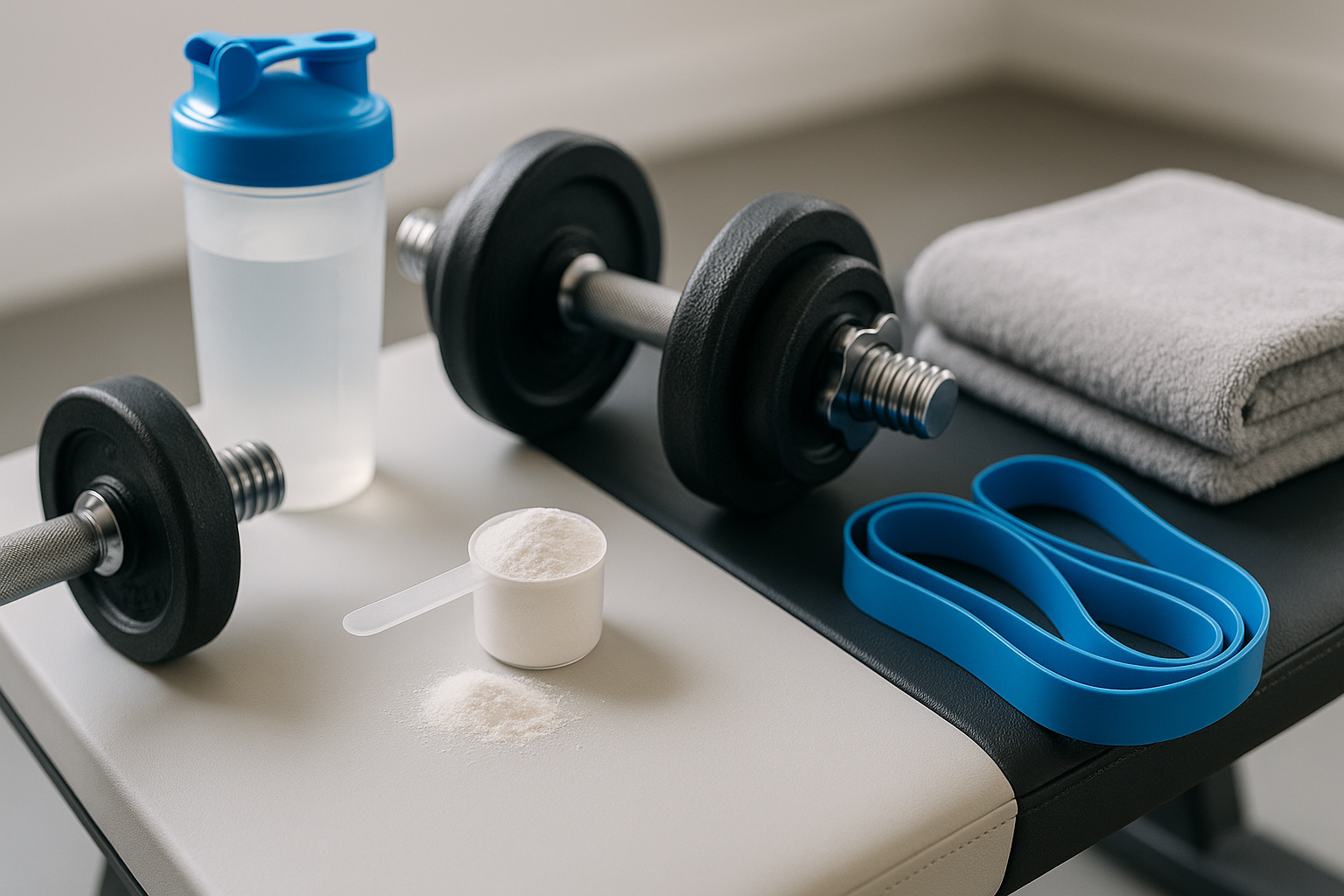
Creatine helps regenerate adenosine triphosphate during short, intense efforts, which is why it is best known for supporting sprinting, lifting and repeated high-power work. In older adults, that same physiology may have broader importance. Muscle power declines faster with age than maximal strength, and reduced training capacity can make it harder to maintain muscle, mobility and confidence in exercise.
In practical terms, creatine may help older trainees perform a few more high-quality repetitions, sustain training intensity, or recover better between hard efforts. Over time, that can support the real driver of progress: consistently effective training. This is one reason creatine is frequently discussed not just as a performance aid, but as a possible tool for healthier ageing.
The best-established use case remains straightforward: combine creatine monohydrate with a structured resistance-training plan. That is where much of the strongest evidence sits in the wider literature. The supplement is not a substitute for training, protein intake, sleep or adequate total calories, but it may make those training sessions more productive.
For readers comparing options, the evidence still overwhelmingly favours monohydrate over trendier alternatives. If you are shopping, see our best creatine rankings, creatine brand reviews and creatine product catalog for product context rather than marketing claims.
How to read this source without overstating it
The biggest limitation here is the source type. This is a narrative review, not a new intervention study. That means the authors summarise and interpret previous research, but the review itself does not randomly assign older adults to creatine or placebo, and it does not generate a fresh pooled estimate the way a systematic review and meta-analysis would.
That distinction matters. Narrative reviews can be very useful for clinicians and informed readers because they connect topics across performance, ageing and practical supplementation. But they are more vulnerable to selection bias, uneven weighting of studies and expert interpretation. If the underlying trials are small, short, heterogeneous or mixed in quality, the confidence we can have in broad conclusions is limited.
Another challenge in this area is that “older adults” and “masters athletes” are not interchangeable groups. Masters athletes often train harder, eat better and start from a higher functional baseline than the average older adult. A finding that looks promising in active, resistance-trained people may not translate neatly to sedentary adults, people with chronic illness, or those dealing with frailty.
So the fair reading is this: the review supports continued interest in creatine for healthy ageing and athletic ageing, but it does not settle every practical question about dose, duration, sex differences, baseline creatine stores or who benefits most.
What this means in practice for creatine users
For most people considering creatine after 40, 50 or 60, the practical advice does not change much because of this paper. The best-supported approach is still creatine monohydrate, taken consistently. A common maintenance intake is 3-5 g/day. People who want to raise muscle creatine stores more quickly can use an optional loading phase of about 20 g/day, usually split into 4 doses, for 5-7 days, then continue with a maintenance dose.
Timing is far less important than consistency. Taking creatine daily with a meal or after training can be a simple way to build the habit. Hydration and total diet still matter, and creatine tends to make the most sense when paired with progressive resistance training.
- Best candidates: older adults doing resistance or mixed training, and masters athletes seeking support for high-quality training.
- Less certain cases: people expecting dramatic fat loss, endurance breakthroughs or large benefits without training.
- Most evidence-based form: creatine monohydrate.
If you want a personalised starting point, use the creatine dosage calculator. For broader education, our creatine guides cover loading, maintenance and common side effects in more detail.
How this fits the wider creatine evidence base
This review largely aligns with the mainstream consensus: creatine monohydrate is one of the most studied and best-supported sports supplements, and its strongest benefits are usually seen in high-intensity performance and resistance-training adaptations. The broader literature also supports a good safety profile for healthy people when creatine is used as recommended.
The International Society of Sports Nutrition position stand remains one of the clearest overviews of efficacy and safety, and its conclusions are broadly consistent with the idea that creatine can support training adaptations across multiple populations, including older adults. Readers can review that source directly here: Kreider et al. (2017), ISSN Position Stand.
Likewise, a later review addressing common misconceptions reinforces several practical points that matter for this article: monohydrate is the reference form, daily use matters more than exotic protocols, and many popular fears about creatine are not well supported in healthy users. See Antonio et al. (2021) for that context.
Where the present source adds value is its ageing-specific framing. It helps put creatine into the conversation about maintaining muscle and performance later in life. But it also sits within, rather than above, the wider evidence base. It should strengthen informed interest, not trigger inflated expectations.
Bottom line for older adults and masters athletes
The news here is not that creatine has suddenly been proven for every older person. It is that a new ageing-focused review places creatine among the more credible supplement options for masters athletes and older adults, especially when the goal is to support resistance training, strength and lean mass.
That is meaningful, but the right level of confidence is moderate rather than absolute. The source is a narrative review, and outcomes in this field depend heavily on study design, exercise programme, participant characteristics and adherence. In other words, creatine looks useful, not magical.
If you are healthy, active, and already training with intent, creatine monohydrate remains a sensible evidence-based option to discuss with your clinician if needed. If you are not training, start there first. The supplement is most helpful as part of a bigger plan that includes resistance exercise, adequate protein, sleep and recovery.
For most readers, the shortest practical summary is this:
- Choose creatine monohydrate.
- Take it consistently at 3-5 g/day, with optional loading if desired.
- Expect the best odds of benefit when combined with resistance training.
- Do not expect the review to erase the normal uncertainty that comes with mixed human research.
Creatine basics that still matter most
- 3-5 g/day Typical maintenance dose — Mainstream evidence-based range for creatine monohydrate.
- 20 g/day Common loading amount — Usually split into 4 doses daily.
- 5-7 days Typical loading duration — Optional, not required for benefits over time.
- 1 form Most studied creatine type — Creatine monohydrate remains the reference standard.
Frequently Asked Questions
Does this new review prove creatine works for all older adults?
No, this review does not prove creatine works for all older adults. It is a narrative review of existing research, so it suggests creatine is promising, especially with resistance training, but it cannot remove the uncertainty created by mixed study designs, different populations and varying supplement protocols.
Who is most likely to benefit from creatine based on this article?
Older adults and masters athletes who do regular resistance or mixed training are most likely to benefit. The best-supported outcomes are usually related to strength, lean mass and training quality, while expectations should be lower if someone is sedentary or looking for major effects without structured exercise.
What type of creatine should older adults choose?
Creatine monohydrate is the best choice for most older adults. It is the most studied form by far, it is usually the most cost-effective option, and the wider evidence base behind safety and efficacy is much stronger than for newer or more heavily marketed forms.
What dose makes sense for someone starting creatine?
A daily dose of 3-5 g of creatine monohydrate makes sense for most beginners. An optional loading phase of about 20 g/day split into 4 doses for 5-7 days can raise stores faster, but it is not necessary if you are happy to reach saturation more gradually.
Is timing important for creatine in older athletes?
Timing is less important than taking creatine consistently. Many people take it with a meal or after training because that is easy to remember, but the bigger factor is daily adherence over weeks and months, especially when combined with progressive resistance training.
Should older adults worry about safety?
Healthy older adults should not assume creatine is unsafe, but they should still use it thoughtfully. The broader literature generally supports a good safety profile for creatine monohydrate in healthy users, though anyone with kidney disease, major medical conditions or medication concerns should speak with a clinician first.