
Heat Trial Will Test Creatine’s Kidney and Cognition Effects
A newly listed clinical trial will test whether one week of creatine monohydrate changes acute kidney injury markers, urinary inflammation and cognitive performance after strenuous exercise in the heat. The key point is that this source describes a study protocol, not results, so it signals an important question rather than proving a benefit or risk.
Source: ClinicalTrials.gov
Key Takeaways
- This is a registered clinical trial protocol, not a published results paper.
- Researchers will compare creatine monohydrate with maltodextrin placebo over seven days.
- Participants will complete 90 minutes of cycling in a 38 C heated chamber at about 40% relative humidity.
- The trial is designed to track urinary inflammation markers, acute kidney injury markers and cognition before and after heat stress.
- The dose is 20 g/day for seven days, which matches a common creatine loading strategy.
- Until results are published, the study does not show that creatine helps or harms kidneys, heat tolerance or cognition.
What this new creatine heat trial is actually testing
The news here is not a new finding but a new registered human trial. According to the ClinicalTrials.gov listing, researchers plan to test whether one week of creatine monohydrate supplementation changes three things during and after exercise in the heat: urinary inflammatory markers, markers associated with acute kidney injury (AKI) risk, and cognitive performance.
That matters because creatine is already widely used for strength, power and lean mass, yet questions still come up around kidney safety, hydration and how the supplement behaves under stressful conditions such as prolonged exercise in the heat. This trial is aimed directly at those concerns in active, young, healthy volunteers.
The study will compare creatine monohydrate with a placebo made of maltodextrin. The core test session is demanding: participants will cycle for 90 minutes in a heated chamber set to 38 C and approximately 40% relative humidity, alternating between lower- and higher-intensity work. Before and after that heat-stress session, researchers will assess urine markers and administer cognitive tasks from the NIH Toolbox.
For readers, the most important interpretive point is simple: this source does not report outcomes. It tells us what investigators intend to measure and how they plan to test it. That makes it useful for tracking where creatine research is heading, but not for claiming creatine protects kidneys, improves cognition in the heat, or changes inflammatory responses. Those answers have to wait for completed data and peer-reviewed publication.
How the study is designed and why that matters
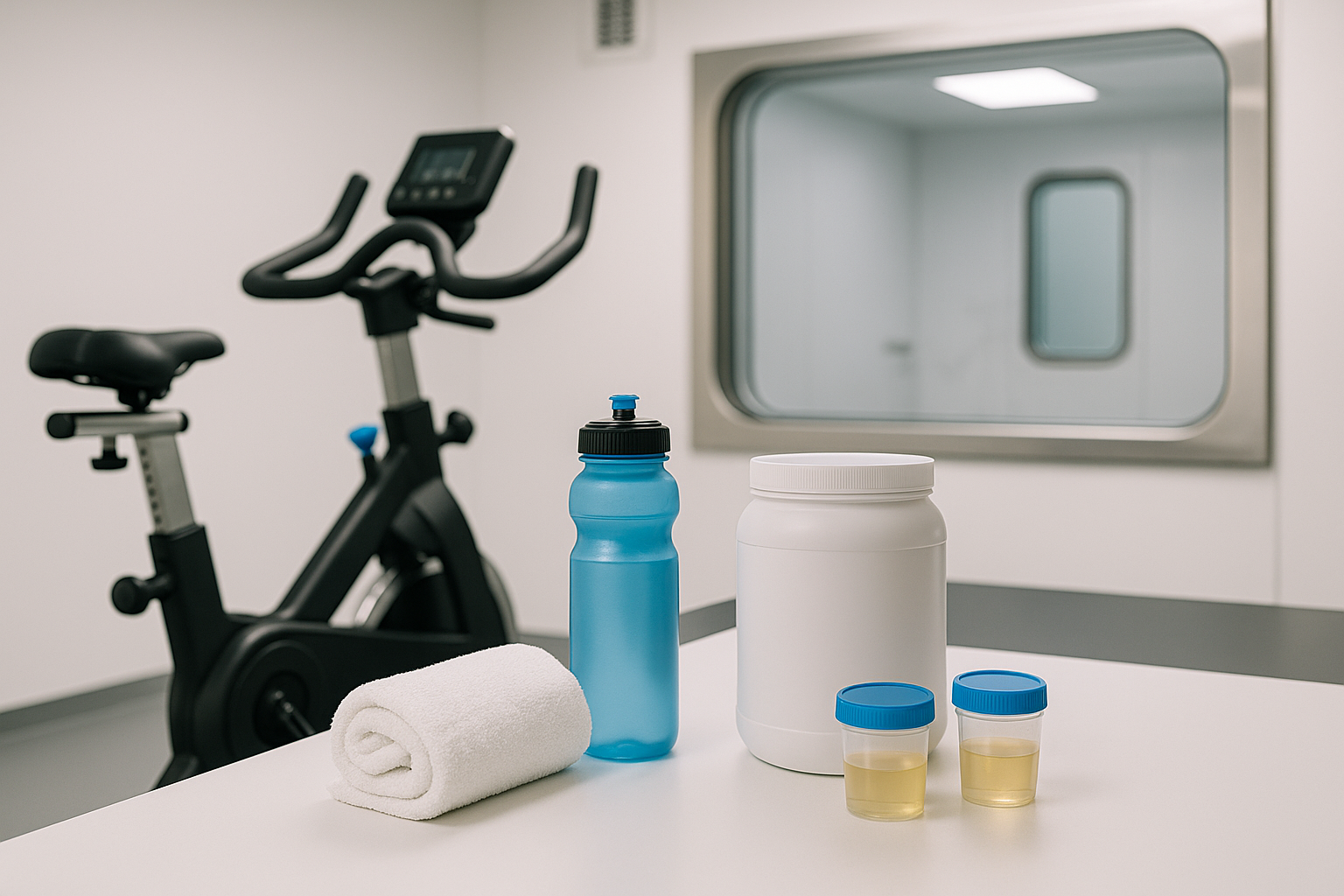
The protocol uses a design that should, in principle, give cleaner answers than a simple before-and-after supplement test. Participants first complete a baseline aerobic test to measure VO2max. They then consume either 20 grams per day of creatine monohydrate or placebo for seven consecutive days. After the heat-exercise trial, they return at least 21 days later to complete the other condition.
That crossover approach is important because each participant effectively serves as their own comparison. In exercise physiology, that can reduce the noise created by individual differences in fitness, sweat rate, heat tolerance, habitual diet and baseline creatine stores.
The protocol also includes several practical measurements:
- Urine collection before, immediately after, and one hour after exercise
- Core temperature monitoring via rectal thermistor
- Cognitive testing before and after exercise using the NIH Toolbox
- Alternating exercise intensities during a prolonged heat exposure
There are still limits. The listing does not provide results, and from the summary alone we do not know the final sample size analysed, how well blinding held, or which specific urinary AKI and cytokine markers will be emphasised in the final report. We also do not know whether the participants are male, female or mixed, or how representative they are of older adults, team-sport athletes, labourers or people with medical conditions.
So, methodologically, this is a sensible and relevant protocol. But until data are published, it remains a well-targeted question, not evidence that creatine changes kidney stress or cognitive resilience in the heat.
Why kidney and heat questions keep following creatine
Creatine is one of the most studied sports supplements, but it still attracts persistent questions about kidney function and dehydration, especially during hard training or hot-weather exercise. That is partly because creatine increases intramuscular water content and can modestly raise blood creatinine, a lab value sometimes used in kidney assessment. Those facts are often misunderstood.
In broader evidence summaries, including the ISSN position stand and the review on common misconceptions by Antonio et al. (2021), creatine monohydrate is generally considered safe for healthy people when used appropriately. Those papers also note that anecdotal concerns about cramping, dehydration and kidney harm are not well supported by the totality of evidence.
Still, “generally safe” is not the same thing as “every context has been fully tested”. A prolonged cycling bout in a 38 C environment is a specific and physiologically stressful scenario. It makes sense to ask whether short-term creatine loading changes urinary responses linked to kidney stress or inflammation, and whether it affects mental performance when fatigue and heat strain are high.
That is why this trial is useful even before results arrive. It focuses on a real-world concern many athletes have: If I take creatine and then train hard in hot conditions, does anything meaningfully change in my kidney-stress markers or my ability to think clearly? The current listing does not answer that question yet, but it is asking the right one.
What it means in practice if you use creatine now
For now, the practical message is conservative: do not change your habits based on this listing alone. There are no results yet. If you already use creatine monohydrate, this trial does not provide evidence that you should stop before summer training, and it does not prove extra protection either.
The protocol’s dose, 20 g/day for seven days, is notable because it mirrors a standard loading strategy used to saturate muscle stores quickly. In mainstream practice, that loading phase is usually followed by a 3 to 5 g/day maintenance dose. If you want help estimating an appropriate routine, a creatine dosage calculator can be useful, and our broader creatine guides cover loading, maintenance and timing in more detail.
For people training in the heat, the basics still matter more than any single supplement:
- Arrive well hydrated
- Adjust pace and work-rest ratios to conditions
- Use cooling strategies where possible
- Do not ignore dizziness, confusion, nausea or worsening performance
If you are shopping, the form used in this trial is creatine monohydrate, which remains the reference standard in research. That is one reason our best creatine rankings, creatine brand reviews and creatine product catalog place so much weight on plain monohydrate, transparent labelling and sensible dosing.
Anyone with known kidney disease, unusual lab results, or medical advice to limit supplements should still speak with a clinician before using creatine, especially if combining it with hard endurance training in hot environments.
Where this fits in the existing creatine evidence
In the larger evidence base, creatine monohydrate is best established for improving high-intensity exercise performance, supporting gains in strength and lean mass, and helping increase intramuscular phosphocreatine stores. Evidence on cognition is more mixed and context-dependent. Some studies suggest possible benefits under stressors such as sleep loss, demanding mental work or low baseline creatine status, while others show little or no effect in well-rested healthy adults.
That nuance matters here. The trial is not simply asking whether creatine boosts brain function in general. It is asking whether it may attenuate heat- and fatigue-related reductions in cognitive measures. That is a more specific and more plausible question than claiming creatine is a universal nootropic.
The kidney side is similarly nuanced. Existing reviews generally do not support the idea that creatine monohydrate harms kidneys in healthy users, but targeted trials under specific stress conditions are still valuable. Exercise in the heat can transiently strain physiology, alter hydration status and affect renal biomarkers. A carefully controlled crossover test could therefore add useful detail, especially if it distinguishes between temporary biomarker shifts and clinically meaningful risk.
So this study’s eventual value will not be in overturning everything we know about creatine. More likely, if completed and published well, it could help refine one narrow but important question: what happens to inflammatory, renal and cognitive responses when short-term creatine loading is paired with hard exercise in hot conditions?
Bottom line for athletes, coaches and everyday users
The bottom line is straightforward: a new clinical trial is investigating whether seven days of creatine monohydrate changes urinary inflammation, AKI-related markers and cognition after 90 minutes of cycling in the heat. That is relevant and timely, but it is not a result.
For athletes and coaches, the main takeaway is to treat this as a study to watch. If published, it could add useful evidence to ongoing debates about creatine, hydration, heat stress and renal safety. For now, it should not be used to claim that creatine prevents kidney stress, improves heat tolerance, or preserves thinking under fatigue.
What remains solid today is the broader evidence base around creatine monohydrate as the most studied form, with established sports-performance benefits and a generally favourable safety profile in healthy users when taken appropriately. But context always matters: hot environments, long exercise sessions, medical history and hydration practices can all affect real-world risk.
If you use creatine, the sensible approach is unchanged: choose a reputable monohydrate product, dose it intelligently, hydrate appropriately and match your expectations to the evidence. This trial may eventually sharpen the picture for heat-stress scenarios. Until then, the right headline is not “creatine helps” or “creatine harms” in the heat. It is simply that researchers are finally putting the question to a more direct test.
The trial at a glance
- 20 g/day Creatine dose — Supplemented for seven consecutive days
- 7 days Loading period — Matches a common short loading protocol
- 90 minutes Heat exercise session — Cycling with alternating low and high intensity
- 38 C Chamber temperature — At approximately 40% relative humidity
Frequently Asked Questions
Did this study find that creatine protects the kidneys in the heat?
No, this source did not find that creatine protects the kidneys in the heat. It is a trial registration describing what researchers plan to test, not a published results paper, so there are no outcome data yet.
Did the trial show that creatine improves cognition after hard exercise?
No, the trial listing does not show that creatine improves cognition after hard exercise. It says researchers will measure cognitive performance before and after heat stress, but the actual results have not been reported.
Why are researchers looking at acute kidney injury markers instead of just creatinine?
Because acute kidney injury markers can provide a more specific picture of kidney stress than creatinine alone. Creatinine can rise for several reasons, including greater muscle mass or creatine use, so targeted urinary markers may help interpret whether heat exercise is causing meaningful renal strain.
Is 20 grams per day of creatine a normal dose?
Yes, 20 grams per day is a standard short loading dose for creatine monohydrate. It is commonly split into four smaller doses for five to seven days, then followed by a maintenance intake of about 3 to 5 grams per day.
Should I stop taking creatine before summer training until this study is published?
No, this listing alone is not a reason to stop taking creatine before summer training. Current evidence still supports creatine monohydrate as generally safe for healthy users, but you should keep hydration, pacing and medical history in mind when training in hot conditions.
Who will this study be most relevant to?
This study will be most relevant to active, young, healthy people who train hard in hot conditions. It may also interest coaches and practitioners working with endurance athletes, field-sport players and military or occupational groups exposed to heat stress.