Creatine gummy trial to test blood-levels vs powder
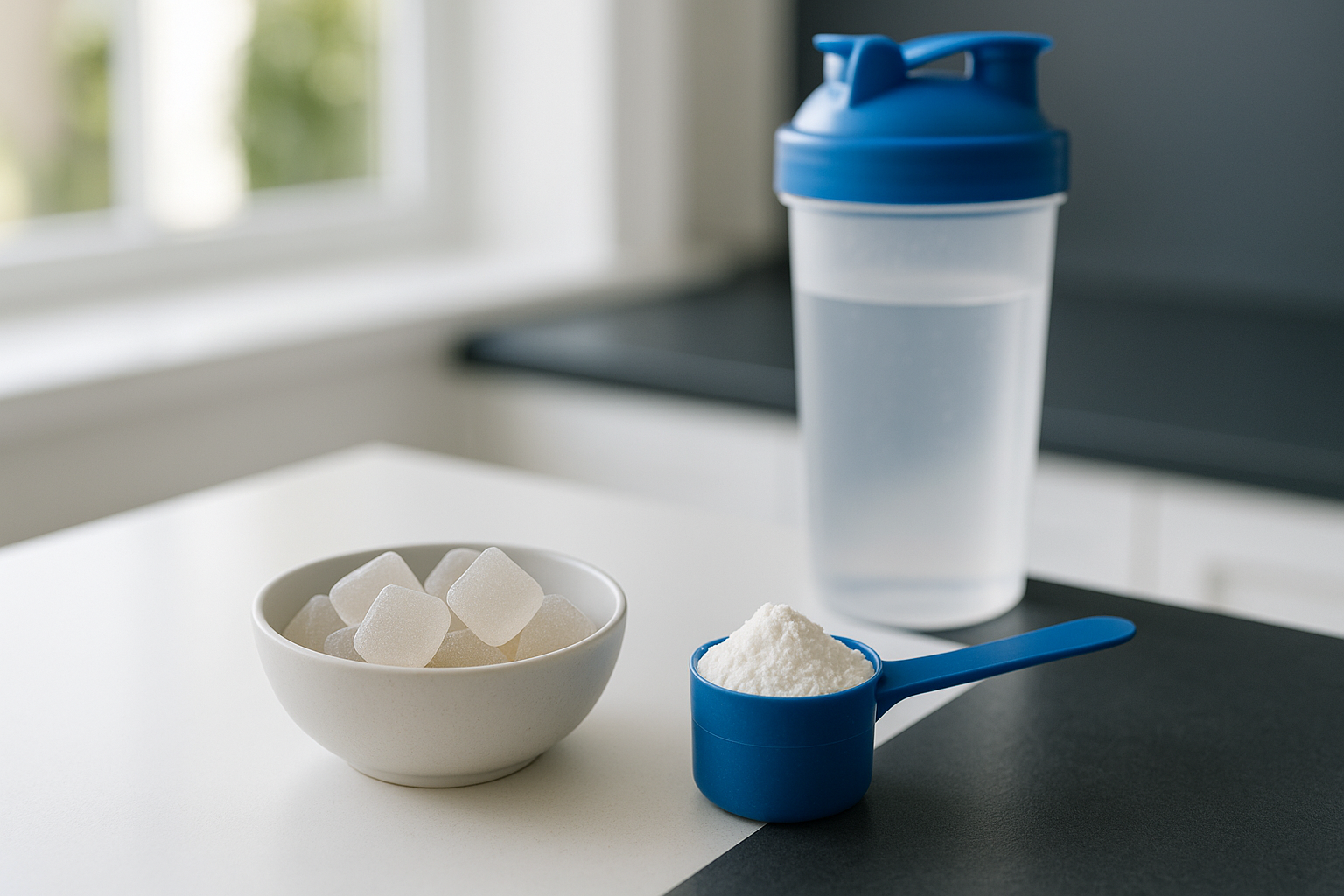
A newly listed ClinicalTrials.gov study will compare blood creatine levels after a single dose of Create Wellness creatine gummies versus creatine monohydrate powder in healthy adults. What is new here is not a proven winner, but a direct pharmacokinetic test of whether a gummy format matches the standard powder on short-term blood exposure.
Source: ClinicalTrials.gov
Key Takeaways
- This source describes a planned or registered acute pharmacokinetic study, not published results.
- The main outcome is blood creatine levels after oral dosing of gummies versus creatine monohydrate powder.
- Because the study is acute, it will not answer whether gummies improve strength, muscle gain, or long-term creatine stores.
- Creatine monohydrate remains the most-studied reference form for efficacy, safety, and practical dosing.
- For consumers, the real question is likely convenience and adherence, unless the trial shows meaningfully similar absorption.
What this new study is actually testing
The ClinicalTrials.gov record is straightforward: researchers aim to compare blood creatine levels after acute oral supplementation with Create Wellness creatine gummies versus creatine monohydrate powder in healthy adults. That makes this a pharmacokinetic question first, not a performance question.
In plain English, the study is asking whether the gummy format produces a similar short-term rise in blood creatine after ingestion. That matters because gummies are being marketed as a more convenient way to take creatine, but convenience alone does not tell you whether the active ingredient reaches circulation in a comparable way.
Just as important is what the source does not show. The registry entry and abstract provided do not report outcomes, numerical results, adverse events, or conclusions. So there is no basis yet to say that gummies are better, worse, or equivalent to powder. At this stage, the news is the launch of a direct comparison using a standard blood-level approach.
For readers weighing formats, this is still worth watching. Creatine products increasingly compete on taste, portability, and ease of use. But if a new delivery format wants to challenge traditional powder, the most credible starting point is exactly this kind of head-to-head study. Until results appear, best creatine rankings and most evidence-based recommendations should still lean on the better-studied powder forms rather than marketing claims.
Why blood levels matter and what they cannot prove
Blood creatine levels are a sensible early test of a supplement format because they show whether ingested creatine is appearing in circulation after a dose. If one product produces clearly lower exposure than another, that could raise questions about how much creatine is being delivered or absorbed. If levels look similar, that would support the idea that the format is at least pharmacokinetically competitive.
But blood levels are only one piece of the puzzle. The outcomes most people care about are things like improved high-intensity performance, increased lean mass over training, or more reliable replenishment of intramuscular phosphocreatine. An acute blood test does not directly measure those.
That distinction matters because creatine works largely through muscle saturation over time, not through a single dramatic spike in the bloodstream. In mainstream practice, users often follow either a loading phase of about 20 g/day split into 4 doses for 5 to 7 days or a simpler maintenance approach of 3 to 5 g/day. Those recommendations are grounded in the broader evidence base around creatine monohydrate, not in one-time pharmacokinetic curves. See our creatine guides or use the creatine dosage calculator if your main goal is practical dosing rather than format experimentation.
So if this study eventually reports similar blood creatine responses, that would be encouraging for gummies. It still would not, by itself, prove equal long-term effectiveness in the gym.
How the study design limits the claims
Based on the source material, this is an acute study in healthy adults. That design is appropriate for pharmacokinetics, but it also sharply narrows what can be concluded.
- Acute dosing means the study looks at a short window after ingestion, not weeks of use.
- Healthy adults is a broad but still limited population; findings may not generalize to adolescents, older adults, clinical populations, or elite athletes.
- Blood creatine is a surrogate marker for absorption/exposure, not a direct measure of muscle creatine uptake, training adaptation, or recovery outcomes.
- The supplied source does not give a sample size, dosing details, feeding conditions, or timing of blood draws, all of which matter for interpretation.
Those missing details are not unusual for a brief registry abstract, but they matter. For example, whether participants were fasted, how much creatine each format delivered, and whether the dose was truly matched could all influence blood levels. Gummies also introduce practical formulation questions, such as the amount of carbohydrate or other excipients, that may affect tolerability or product size even if absorption is fine.
Until the full protocol or results are available, the most accurate framing is modest: this study should help answer whether a branded creatine gummy can produce a comparable acute blood-creatine response to monohydrate powder. It cannot settle every question consumers have about cost-effectiveness, performance, or long-term use. If you are comparing products now, our creatine brand reviews and creatine product catalog remain better tools than unpublished registry language alone.
How this fits the existing creatine evidence
This registry entry sits within a much larger and more settled creatine literature. The broad evidence base still supports creatine monohydrate as the most studied form for effectiveness, safety, and value. The International Society of Sports Nutrition position stand and later reviews continue to treat monohydrate as the reference standard because it has the deepest data behind it across performance and body-composition outcomes.
That context is crucial. New delivery systems often enter the market with claims about convenience, taste, or superior absorption. Sometimes those claims are plausible; often they are under-tested. A pharmacokinetic comparison like this one is useful precisely because it asks a narrower, more answerable question before leaping to bigger marketing narratives.
Readers should also remember that creatine is not a stimulant and does not need to “hit” in the way pre-workout products do. Daily intake and consistency matter more than a flashy format. As covered in Kreider et al. (2017) and Antonio et al. (2021), the big picture remains stable: creatine monohydrate is effective for many people when dosed appropriately, and common fears about it are often overstated.
If gummies ultimately show similar blood exposure and are easier for some users to take consistently, they may become a reasonable alternative format. But to displace powder as the evidence-based default, they would need more than a single acute trial.
What it means in practice for creatine users
For most people considering creatine today, the practical takeaway is conservative: there is no current evidence from this source that you should switch from monohydrate powder to gummies solely for better results. The trial may eventually show similar short-term blood levels, but that is not the same thing as proving superior muscle uptake or training benefits.
If you already use powder successfully, there is little reason to change on scientific grounds alone. Powder remains the most evidence-based option, especially when cost per gram and total daily dose matter. If you dislike powder, travel frequently, or struggle with adherence, gummies could be attractive if they deliver enough creatine per serving and fit your budget.
Before switching formats, ask a few practical questions:
- How many gummies are needed to reach an evidence-based daily dose?
- What is the cost per gram of creatine versus powder?
- Does the product use creatine monohydrate, or another form with less evidence?
- Will you realistically take it every day?
For users focused on performance, consistency still beats novelty. A simple daily 3 to 5 g maintenance dose is enough for many adults, while loading can speed saturation if desired. If a gummy helps you actually stick to that plan, it may have practical value. But the burden of proof remains on the product format, not on the consumer to assume it works the same.
Bottom line
The news here is not that creatine gummies have beaten powder. The news is that a registered study is set to compare acute blood creatine levels after Create Wellness gummies versus creatine monohydrate powder in healthy adults.
That is a worthwhile test, because it addresses a basic but important question about whether a newer, more convenient format behaves similarly to the standard. If the results show comparable blood exposure, gummies would gain some scientific credibility as an alternative delivery system. If they do not, that would reinforce the case for sticking with powder.
Either way, consumers should keep their expectations calibrated. Even a positive pharmacokinetic result would not automatically mean equal long-term effects on strength, muscle gain, or training recovery. For now, the larger evidence base still supports monohydrate powder as the best-established option.
So the actionable answer is simple: watch for the results, but do not rewrite your creatine routine based on a trial registration. Until published data arrive, evidence-based users are still best served by proven dosing, consistent intake, and products that clearly deliver enough creatine to matter.
What this creatine gummy study can and cannot tell us
- 1 acute comparison — The registry describes a single short-term pharmacokinetic comparison, not a training study.
- 2 formats compared — Create Wellness creatine gummies versus creatine monohydrate powder.
- 3-5 g/day standard maintenance dose — Mainstream evidence-based daily creatine intake for many adults.
- 20 g/day common loading approach — Typically split into 4 doses for 5-7 days to accelerate saturation.
Frequently Asked Questions
Did this study show that creatine gummies work better than powder?
No. The supplied source does not report results, so it does not show that gummies are better, worse, or equal. It only tells us that researchers plan to compare blood creatine levels after gummies versus creatine monohydrate powder in healthy adults.
Why compare blood creatine levels at all?
Blood creatine levels help show whether a creatine product delivers the ingredient into circulation after a dose. That is useful for testing absorption or exposure, but it does not directly prove long-term effects on strength, lean mass, or muscle creatine saturation.
If blood levels are similar, does that mean gummies are just as good?
Not necessarily. Similar blood levels would be encouraging, but they would still be only one piece of evidence. Long-term efficacy depends on factors such as total daily dose, consistency, muscle uptake over time, and whether the product is practical enough to use regularly.
Should I switch from creatine powder to gummies now?
Probably not on scientific grounds alone. Creatine monohydrate powder remains the most studied and usually the most cost-effective format. Gummies may be worth considering for convenience or adherence, but this source does not yet provide outcome data strong enough to justify switching for better results.
What is the standard evidence-based creatine dose?
For many adults, 3 to 5 g per day is the standard maintenance dose. A common loading option is about 20 g per day split into four doses for 5 to 7 days, which can raise muscle creatine stores faster before moving to a maintenance intake.
Does this study tell us anything about creatine safety?
Only indirectly. The source is an acute pharmacokinetic study in healthy adults, not a dedicated long-term safety trial. Broader creatine safety conclusions still come mainly from the existing literature on creatine monohydrate rather than from this single registered comparison.