
This 2026 biomarker paper isn’t about creatine
The supplied paper does not provide usable evidence about creatine supplementation. Instead, the source material describes a medical case involving persistently elevated troponin T, later explained by macrotroponin, with only a brief mention that moderately raised creatine kinase could suggest an underlying muscle disorder.
Source: Journal of mother and child
Key Takeaways
- This is not a creatine supplementation trial, safety study, or performance study.
- The source material describes a case of elevated troponin T later explained by macrotroponin, not an effect of creatine use.
- A mention of moderately elevated creatine kinase is about a muscle enzyme, not creatine powder or creatine monohydrate.
- Readers should not infer that creatine supplements raise troponin, cause chest pain, or create this lab pattern.
- For practical creatine decisions, broader evidence still supports creatine monohydrate as the most-studied form, typically at 3–5 g/day for maintenance.
What the source actually found
The most important point for Creatine Canada readers is simple: this source is not a creatine study. The material provided alongside the citation describes a clinical case in which a woman in her 70s presented with chest pain and elevated troponin T, a blood biomarker commonly used when clinicians suspect heart muscle injury.
According to the supplied abstract text, her initial troponin T was 108 ng/L, later rising to 263 ng/L. Yet the usual cardiac workup did not line up cleanly with a heart attack or another obvious structural cardiac diagnosis: electrocardiogram and coronary angiography were normal, and cardiac MRI plus echocardiography did not show definitive pathology. Troponin T remained persistently elevated at around 270 ng/L, and even 14 months later it was still elevated at 89 ng/L.
The key explanation offered was biochemical rather than cardiac: further testing suggested macrotroponin, meaning troponin T bound to IgG, which can produce a falsely elevated result. The abstract also notes that the underlying reason for the initial elevation remained uncertain and that a moderately persistent rise in creatine kinase could point to an underlying myopathic process.
That last detail may catch the eye of supplement readers, but it should not be overread. Creatine kinase is an enzyme measured in blood; it is not the same thing as dietary creatine supplementation. Nothing in the supplied source shows that creatine supplements caused the symptoms, changed troponin, or were even used by the patient.
Why this is not evidence for or against creatine supplementation
There are two easy ways readers can get misled by medical papers in this area. First, the word creatine is often confused with creatine kinase or creatinine. These are related to muscle and metabolism, but they are not interchangeable terms.
- Creatine is the compound found in foods and supplements, often taken to support strength, power, lean mass, and high-intensity performance.
- Creatine kinase is an enzyme that can rise in the blood when muscle tissue is stressed or damaged.
- Creatinine is a breakdown product often used in kidney function testing.
Second, a case report about unusual lab results should not be treated as a supplement headline unless the paper actually studied supplement exposure. The source material here does not report creatine dosing, loading, timing, brand, formulation, or even whether the patient took creatine at all. That means there is no basis for linking this case to creatine products, creatine brand reviews, or differences among formulas.
In practical terms, this is a story about diagnostic interpretation: when biomarkers do not match the clinical picture, clinicians may need to consider analytical interference or alternative explanations. It is not a story showing that creatine monohydrate alters troponin, causes chest pain, or increases malignant hyperthermia risk.
If you are choosing a supplement, this paper should not move your decision one way or the other. For that, readers are better served by broader evidence reviews and position stands, not an unrelated case narrative.
How the evidence is designed — and why its limits matter
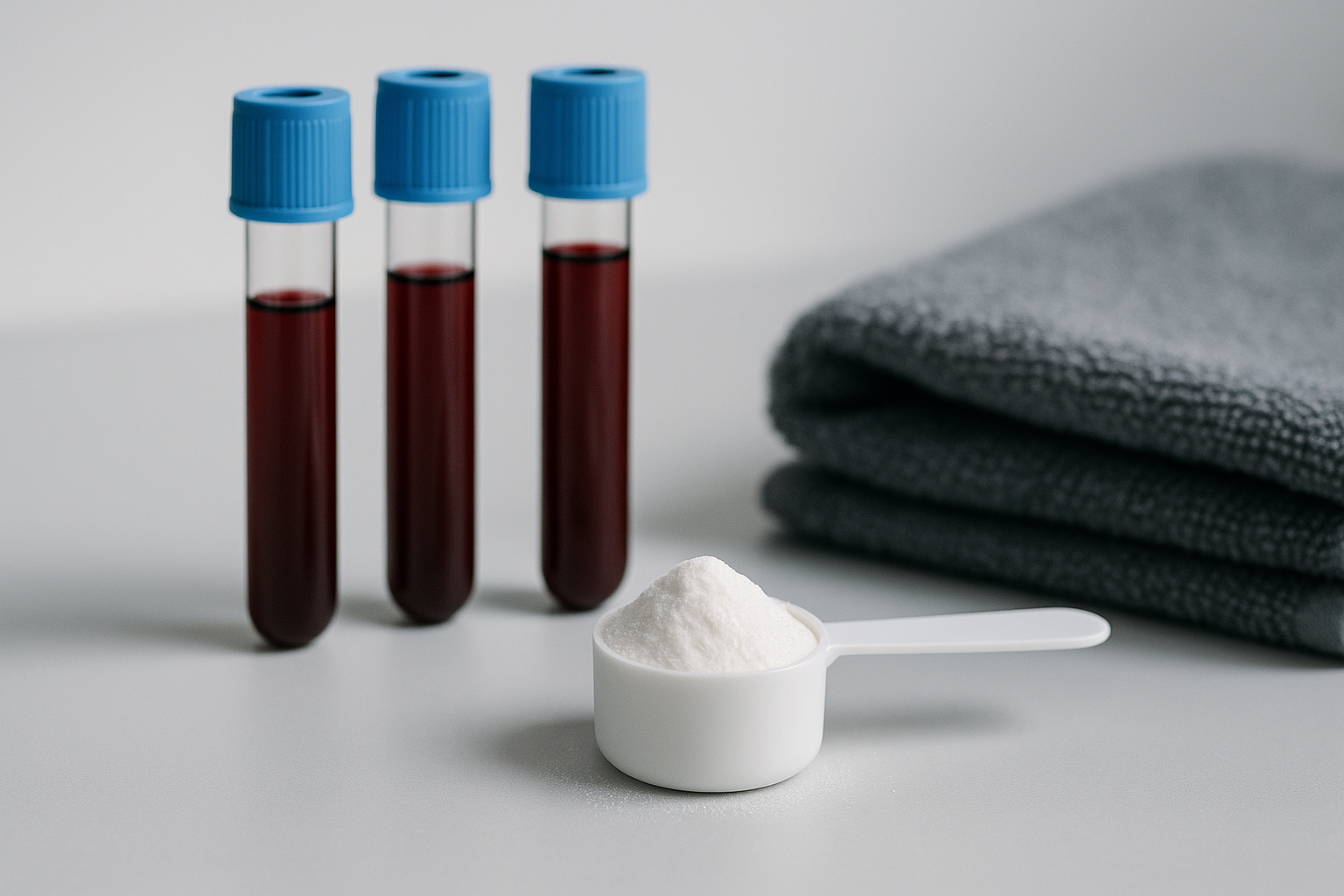
Based on the supplied material, this is a single-patient clinical case report or case-based discussion. That design can be valuable for highlighting unusual findings, rare diagnostic pitfalls, or mechanisms clinicians should keep in mind. But it sits near the bottom of the evidence hierarchy for answering supplement questions.
Here are the main limitations for anyone trying to learn something about creatine:
- Sample size of one: there is no comparison group and no way to estimate how often this happens.
- No creatine exposure data: no supplement history, dose, timing, or product information is reported in the supplied text.
- No causal test of creatine: there is nothing showing creatine changed troponin, creatine kinase, symptoms, or outcomes.
- Possible source mismatch: the citation provided and the abstract text supplied do not clearly align, which makes caution even more important when interpreting the item.
That final point deserves emphasis. The user-supplied primary source title references King-Denborough syndrome and malignant hyperthermia risk, but the accompanying abstract text is about a case of elevated troponin T and macrotroponin. Because those are not the same topic, the safest and most accurate editorial approach is to report only what is clearly present in the supplied material and avoid inventing conclusions.
For readers, the lesson is straightforward: before treating a study as supplement news, confirm what was actually studied, in whom, and compared with what. That is the difference between evidence-based guidance and keyword confusion.
What it means in practice for people taking or considering creatine
The practical takeaway is reassuring: this source does not provide a reason to stop using creatine monohydrate if it otherwise suits your goals and your healthcare context. It also does not create a new reason to start.
For most healthy adults using creatine for performance or training support, the mainstream evidence base remains the more relevant guide. That usually means:
- Maintenance: about 3–5 g/day of creatine monohydrate.
- Optional loading: about 20 g/day split into 4 doses for 5–7 days, then maintenance.
- Timing: consistency matters more than precise timing for most people.
If you want help estimating an appropriate daily amount, a creatine dosage calculator is more useful than trying to extrapolate from an unrelated medical case. Likewise, if you are comparing forms or purity, start with evidence-grounded best creatine rankings and broader creatine guides.
The one area where this case may matter indirectly is clinical communication. If you are undergoing bloodwork or being evaluated for cardiac or muscle-related symptoms, tell your clinician what supplements you use, but do not assume creatine is the explanation for every abnormal lab result. Troponin abnormalities, chest pain, or persistent symptoms deserve proper medical assessment. And if a biomarker does not fit the wider clinical picture, the answer may lie in assay interference, lab methodology, or another underlying condition rather than in your supplement tub.
How this fits the broader evidence on creatine safety and efficacy
When placed against the broader literature, this item changes essentially nothing about the current understanding of creatine. Large reviews and position statements continue to support creatine monohydrate as the most-studied form of creatine, with evidence for performance benefits in repeated high-intensity exercise and a generally favourable safety profile in appropriate populations.
The International Society of Sports Nutrition position stand and later review work both stress that many common creatine fears are overstated or unsupported, especially when the discussion drifts from actual supplementation studies into unrelated lab markers or anecdotal cases. Readers can review that broader context in Kreider et al. (2017), ISSN Position Stand: Safety and Efficacy of Creatine and Antonio et al. (2021), Common questions and misconceptions about creatine supplementation.
That does not mean creatine is for everyone in every scenario. People with complex medical conditions, unusual symptoms, or medication interactions should individualise decisions with a clinician. But it does mean that a case report centred on false-positive troponin T is far less informative for supplement users than the accumulated body of controlled creatine research.
So if your goal is to understand effectiveness, dosing, form selection, or safety, stick to the studies that actually investigate creatine use directly. This paper, based on the supplied material, is better read as a reminder that clinical chemistry can be messy.
Bottom line
The supplied source material does not show that creatine supplementation affects troponin, causes chest pain, raises malignant hyperthermia risk, or explains persistent biomarker abnormalities. What it does show is a diagnostic lesson: a persistently elevated troponin T result may sometimes reflect macrotroponin rather than ongoing heart injury, and a mention of elevated creatine kinase should not be confused with creatine supplementation.
For supplement users, the actionable message is conservative and clear:
- Do not treat this paper as evidence for or against creatine.
- Do not confuse creatine with creatine kinase or troponin.
- Use the broader evidence base to guide dosing and product selection.
- Seek medical evaluation for chest pain or abnormal lab work rather than self-diagnosing based on supplement content online.
If you are shopping for creatine, focus on well-tested monohydrate products in the creatine product catalog and evidence-based comparisons rather than medical case reports that do not actually study supplementation. That is the clearest way to separate true creatine news from keyword noise.
What the source says — and what mainstream creatine evidence says
- 108 ng/L Initial troponin T in the case — From the supplied abstract text describing the medical case.
- 14 months Later readmission interval — Troponin T was still elevated at readmission in the supplied case summary.
- 3–5 g/day Typical creatine maintenance dose — Well-established mainstream creatine guidance for monohydrate.
- 20 g/day for 5–7 days Common optional loading protocol — Usually split into 4 daily doses before switching to maintenance.
Frequently Asked Questions
Does this paper show that creatine raises troponin?
No, the supplied source does not show that creatine raises troponin. The material describes a case of elevated troponin T later explained by macrotroponin, and it does not report that creatine supplementation was used or caused the biomarker pattern.
Is creatine kinase the same thing as creatine?
No, creatine kinase is not the same thing as creatine. Creatine kinase is a muscle-related enzyme measured in blood, while creatine is the nutrient compound found in foods and supplements such as creatine monohydrate.
Should people stop taking creatine because of this report?
No, this report does not give a clear reason for most users to stop taking creatine. It is not a creatine intervention study, and the broader evidence base remains much more relevant for assessing creatine’s typical safety and efficacy.
What is macrotroponin?
Macrotroponin is troponin bound to an antibody, often IgG, which can produce a falsely elevated lab result. In the supplied case summary, that mechanism was used to explain why troponin T stayed elevated despite a clinical picture that did not strongly support ongoing cardiac injury.
What dose of creatine is usually supported by mainstream evidence?
A typical evidence-based maintenance dose is 3–5 g/day of creatine monohydrate. Some people also use an optional loading phase of about 20 g/day split into 4 doses for 5–7 days before switching to maintenance.
How should readers evaluate medical stories that mention creatine-related lab markers?
Readers should first check whether the paper actually studied creatine supplementation. If the report is really about biomarkers such as creatine kinase, creatinine, or troponin, it may have little or nothing to say about creatine supplements themselves.