
SCI review flags creatine as a possible support tool
A new review on chronic spinal cord injury does not show that creatine treats SCI, but it does highlight the need for broader, proactive management of long-term complications where supportive nutrition strategies may matter. For creatine users, the key news is contextual: this is a high-level review, not a trial proving benefit in people with chronic SCI.
Source: Annals of medicine
Key Takeaways
- This paper is a narrative review of chronic spinal cord injury complications, not a creatine intervention study.
- The review’s main message is that chronic SCI care remains reactive and symptom-focused, with a need for more proactive, individualised management.
- The source does not provide new efficacy data showing creatine improves outcomes after chronic SCI.
- Creatine may still be relevant as a supportive supplement in muscle and rehabilitation contexts, but that broader evidence comes from outside this review.
- For most healthy adults, creatine monohydrate remains the best-studied form, typically used at 3-5 g/day or after a 5-7 day loading phase of about 20 g/day split into 4 doses.
What the review actually says about chronic SCI
The paper in Annals of Medicine is a broad review of the clinical management of complications after chronic spinal cord injury (SCI). Its headline finding is not about a new drug, supplement, or rehabilitation breakthrough. Instead, the authors argue that long-term SCI care is still largely reactive and symptom-oriented, even though chronic SCI affects multiple systems at once, including motor, respiratory, cardiovascular, gastrointestinal, and urinary function.
That matters because chronic SCI is not just a movement problem. Over time, complications can drive rehospitalisation, lower quality of life, and increase healthcare costs. The review’s central message is that managing these complications needs a more proactive, patient-centred, multidisciplinary model rather than isolated treatment of one symptom at a time.
For creatine readers, the important nuance is simple: this source does not present new data showing creatine improves outcomes in chronic SCI. If you saw the study cited in supplement conversations, it is best understood as a context-setting medical review, not proof of benefit from any specific ergogenic aid.
Still, the review is relevant because it reinforces a bigger idea familiar in sports nutrition: preserving muscle function, maintaining engagement in rehab, and supporting long-term physical capacity can matter in chronic conditions. That is where interest in well-studied supplements such as creatine tends to arise. But that broader relevance should not be confused with evidence that this paper itself demonstrated a creatine effect.
Where creatine fits into the story, and where it doesn’t
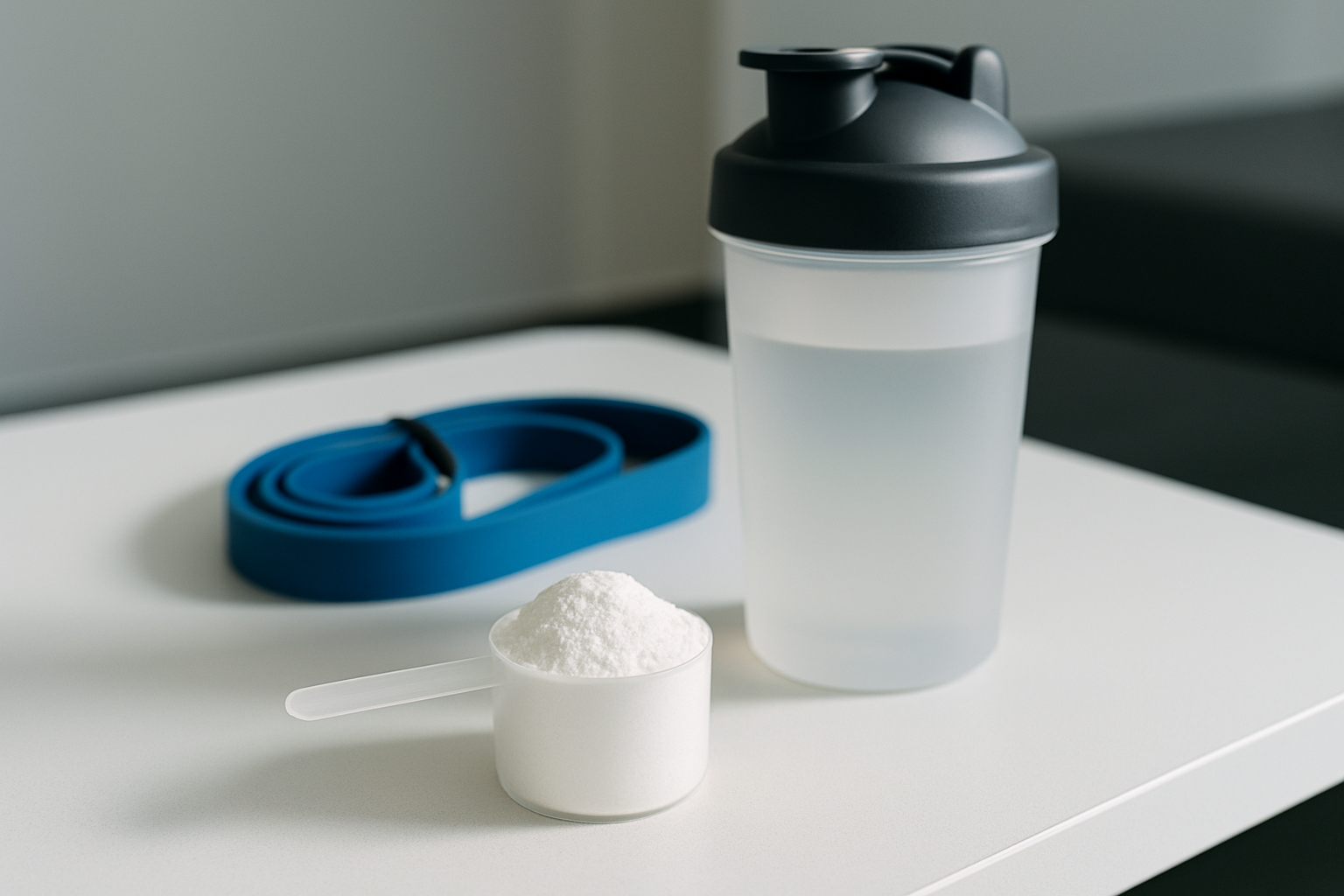
If you are looking for a direct creatine takeaway, the honest answer is restrained. This review does not test creatine, does not report a creatine dose, and does not quantify creatine-related improvements in strength, function, fatigue, or quality of life in chronic SCI. So it should not be framed as evidence that people with SCI should start creatine for clinical benefit.
What it does do is highlight a treatment gap: chronic SCI management often struggles with durability, accessibility, and sustained patient engagement. In real life, that creates interest in lower-burden supportive tools that may help preserve lean mass or training capacity alongside rehabilitation. Creatine frequently enters that discussion because it is the most-studied sports supplement overall, especially in muscle and performance settings.
Mainstream evidence outside this paper supports creatine monohydrate as the reference form for supplementation. The International Society of Sports Nutrition position stand and related reviews consistently describe creatine monohydrate as effective and generally safe for healthy populations when used appropriately. See Kreider et al. (2017), ISSN Position Stand and Antonio et al. (2021).
But chronic SCI is a medical condition with unique physiology, comorbidities, mobility limitations, and medication considerations. That means evidence from athletes or healthy gym-goers cannot simply be pasted over this population. Anyone with SCI considering creatine should treat it as a discussion for a clinician or rehab team, not a conclusion supplied by this review alone.
How the source was designed, and its key limitations
This paper is a review article, meaning it synthesises recent advances and current limitations in managing complications after chronic SCI. That design is useful for seeing the big picture across systems and therapies, but it is fundamentally different from a randomised controlled trial or a meta-analysis focused on one intervention.
In practical terms, a review can tell you:
- which complications matter clinically,
- where current care falls short,
- which treatment areas are evolving, and
- where more research is needed.
What it usually cannot do on its own is prove that a specific intervention causes a specific outcome. That is especially important here because the article’s abstract is broad and conceptual. It discusses rehabilitation, pharmacology, neuromodulation, surgery, and future directions such as neural regeneration and precision medicine, but it does not present new patient-level results for creatine.
There are a few limitations readers should keep in mind:
- No trial data in the source material: the abstract does not report participant numbers, effect sizes, or direct comparisons for creatine.
- Review-level uncertainty: conclusions depend on the quality and scope of the studies reviewed.
- Broad clinical focus: because the paper covers multiple body systems, it is not a dedicated nutrition or supplementation analysis.
- Not a prescribing document: it does not establish who should take creatine, at what dose, or for how long in chronic SCI.
Bottom line: this is a useful paper for understanding why chronic SCI care needs better long-term strategies, but it is not strong evidence for or against creatine in that population.
Practical creatine guidance for readers who want actionable advice
Because the review does not provide a creatine protocol, practical advice has to come from the established broader literature, not from this paper itself. For generally healthy adults using creatine for training support, the best-supported option remains creatine monohydrate.
Typical evidence-based approaches are:
- Maintenance only: 3-5 g per day.
- Optional loading: about 20 g per day split into 4 doses for 5-7 days, then 3-5 g per day.
Timing is much less important than consistency. Most people can simply take creatine daily with water or a meal. If you want a personalised estimate, our creatine dosage calculator can help you plan an intake approach, and our creatine guides cover practical questions in more detail.
For readers with chronic SCI or other medical conditions, though, the decision tree is different. The safer, more evidence-based approach is:
- Ask whether creatine is being considered for general nutrition support, preserving training capacity, or a specific rehab goal.
- Review kidney history, hydration issues, medications, and any clinician concerns.
- Prefer plain monohydrate over under-studied designer forms marketed with stronger claims.
If you are comparison shopping, our best creatine rankings, creatine brand reviews, and creatine product catalog focus on formula quality and transparency. Just keep the medical distinction clear: sensible product selection is not the same as proof of benefit for chronic SCI.
How this fits the broader evidence on creatine
The broader creatine literature is much stronger for exercise performance, lean mass support, and high-intensity training capacity than it is for chronic spinal cord injury specifically. That is why this review should be read as a signpost, not a verdict.
Across sports nutrition research, creatine monohydrate is one of the most extensively studied supplements. Position stands and reviews generally conclude that it can improve high-intensity exercise performance and support gains in lean mass when paired with training. It is also commonly described as safe for healthy users when taken at standard doses. Those points are well summarised by the ISSN review literature and by evidence digests such as Examine.com’s creatine summary.
What remains less clear is how much of that translates to populations with substantial neurological injury, altered muscle use, autonomic dysfunction, and complex rehabilitation needs. That uncertainty is exactly why the new review calls for more research and more individualised care models.
So the hierarchy of evidence here matters:
| Question | What the evidence is strongest for |
|---|---|
| Does creatine help healthy lifters and athletes? | Yes, especially creatine monohydrate in strength and high-intensity settings. |
| Does this review prove creatine helps chronic SCI? | No. It does not present direct efficacy data for creatine. |
| Should creatine be discussed in long-term rehab support? | Potentially, but as an individual clinical discussion rather than a settled recommendation from this source. |
That is the balanced reading: creatine remains credible in general sports nutrition, while its role in chronic SCI still needs targeted research.
Bottom line for creatine users and clinicians
The main news from this paper is about chronic SCI care, not about creatine. The review argues that people living with long-standing SCI need more proactive, multidisciplinary, individualised management because current approaches are often reactive and limited in long-term effectiveness.
For creatine users, the practical conclusion is cautious:
- This paper does not prove creatine treats chronic SCI complications.
- It does support the broader idea that long-term function and engagement matter, which is why supportive tools are of interest.
- Any creatine use in chronic SCI should be framed as a clinician-guided, case-by-case decision until better direct evidence exists.
If you are a generally healthy person deciding whether creatine is worth using, the answer from the larger evidence base is still yes: plain monohydrate is the best-studied option, and standard dosing remains straightforward. If you are living with chronic SCI, the more accurate takeaway is that creatine may be discussable, but this review is not the study that settles the question.
That distinction matters. Good science communication does not turn a broad medical review into a supplement headline it did not earn. In this case, the most trustworthy reading is also the most useful one: chronic SCI needs better long-term care models, and creatine’s place within that picture remains promising in theory but unproven by this source.
Creatine context readers should know
- 3-5 g/day Typical creatine monohydrate maintenance dose — Mainstream sports nutrition guidance for healthy adults
- ~20 g/day Common loading amount — Usually split into 4 doses for 5-7 days
- 5-7 days Typical loading phase duration — Optional before switching to maintenance dosing
- 0 curative therapies What the review says currently exists for chronic SCI — The paper emphasises management of complications, not cure
Frequently Asked Questions
Did this review find that creatine helps people with chronic spinal cord injury?
No, this review did not directly show that creatine helps people with chronic spinal cord injury. It is a broad clinical review about managing chronic SCI complications and does not report a creatine trial, a creatine dose, or outcome data proving benefit.
Why is this paper relevant to creatine readers at all?
It is relevant because it highlights the need for better long-term, patient-centred strategies in chronic SCI, where supportive nutrition ideas often come up. But the relevance is indirect: the paper provides context for the discussion, not proof that creatine should be used clinically in SCI.
What form of creatine is best supported by evidence?
Creatine monohydrate is the best-supported form by far. It is the version most consistently backed in sports nutrition research, while many alternative forms are marketed aggressively without stronger evidence that they work better.
What is the standard creatine dose for healthy adults?
The standard dose for healthy adults is usually 3-5 g of creatine monohydrate per day. Some people also choose an optional loading phase of about 20 g/day split into 4 doses for 5-7 days before moving to daily maintenance.
Should someone with spinal cord injury start creatine based on this review?
No, not based on this review alone. A person with spinal cord injury should discuss creatine with a clinician or rehabilitation team because chronic SCI can involve unique medical factors that are not addressed by general sports supplement evidence.
Does this article change the mainstream view of creatine safety?
No, this article does not materially change the mainstream view of creatine safety. The broader literature still supports creatine monohydrate as generally safe for healthy people at standard doses, but that general safety picture is separate from condition-specific medical advice.