
Cordyceps timing trial launches in athletes
A newly registered ClinicalTrials.gov study will test whether taking Cordyceps before or after exercise changes recovery and aerobic adaptation in athletes. The key point: this source does not report results yet, but it signals that supplement timing for endurance recovery is being studied more seriously, alongside better-established options such as creatine.
Source: ClinicalTrials.gov
Key Takeaways
- This is a registered trial protocol, not a published results paper.
- Researchers plan to compare Cordyceps taken before exercise, after exercise, or placebo.
- Main outcomes include IL-6, MDA, CK, VO2max and countermovement jump performance.
- The study is designed to test timing effects on recovery and aerobic adaptation, not creatine itself.
- For creatine users, the broader takeaway is that timing usually matters less than consistent daily intake.
- Creatine monohydrate remains the best-studied supplement for performance support and training adaptation.
What the new trial actually says
A new ClinicalTrials.gov registration outlines a study that will test whether the timing of Cordyceps supplementation changes recovery and aerobic training adaptation in athletes. Specifically, participants are expected to be assigned to one of three strategies: taking Cordyceps before exercise, after exercise, or taking a placebo.
That makes this interesting news for athletes and coaches, but it is important to be precise about what the source does and does not show. It does not report outcomes. There are no efficacy data yet, no statistically significant findings, and no basis for claiming that pre-workout or post-workout Cordyceps works better. At this stage, the study is a protocol-level signal that researchers think supplement timing is worth testing in a controlled way.
The trial plans to measure several outcomes linked to training stress and adaptation:
- Inflammation: IL-6
- Oxidative stress: MDA
- Muscle damage: CK
- Aerobic fitness: VO2max
- Neuromuscular performance: countermovement jump, or CMJ
For readers who use creatine guides to make evidence-based decisions, the practical message is straightforward: do not confuse a study registration with a proven result. Still, the trial is worth watching because it addresses a real question in sports nutrition: whether when you take a supplement can meaningfully change recovery or adaptation.
How the study is designed and why that matters
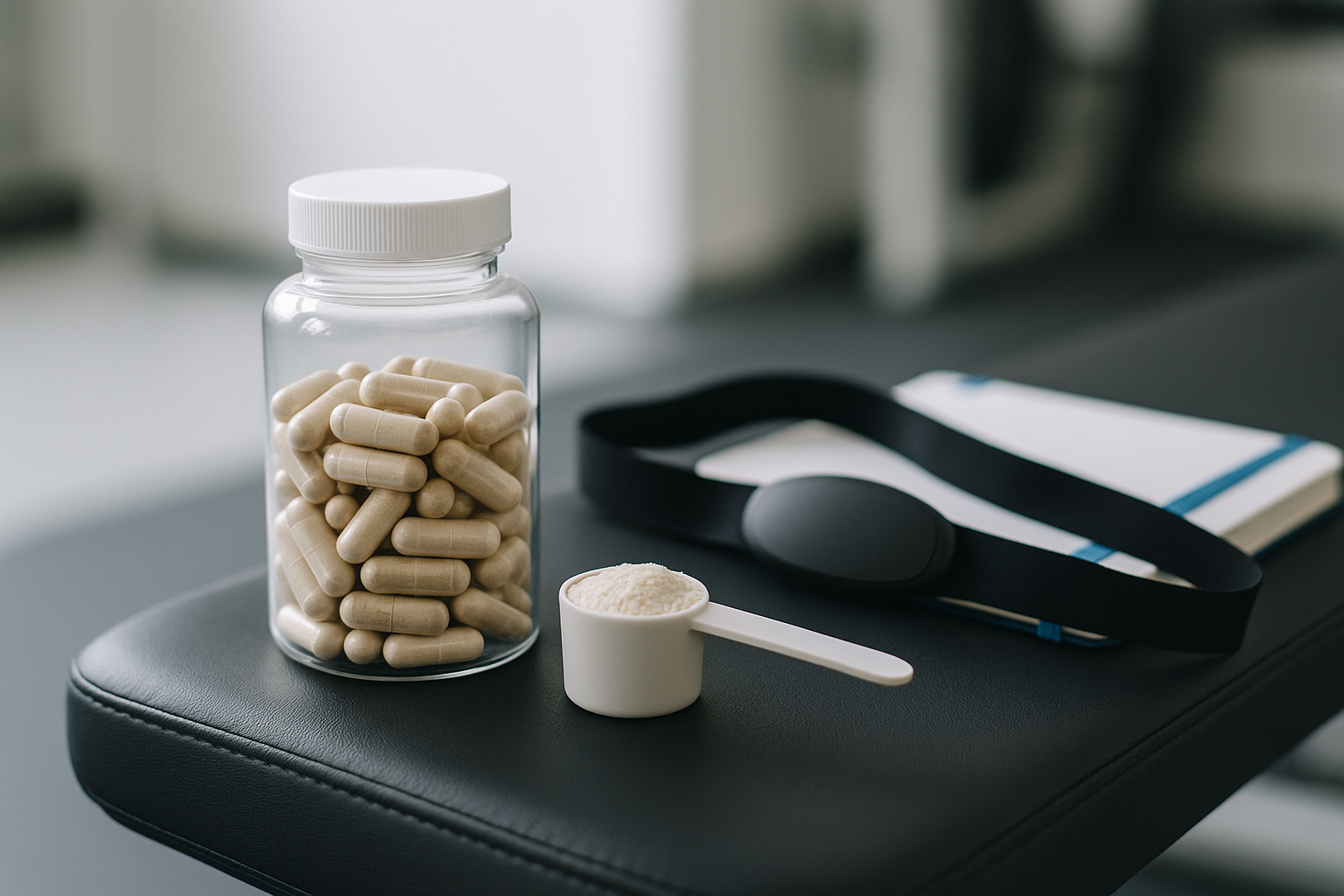
Based on the registration text, this is an intervention study in athletes or physically active people focused on both acute responses to exercise and chronic adaptation across training. That is a sensible design for a timing question, because a supplement could theoretically affect the immediate post-exercise stress response without necessarily improving longer-term fitness outcomes such as VO2max.
The listed comparison groups matter. A before-exercise group, an after-exercise group, and a placebo group can help distinguish three different possibilities:
- Cordyceps has no meaningful effect at all.
- Cordyceps has an effect, but timing does not matter much.
- Cordyceps has an effect, and one timing strategy is better than the other.
Those are exactly the kinds of distinctions athletes need, because supplement marketing often jumps straight to timing claims without testing them directly.
There are also key unknowns from the registration excerpt. The source material does not provide the sample size, dosing details, duration, participant training status breakdown, or whether the trial is blinded. Those missing details limit how confidently anyone should interpret the importance of the protocol today. A small study, for example, may miss real effects or overestimate noisy ones.
This is where evidence standards matter. On our best creatine rankings and creatine brand reviews, products are judged against a far larger and more mature evidence base than Cordyceps currently has. For now, this registration is best viewed as research to watch, not a reason to change your supplement stack.
Why athletes care about IL-6, MDA, CK, VO2max and CMJ
The biomarkers and performance tests in this trial were chosen for a reason. They cover several pieces of the training puzzle rather than just one headline outcome.
- IL-6 is a commonly measured inflammatory marker that can rise after strenuous exercise.
- MDA is often used as a marker of oxidative stress.
- CK, or creatine kinase, is widely used as a rough indicator of muscle damage or muscle membrane disruption after hard training.
- VO2max is a standard measure of aerobic capacity.
- CMJ performance gives a quick snapshot of lower-body neuromuscular readiness and fatigue.
In practical terms, the researchers appear to be asking two linked questions: does Cordyceps timing change the body’s response to hard exercise, and if it does, does that translate into better adaptation over time?
That second question is the crucial one. It is possible for a supplement to alter a biomarker without improving real-world performance. Lower CK or lower perceived soreness may look encouraging, but if VO2max and functional performance do not improve, the practical value may be limited. The reverse can also happen: some post-exercise stress is part of normal adaptation, so blunting it is not automatically beneficial.
Creatine users will notice that CK appears in this trial even though the supplement under study is not creatine. That is because creatine kinase is an enzyme marker, not a sign that creatine supplementation is being tested. If you are new to the topic, our creatine dosage calculator can help with basic daily intake planning, but this Cordyceps protocol should not be interpreted as evidence for changing creatine timing.
What it means for creatine users right now
For people taking creatine, the immediate answer is simple: this study does not change current best practice. The source is about Cordyceps timing, and there are no results yet. Creatine remains a separate supplement category with a much stronger evidence base for increasing intramuscular phosphocreatine stores, supporting high-intensity performance, and helping training quality over time.
The broader lesson is about timing versus consistency. In creatine research, the most reliable practical rule is that daily intake matters more than exact timing. Mainstream guidance still centres on:
- 3-5 g/day as a typical maintenance dose
- An optional loading phase of about 20 g/day, usually split into 4 doses, for 5-7 days
- Using creatine monohydrate, the most studied and best-supported form
Those fundamentals are supported by large reviews and position stands, including the ISSN overview by Kreider et al. (2017). If your goal is selecting a proven product rather than chasing more speculative timing hacks, start with the creatine product catalog or browse our creatine guides.
Could a future study eventually show that timing matters for some supplements in some sports? Yes. But athletes should separate that possibility from what is already well established. For creatine, the evidence still favours regular use, adequate dosing, and choosing monohydrate over obsessing about the clock.
Where Cordyceps fits in the broader evidence
Cordyceps has long been marketed for energy, endurance and recovery, largely because it contains compounds such as cordycepin and various polysaccharides with plausible biological activity. The trial registration mentions antioxidant, anti-inflammatory and immunomodulatory properties, which helps explain why researchers would test it around hard training.
But plausibility is not proof. The wider sports-supplement evidence base is full of ingredients that look promising in mechanism-driven discussions yet produce mixed or small effects in athletes when tested rigorously. Cordyceps may eventually prove useful in a narrow context, but that remains to be shown by completed trials and replicated findings.
This is exactly where creatine stands apart. It is not merely popular; it is one of the best-studied sports supplements in existence. The review by Antonio et al. (2021) addresses many common myths and reinforces that monohydrate remains the reference form. Even broad consumer summaries such as Examine’s creatine evidence summary place creatine on far firmer ground than most recovery ingredients.
That does not mean Cordyceps is ineffective. It means the burden of proof is still higher than the marketing usually suggests. When this study eventually reports results, the most important questions will be:
- Was there a meaningful effect versus placebo?
- Was any benefit large enough to matter in training?
- Did one timing strategy clearly outperform the other?
- Were the findings consistent across fitness and performance measures?
Until then, athletes should treat Cordyceps as experimental compared with creatine’s much more established role.
Bottom line for athletes and coaches
The news here is not that Cordyceps has been proven to improve recovery or VO2max. The news is that a registered athlete trial is set up to test whether taking Cordyceps before versus after exercise changes inflammatory, oxidative-stress, muscle-damage and performance outcomes.
That is a worthwhile question, and the protocol includes sensible endpoints. But for now, there are no results to act on. Athletes, coaches and supplement buyers should resist the urge to turn a registration page into a recommendation.
| Question | What this source supports |
|---|---|
| Does Cordyceps work? | Not answered yet. |
| Does timing matter? | Being tested, not proven. |
| Should creatine users change anything now? | No, current creatine best practice stays the same. |
| What is most evidence-based today? | Consistent creatine monohydrate intake at established doses. |
If you want to optimise performance with the highest-confidence supplement strategy, the basics still win: train well, recover well, meet protein and energy needs, and use evidence-backed supplements first. For creatine, that means straightforward daily use rather than chasing marginal timing tweaks. If Cordyceps eventually shows a real edge in a completed trial, it will deserve attention. It just has not earned that conclusion yet.
Cordyceps timing study at a glance
- 3 Study arms planned — Before exercise, after exercise, or placebo.
- 5 Main outcomes listed — IL-6, MDA, CK, VO2max and CMJ.
- 3-5 g/day Typical creatine maintenance dose — Mainstream guidance for creatine monohydrate.
- 20 g/day Common creatine loading protocol — Usually split into 4 doses for 5-7 days.
Frequently Asked Questions
Did this study find that Cordyceps works better before or after exercise?
No. The ClinicalTrials.gov entry describes a planned study, not published results, so it does not show whether pre- or post-exercise Cordyceps is better.
Is this research about creatine?
No. The trial is about Cordyceps supplementation timing, although it is relevant to creatine users because it highlights the broader question of whether supplement timing meaningfully affects recovery and adaptation.
Why is creatine kinase listed if the study is not about creatine?
Creatine kinase, or CK, is a muscle-damage biomarker, not a sign that creatine supplementation is being tested. It is commonly measured after hard exercise to estimate muscle stress or disruption.
Should I change when I take creatine because of this news?
No. This trial does not test creatine, and current evidence still suggests that consistent daily creatine intake matters more than exact timing for most people.
What creatine approach is still best supported by evidence?
Creatine monohydrate at established daily doses is still the best-supported approach. A typical maintenance intake is 3-5 g/day, with an optional loading phase of about 20 g/day split into 4 doses for 5-7 days.
Could Cordyceps still end up being useful for athletes?
Yes, possibly. The protocol is reasonable and targets relevant recovery and aerobic outcomes, but usefulness depends on the eventual results, effect size, study quality and whether findings can be replicated.