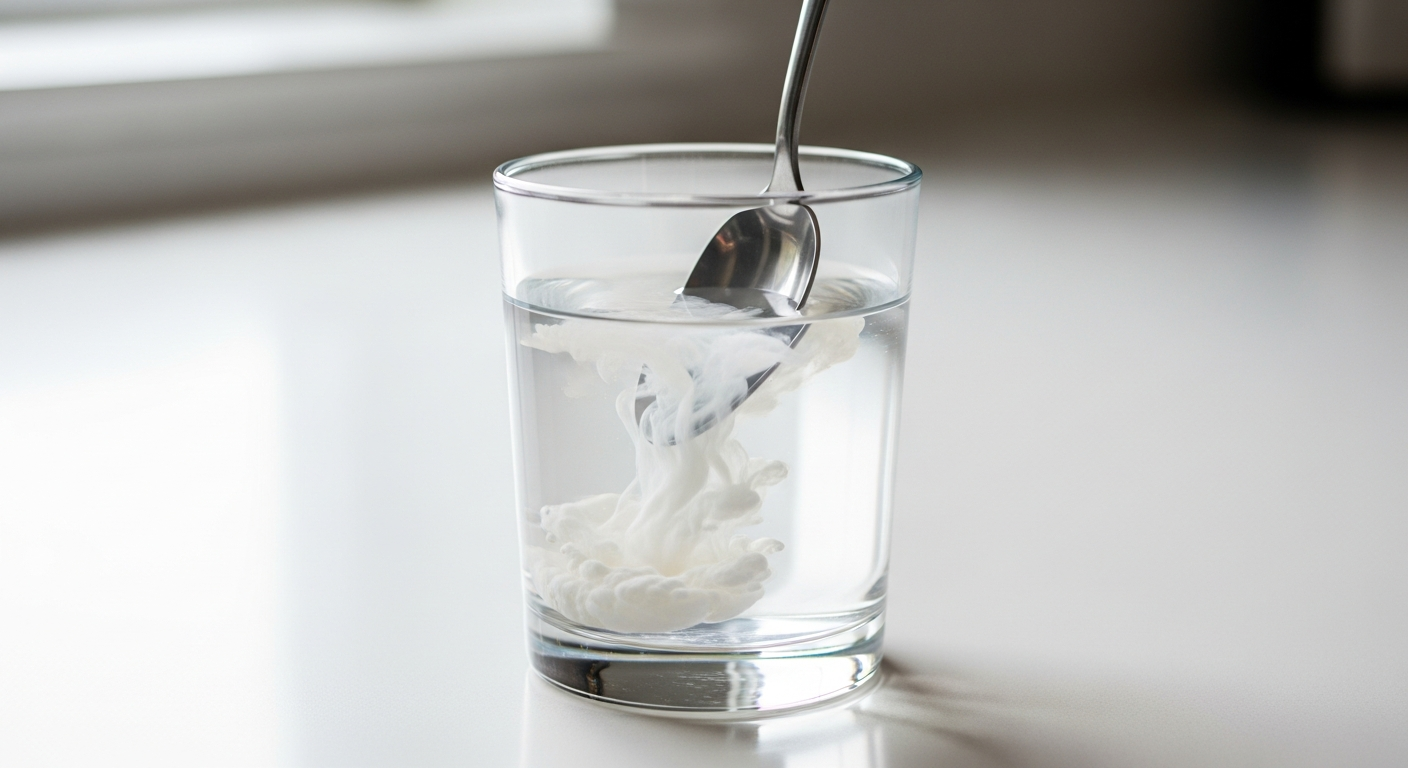
How to Mix Creatine: The Right Way to Take It Every Day
Key Takeaways
- Mix creatine into at least 250 ml of liquid — water, juice, or a protein shake all work.
- Warm water dissolves creatine faster than cold; stir or shake well.
- Creatine mixed with carbohydrates (like juice) may improve uptake slightly.
- Drink it right after mixing — creatine degrades slowly in solution over time.
- Clumping in the tub is caused by moisture, not product degradation — it is still effective.
What to Mix Creatine With
Creatine monohydrate is odourless and nearly tasteless — it dissolves into almost any liquid without changing the flavour much. Here are the best options:
Water: The simplest and most practical choice. Use at least 250 ml (a full cup) per 5 g dose. Creatine dissolves slowly in cold water, so you may see a slightly gritty texture if you do not stir well enough. It still works — the undissolved particles dissolve quickly in your stomach. For complete dissolution, use warm or room-temperature water.
Juice (especially fruit juice): A genuine performance advantage over plain water. The carbohydrates in juice trigger an insulin response, which enhances creatine transport into muscle cells. Orange juice, grape juice, and apple juice all work well. The sweetness also makes the ritual more pleasant for people who find plain creatine water unappealing.
Protein shake: A great combination. The protein and carbohydrates in a post-workout shake both support creatine uptake, and the timing (post-workout) is ideal. Simply add your creatine to the shake and blend or shake to combine.
Pre-workout drink: If your pre-workout already contains creatine, check the dose before adding more. If it does not, adding 3–5 g to your pre-workout mix is convenient and the timing (before training) is fine.
Coffee: Some research suggested caffeine might interfere with creatine uptake, but more recent evidence suggests the effect is minimal at typical coffee intakes. If your morning coffee is the easiest way to remember your creatine, go ahead — the convenience benefit of actually taking it every day outweighs any marginal interaction.
Milk: Works fine. The protein and carbohydrates support uptake and the flavour is neutral. A good choice for anyone mixing creatine into a morning milk drink or smoothie.
How to Mix Creatine Properly
The process is simple, but a few steps make it better:
- Measure your dose first. Use a digital scale or the scoop that comes with your creatine (most scoops are 5 g). Do not eyeball it — creatine is cheap enough that overdosing slightly does not matter much, but accuracy helps if you are tracking.
- Add liquid to your glass or shaker first, then add the creatine. Adding powder to an empty container makes it clump at the bottom. Liquid first means the powder disperses immediately on contact.
- Stir or shake for at least 15–20 seconds. Creatine monohydrate dissolves slowly. A brief stir leaves gritty particles that settle to the bottom. If using a shaker bottle, 15–20 good shakes will get it dissolved.
- Use warm or room-temperature liquid if possible. Creatine dissolves roughly 4–5x faster in warm water than in cold water. This is not essential, but it makes the texture much smoother.
- Drink it immediately. Creatine is stable as a dry powder for years, but it slowly converts to creatinine (an inactive metabolite) once dissolved in liquid — especially acidic liquids like juice. Drink within 30 minutes of mixing for maximum potency.
Why Is My Creatine Clumping in the Tub?
This is one of the most common creatine questions and the answer is simple: moisture. Creatine monohydrate is hygroscopic — it absorbs water from the air. If your tub is left open, or stored in a humid environment (bathroom shelf, gym bag), it will absorb moisture and the particles will stick together.
Clumped creatine is not degraded creatine. It is still effective. Simply break up the clumps with a fork or spoon before scooping. The moisture absorption does not convert creatine to creatinine in solid form — that only happens in solution.
How to prevent clumping:
- Always seal the lid tightly after each use.
- Store the tub in a cool, dry place — not your bathroom or gym bag.
- If your climate is very humid, consider decanting small amounts into a zip-lock bag for daily use and keeping the main tub sealed.
- Keep the silica gel packet that comes with most tubs. It absorbs ambient moisture inside the container.
When Should You Take Creatine?
This is a common point of confusion. The short answer: it matters less than you think, and consistency matters far more than perfect timing.
On training days: Taking creatine close to your workout — either 30 minutes before or within an hour after — appears to produce slightly better results than taking it at an unrelated time. Post-workout, paired with carbohydrates and protein, has the most research support for maximum uptake.
On rest days: Take it whenever is easiest to remember. Morning with breakfast, mid-day with lunch, or evening with dinner all work equivalently on non-training days. The goal is simply to maintain saturation in your muscles.
The most important variable is taking it every day. Muscle creatine stores take weeks to build up and weeks to deplete. A missed day here and there will not significantly affect your stores. But consistently forgetting to take it will. Build it into a reliable habit — same time, same drink, every day — and timing optimization becomes irrelevant.
Common Creatine Mixing Mistakes
Using too little liquid. Trying to dissolve 5 g of creatine in a couple of tablespoons of water just produces a paste. Use at least 250 ml per dose — more is fine.
Not stirring enough. A quick stir leaves gritty particles. These particles do dissolve in your stomach, but the texture is unpleasant. Stir or shake properly.
Mixing and then waiting. Creatine degrades slowly in solution. Mix it, drink it within 30 minutes. Do not mix a day's worth and leave it in the fridge overnight.
Taking it with hot liquid. Warm is good; boiling is not. Very high temperatures can degrade creatine. Do not dissolve it in boiling water or hot coffee. Warm (not scalding) water is fine; room temperature is fine; cold is fine just stir longer.
Worrying about brand or flavour differences. Plain creatine monohydrate tastes like very little — a slightly chalky neutrality. Flavoured creatine or pre-mixed versions add sweeteners and flavours, which is fine, but plain monohydrate mixed into juice or a shake is identical in effect and usually cheaper.
How to Mix Creatine: Quick Reference
- 250 ml+ Minimum liquid per 5 g dose
- Juice Best liquid for creatine uptake (carb-driven)
- 30 min Maximum time to wait before drinking after mixing
- Warm water Dissolves creatine 4–5x faster than cold
- Dry, sealed Storage condition to prevent clumping
Frequently Asked Questions
What is the best thing to mix creatine with?
Juice is often cited as the best option because the carbohydrates trigger an insulin response that enhances creatine transport into muscle cells. Water and protein shakes both work well too. Coffee, milk, and pre-workout drinks are all fine. The most important thing is that you actually take it every day — mix it with whatever you will consistently drink.
Can I mix creatine into a protein shake?
Yes. Adding creatine to a protein shake is one of the most practical approaches. The protein and carbohydrates in the shake support creatine uptake, and post-workout timing (when most people drink a shake) is ideal. Just add your dose and shake well.
Why is my creatine clumping?
Clumping is caused by moisture absorption — creatine monohydrate is hygroscopic and absorbs water from the air. Clumped creatine is not degraded and is still fully effective. Break up clumps with a fork or spoon before scooping. Prevent it by sealing the lid tightly, storing the tub in a cool dry place, and keeping the silica gel packet inside.
Should I mix creatine with warm or cold water?
Warm water dissolves creatine significantly faster than cold water and produces a smoother texture. However, cold water works fine if you stir or shake long enough. Avoid boiling water — very high temperatures can degrade creatine. Room temperature is a practical middle ground.
How long after mixing creatine should I drink it?
Drink it within 30 minutes of mixing. Creatine is stable as a dry powder for years, but begins converting to creatinine (an inactive metabolite) once dissolved in liquid, particularly in acidic liquids like juice. Mix it fresh and drink it promptly.