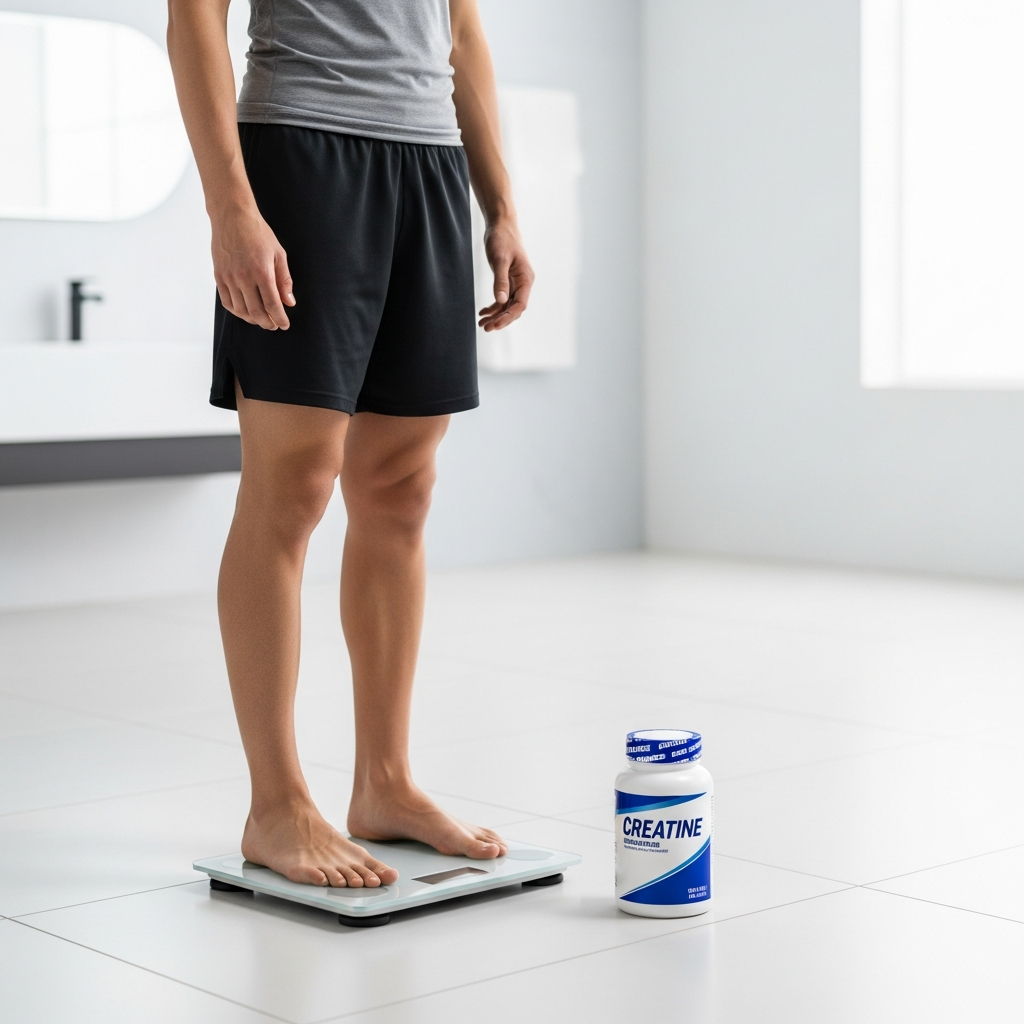
Does Creatine Cause Weight Gain or Bloating? The Complete Truth
Yes, creatine will add 0.5–2kg to the scale in the first week or two. No, it is not fat. Here is the honest, science-backed explanation of what is actually happening — and why most people should not care.
Key Takeaways
- Creatine causes initial water weight gain of 0.5–2kg as muscles draw in water alongside creatine — this is intramuscular hydration, not fat or subcutaneous bloating.
- This water weight gain is inside your muscle cells, which makes your muscles look slightly fuller — not puffy or bloated.
- Creatine does not cause fat gain. No research demonstrates a causal link between creatine supplementation and increased body fat percentage.
- The scale increase is real but temporary in nature — if you stop creatine, the water weight depletes with your creatine stores over 4–6 weeks.
- Subcutaneous water retention (the puffy look under skin) is not a known side effect of creatine at standard doses.
- People who experience visible bloating from creatine usually have a GI issue (undissolved creatine, empty stomach dosing) rather than a fluid retention issue.
What Actually Happens to Your Weight on Creatine
When you start supplementing creatine, your muscles accumulate phosphocreatine. Creatine is osmotically active — it draws water into muscle cells alongside it. This is a normal, well-documented physiological response, and it results in a measurable increase on the scale.
Most research documents an initial weight gain of 0.5–2 kilograms within the first 1–2 weeks of creatine supplementation, particularly during a loading phase. At maintenance dosing (3–5g/day without loading), the increase is typically at the lower end — 0.5–1kg.
This is not fat. It is not subcutaneous water (the type that makes you look puffy). It is water inside your muscle cells — intramuscular water that contributes to muscle fullness and may actually improve the visual appearance of your muscles by making them look denser and more defined.
Does Creatine Make You Fat?
No. There is no research mechanism or direct study demonstrating that creatine supplementation causes fat gain.
Creatine does not increase caloric intake. It does not stimulate appetite. It does not affect lipid metabolism in a way that promotes fat storage. The molecular mechanism of creatine (phosphocreatine replenishment for ATP regeneration) has no known pathway to adipogenesis (fat cell creation).
What creatine does do is enable more productive training — which, over time, supports fat loss through increased muscle mass and metabolic rate. Multiple studies on creatine combined with resistance training show improved body composition: more lean mass, equal or less body fat compared to placebo groups doing the same training.
If someone gains fat while on creatine, it is because of their diet and overall energy balance — not the creatine.
Creatine Bloating: Real Cause, Real Fix
Some people report bloating when they start creatine. This is real — but the cause is almost always gastrointestinal, not fluid retention:
- Undissolved creatine reaching the gut: Creatine powder that is not fully dissolved can cause GI irritation. Fix: dissolve in 250–350ml of water and stir vigorously, or use micronized creatine which dissolves more easily.
- Taking creatine on an empty stomach: Some people experience stomach discomfort when taking creatine without food. Fix: take creatine with a meal or snack.
- Loading phase doses: 20g/day significantly increases osmotic load in the gut. Many people experience GI discomfort during loading. Fix: skip the loading phase and use 3–5g/day instead.
- Low-quality creatine: Impure creatine with creatinine contamination can cause GI issues. Fix: use a Creapure-certified product.
The subcutaneous 'puffy' bloating people associate with anabolic steroids is not a feature of creatine supplementation. Creatine water retention is intramuscular. See our guide on fixing creatine upset stomach for specific remedies.
Who Gains More Scale Weight from Creatine?
The amount of initial weight gain from creatine varies considerably between individuals:
- People with lower baseline muscle creatine: Vegetarians and vegans, who get no dietary creatine, typically see larger weight changes because their starting stores are lower and have more room to fill.
- Larger individuals: More muscle mass means more total phosphocreatine stored — and proportionally more water retained alongside it.
- Loading phase users: The rapid saturation from a loading phase produces a larger initial weight spike (up to 2kg) versus gradual saturation at maintenance dose (0.5–1kg).
- Women: Research suggests women may see slightly smaller initial weight increases than men, partly because women have lower total muscle mass and baseline creatine stores.
When Weight Gain from Creatine Actually Matters
For most people, 0.5–1kg of intramuscular water weight is irrelevant. For some athletes, it requires planning:
- Combat sport athletes making weight: The extra 0.5–1.5kg of creatine-associated water can complicate a weight cut. Many combat athletes stop creatine 1–2 weeks before a weigh-in to shed this water weight, then resume immediately after weighing in.
- Endurance athletes focused on power-to-weight ratio: Elite marathon runners and climbers may choose not to use creatine during racing season to avoid carrying extra water weight. The cognitive and high-intensity training benefits may still make off-season supplementation worthwhile.
- Everyone else: The scale going up by 0.5–1kg is not a health concern, a fat gain concern, or an appearance concern. The muscle fullness from intramuscular hydration is, if anything, a visual positive for most people.
See our creatine for athletes guide for more on sport-specific considerations.
Creatine and Weight: What the Scale Is Actually Showing
- 0.5–2kg Typical initial weight increase — intramuscular water, not fat
- 0% Research showing creatine causes fat gain in healthy adults
- Inside Muscle cells — where creatine water retention occurs (not under the skin)
- 4–6 weeks Time for the extra water weight to leave if you stop creatine
Frequently Asked Questions
Does creatine make you gain weight?
It adds 0.5–2kg to the scale, but this is intramuscular water weight — not fat. Creatine draws water into muscle cells alongside phosphocreatine. This makes muscles appear fuller and denser. It is not subcutaneous water retention (the puffiness associated with steroids) and it is not fat gain.
Does creatine make you look bloated or puffy?
No, not from fluid retention. The water creatine retains is inside muscle cells (intramuscular), not under the skin. If you experience visible bloating, it is almost always a GI issue — undissolved powder, taking it on an empty stomach, or a low-quality product. Switching to micronized creatine and taking it with food resolves most cases.
Will I lose the weight gained from creatine when I stop?
Yes — the intramuscular water weight depletes as your creatine stores gradually decrease over 4–6 weeks after stopping supplementation. However, any actual lean muscle mass built during your training while on creatine remains.
Should I be concerned about the weight gain from creatine?
For most people, no. A 0.5–1kg intramuscular water increase is not a health concern and does not affect your appearance negatively. If you are a combat athlete making weight or an endurance athlete focused on power-to-weight ratio, it requires planning — but even then it is manageable by timing your supplementation around competition.
Does creatine cause water retention under the skin?
No. Subcutaneous water retention (the puffy look associated with anabolic steroids or high sodium intake) is not a documented side effect of creatine at standard doses. Creatine-associated water is held inside muscle cells, which typically makes muscles look fuller rather than puffy.
How do I stop creatine bloating?
If you experience GI bloating: dissolve creatine completely in 250-350ml of water, take it with food, skip the loading phase, and try micronized creatine which dissolves more easily. If bloating persists, check your product quality — impure creatine with creatinine contamination is a known cause of GI issues.