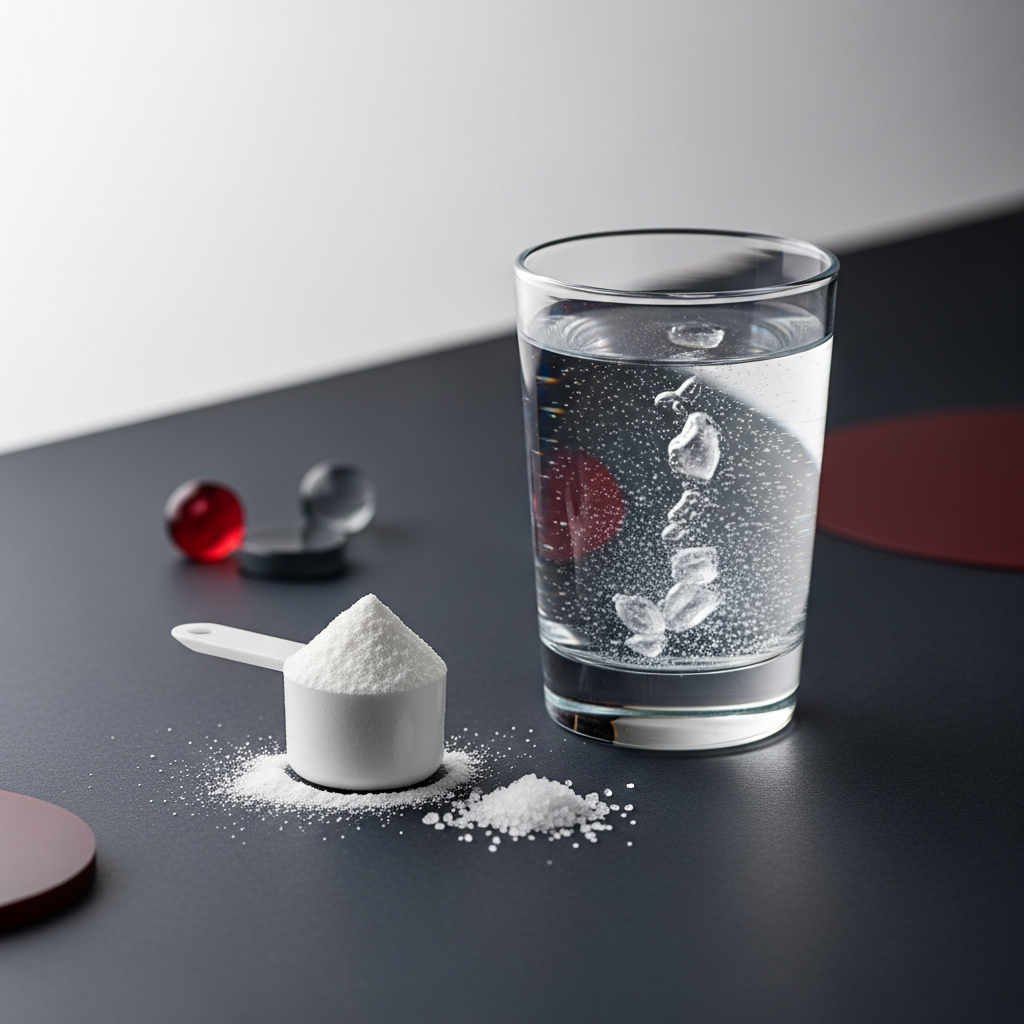
Creatine, Salt, and Electrolytes: Should You Stack Them?
Some coaches swear by adding a pinch of salt to their creatine. Some electrolyte products now bundle creatine right in the formula. Is this clever stacking — or just noise? Here's what the evidence actually says about combining creatine with sodium and electrolytes.
Key Takeaways
- Creatine is transported into muscle cells partly via a sodium-dependent transporter (CreaT1), so sodium isn't just a flavour add — it plays a direct role in uptake.
- You don't need to add extra salt to 'activate' creatine. Normal dietary sodium is more than enough for the transporter to function.
- Mixing creatine with a carbohydrate-and-sodium drink modestly increases cellular uptake compared to plain water — useful during a loading phase, less critical during maintenance.
- Creatine pulls water into muscle cells, which shifts fluid balance slightly; staying well hydrated and maintaining adequate electrolytes (not just sodium) matters more than any specific stack.
- Ready-made creatine-plus-electrolyte products can be convenient but often charge a large premium — mixing your own takes 30 seconds and costs a fraction of the price.
Why sodium is involved in creatine absorption at all
Creatine doesn't drift passively into your muscle cells — it needs a carrier. The primary transporter is CreaT1 (also written SLC6A8), a sodium- and chloride-dependent protein that sits in the muscle cell membrane. When sodium flows into the cell along its concentration gradient, it drags creatine molecules with it. This is why the combination of creatine with carbohydrates (which stimulate insulin and indirectly raise intracellular sodium cycling) has been shown in some studies to increase muscle creatine accumulation slightly faster than creatine alone.
The practical implication is small but real: taking creatine with a meal or a drink that contains both carbohydrates and sodium creates an environment where the transporter is busier than it would be with plain water. Research by Green et al. (1996) found roughly 60% greater muscle creatine accumulation when subjects co-ingested creatine with 100 g of simple carbohydrates, with sodium playing a supporting role alongside the insulin spike.
None of this means you're wasting creatine with plain water. The transporter still works; you're just not optimising the last few percentage points of speed.
Does adding a pinch of salt to your creatine actually do anything?
The short answer: probably not much beyond what your normal diet already provides.
A typical Canadian diet delivers 2,000–3,400 mg of sodium per day — far more than the trace amount needed to keep CreaT1 running. The transporter doesn't require a sodium bolus alongside each dose; it needs ambient sodium to be present, which it always is. Adding a literal pinch of table salt (roughly 200–300 mg of sodium) to your creatine drink is unlikely to measurably change uptake on top of an already-adequate background sodium level.
Where extra sodium might matter: if you train in the heat, sweat heavily, or follow a very low-sodium diet (below ~1,500 mg/day), your intracellular sodium gradients could be lower than usual, and that can subtly impair the transporter. In that narrow case, ensuring adequate sodium around training has some logic behind it — but 'take creatine with a sports drink' is a more practical way to achieve this than pinching salt into a glass of water.
Creatine, water retention, and electrolyte balance
Creatine is osmotically active — as it accumulates in muscle cells, it draws extra water in with it. This is why many people see a 1–2 kg bump on the scale in the first week or two of supplementation; the extra weight is largely intramuscular water, not fat.
This has a knock-on effect on electrolyte balance. More water inside muscle cells means more fluid needs to come from somewhere, and that 'somewhere' is your total body water pool. The practical result: you may need to drink slightly more fluid than before, and keeping sodium, potassium, and magnesium in balance becomes marginally more important — not dramatically so, but worth keeping in mind if you feel sluggish or get calf cramps after starting creatine.
The evidence-based guidance from sports dietitians is simple: drink to thirst, don't restrict sodium, and make sure your diet includes reasonable amounts of potassium (fruits, vegetables) and magnesium (nuts, seeds, greens). No elaborate electrolyte stack required.
All-in-one creatine-plus-electrolyte products: worth it?
The supplement market has responded to the creatine-hydration conversation with a wave of combined products — creatine monohydrate blended with sodium, potassium, magnesium, sometimes calcium, often some flavouring and a branded electrolyte matrix.
These products are genuinely convenient, and convenience is underrated in building daily habits. But they deserve a close look on cost:
| Format | Typical cost per 5 g creatine dose | Notes |
|---|---|---|
| Plain creatine monohydrate (bulk) | $0.15–$0.30 | Zero extras — you add the hydration yourself |
| DIY creatine + electrolyte packet | $0.20–$0.50 | Add your own electrolyte tab (~$0.05–$0.20) |
| All-in-one branded product | $1.00–$2.50 | Convenience premium is real; check creatine per serving |
When evaluating a combined product, apply the same label-reading discipline as any other creatine supplement: look for 3–5 g of actual creatine monohydrate per serving, not a proprietary blend that could mean anything. For a full breakdown of what to look for, see our guide to reading a creatine label.
A practical, low-cost approach
If you want to tick every box — creatine absorption, hydration, and electrolyte balance — without spending extra on a premium product, here's a simple approach that covers all the bases:
- Mix creatine with a small glass of fruit juice (100–150 ml). The natural sugars trigger an insulin response that supports uptake; the potassium in the juice covers one electrolyte.
- Drink it with or right after a meal, which provides sodium and other electrolytes automatically.
- Keep total daily fluid intake up, especially on training days. Plain water is fine — there's no need for constant electrolyte drinks if your diet is balanced.
- If you train hard in the heat, adding a proper electrolyte tablet or powder to your intra-workout water makes more sense than adding salt to your creatine.
The bottom line: the creatine-sodium connection is real biochemistry, but it's already covered by a normal diet. Stack if it suits your routine — but the ingredient doing the heavy lifting for your strength and power output is the creatine itself, not the electrolytes around it.
Creatine + electrolytes at a glance
- CreaT1 Sodium-dependent transporter that carries creatine into muscle cells
- 1–2 kg Typical initial weight gain from intramuscular water retention — Not fat — fluid drawn in by osmosis
- ~5x Higher cost per dose for branded creatine-electrolyte products vs plain monohydrate
Frequently Asked Questions
Does adding salt to creatine improve absorption?
Only marginally, and only if your sodium intake is unusually low. Creatine enters muscle cells via a sodium-dependent transporter, but a typical Canadian diet already provides far more sodium than needed to keep that transporter working efficiently. Adding a pinch of salt is unlikely to produce any measurable benefit.
Should I take creatine with an electrolyte drink?
It won't hurt and may offer a minor convenience benefit, but it isn't necessary. Taking creatine with a small amount of carbohydrates and sodium (like fruit juice with a meal) modestly supports uptake. A dedicated electrolyte drink adds little beyond what a balanced diet already provides.
Does creatine affect electrolyte balance?
Indirectly. Creatine draws extra water into muscle cells, slightly increasing your fluid needs and making adequate hydration more important. Maintaining normal sodium, potassium, and magnesium intake from food is sufficient for most people — no special electrolyte stack is needed.
Why do I get cramps after starting creatine?
Muscle cramps after starting creatine are often linked to the rapid shift in fluid into muscle tissue. Drinking more water and ensuring adequate potassium and magnesium (from fruits, vegetables, and nuts) typically resolves this. There is no strong evidence that creatine itself directly causes cramping in healthy, well-hydrated people.
Are creatine-plus-electrolyte products worth the extra cost?
Only if the convenience genuinely helps you stay consistent. They cost 3–5 times more per serving than plain creatine monohydrate. You can get the same effect by mixing plain creatine with fruit juice and eating a normal balanced diet.
Sources & Further Reading
- Green AL et al. (1996) — Carbohydrate ingestion augments skeletal muscle creatine accumulation during creatine supplementation in humans. Am J Physiol.
- Lemon PW (2002) — Dietary creatine supplementation and exercise performance. Can J Appl Physiol.
- Terjung RL et al. (2000) — ACSM roundtable: the physiological and health effects of oral creatine supplementation. Med Sci Sports Exerc.
- Buford TW et al. (2007) — ISSN position stand: creatine supplementation and exercise. J Int Soc Sports Nutr.
- Examine — Creatine: absorption, dosing and stacking