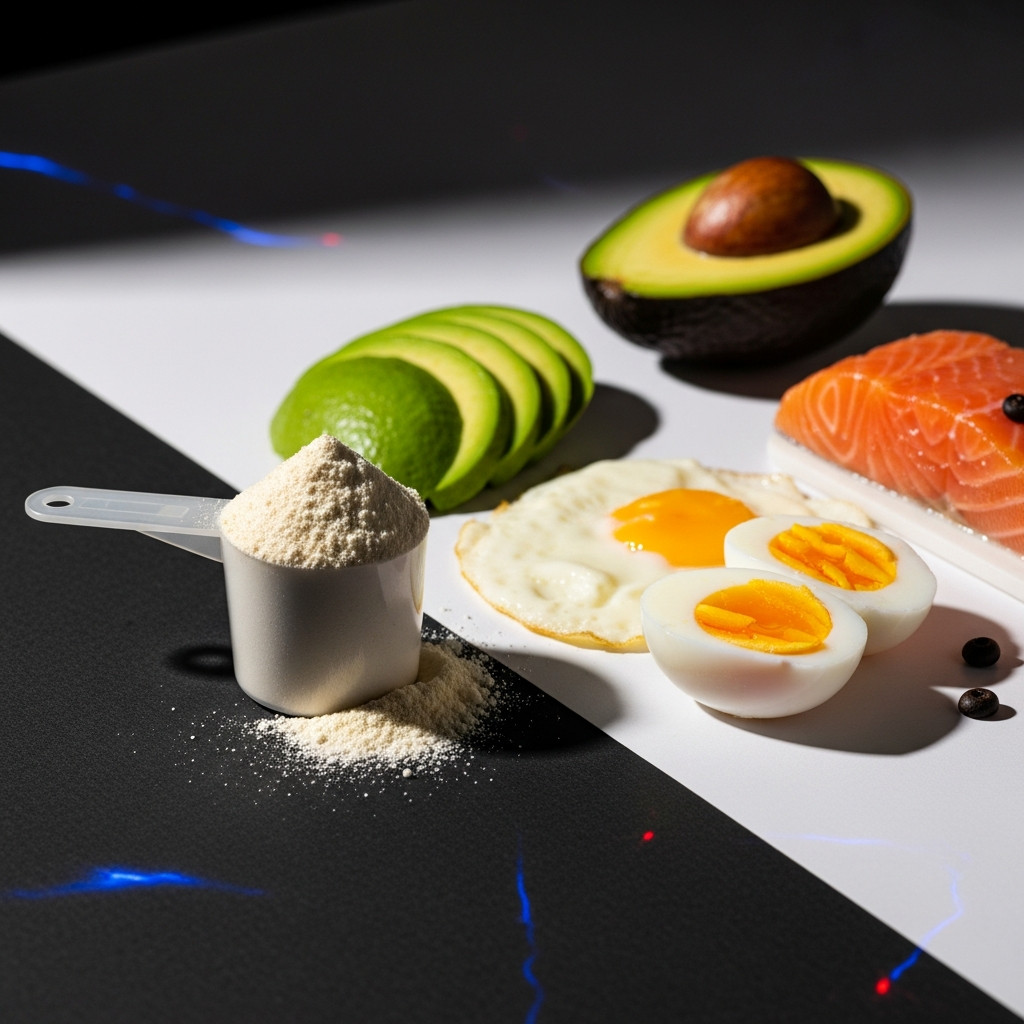
Creatine on a Keto Diet: What Changes and What Doesn't
Keto dieters often worry that creatine will spike insulin, add carbs, or knock them out of ketosis. The short answer: it won't. In fact, because low-carb diets can lower your natural creatine stores, keto may be one of the situations where supplementing helps most.
Key Takeaways
- Creatine monohydrate has zero carbohydrates and does not break ketosis.
- It does not meaningfully raise insulin, so it's compatible with a strict keto approach.
- Low-carb and plant-forward diets can reduce dietary creatine intake, making supplementation more valuable.
- Expect a small, one-time increase in scale weight from intramuscular water — this is not fat and not 'kicked out of ketosis'.
- Standard dosing applies: 3-5 g of monohydrate daily, no special keto protocol needed.
Does creatine break ketosis?
No. Ketosis is driven by keeping carbohydrate intake very low so your body relies on fat and ketones for fuel. Pure creatine monohydrate contains zero carbohydrates, zero sugar, and negligible calories. It's a single compound, not a carb source, so it can't pull you out of ketosis.
The confusion usually comes from two places: flavoured or 'all-in-one' creatine products that add sugars, and the old advice to take creatine with a big hit of carbs. Neither applies if you use plain monohydrate.
What about insulin?
Some older protocols recommended taking creatine with high-glycaemic carbs to spike insulin and drive creatine into muscle faster. That can modestly improve uptake, but it is not required — creatine saturates your muscles perfectly well on its own over a few weeks. On keto, simply skip the carb pairing. Creatine itself does not produce a meaningful insulin response, so it won't disrupt your metabolic state.
Why keto dieters may benefit more than most
Here's the counterintuitive part. Your body gets creatine from two sources: what it makes internally, and what you eat — mostly from red meat and fish. But diets low in these foods, and to some extent very-low-carb eating patterns, can leave your natural muscle creatine stores lower than average.
People with lower baseline stores tend to respond more strongly to supplementation. So a keto dieter — especially one eating moderate rather than huge amounts of meat — may see a clearer benefit from topping up than someone already eating a creatine-rich diet.
Creatine and performance on low-carb
Low-carb training can feel harder during high-intensity efforts, because your body leans less on stored glycogen. Creatine works on a different energy system — the rapid phosphocreatine system that powers short, explosive bursts like heavy lifts and sprints. That makes it a logical complement for keto athletes, helping preserve strength and power output during the kind of efforts where low glycogen is most noticeable.
The water-weight question
Many people start keto partly to shed water weight, so this one matters. When you begin creatine, you'll likely see a small bump on the scale — typically a pound or two — as creatine draws a little water into your muscle cells. Two things to understand:
- This is intramuscular water tied to muscle performance, not the bloated, subcutaneous look people dislike.
- It's a one-time adjustment, not ongoing gain, and it does not mean you've left ketosis.
Judge your progress by measurements, strength, and how you look and feel — not by a single early jump on the scale.
How to take creatine on keto
Nothing special is required — the standard protocol works:
| Question | Keto answer |
|---|---|
| Which form? | Plain or micronized creatine monohydrate |
| How much? | 3-5 g per day, every day |
| With carbs? | No — mix with water, coffee, or a keto shake |
| Loading? | Optional; not necessary |
| Timing? | Any consistent time you'll remember |
Avoid flavoured creatine products that list sugars or maltodextrin if you want to stay strict. Unflavoured monohydrate keeps it clean and carb-free.
The bottom line
Creatine and keto are a good match. Monohydrate adds no carbs, won't break ketosis, and doesn't need an insulin spike to work. Because low-carb and low-meat eating can leave your natural stores on the lower side, supplementing may deliver an especially noticeable strength and power benefit. Use plain monohydrate, take 3-5 g daily, and don't be alarmed by a small early bump in scale weight.
Creatine on keto at a glance
- 0 g Carbs in pure monohydrate — Won't break ketosis
- 3-5 g Daily dose — Same as any diet
- No Carb pairing needed — Mix with water
- 1-2 lb Typical early water gain — One-time, intramuscular
Frequently Asked Questions
Does creatine break ketosis?
No. Pure creatine monohydrate has zero carbohydrates and negligible calories, and it doesn't produce a meaningful insulin response, so it cannot knock you out of ketosis. Just avoid flavoured versions that add sugars.
Do I need to take creatine with carbs on keto?
No. Taking creatine with carbs can slightly speed muscle uptake, but it isn't required. On keto, simply mix plain monohydrate with water or a keto-friendly drink; it will still fully saturate your muscles over a few weeks.
Will creatine cause weight gain on keto?
You may see a small, one-time increase of about 1-2 pounds from water drawn into your muscle cells. This is intramuscular water linked to performance, not fat and not a sign you've left ketosis.
Is creatine more effective on a low-carb diet?
Possibly. Low-carb and low-meat diets can lower your baseline muscle creatine stores, and people with lower stores tend to respond more strongly to supplementation, so keto dieters may notice a clearer benefit.
How much creatine should I take on keto?
The standard 3-5 grams of creatine monohydrate per day, taken consistently. There's no special keto dosing protocol, and loading remains optional.
Which creatine is best for keto?
Plain or micronized creatine monohydrate is ideal because it's carb-free, effective, and inexpensive. Avoid flavoured or all-in-one products that list sugars or maltodextrin.
Can creatine help with keto 'low energy' during workouts?
Creatine fuels the short, explosive phosphocreatine energy system rather than glycogen, so it can help preserve strength and power during heavy or sprint-style efforts, which is often where low-carb training feels hardest.