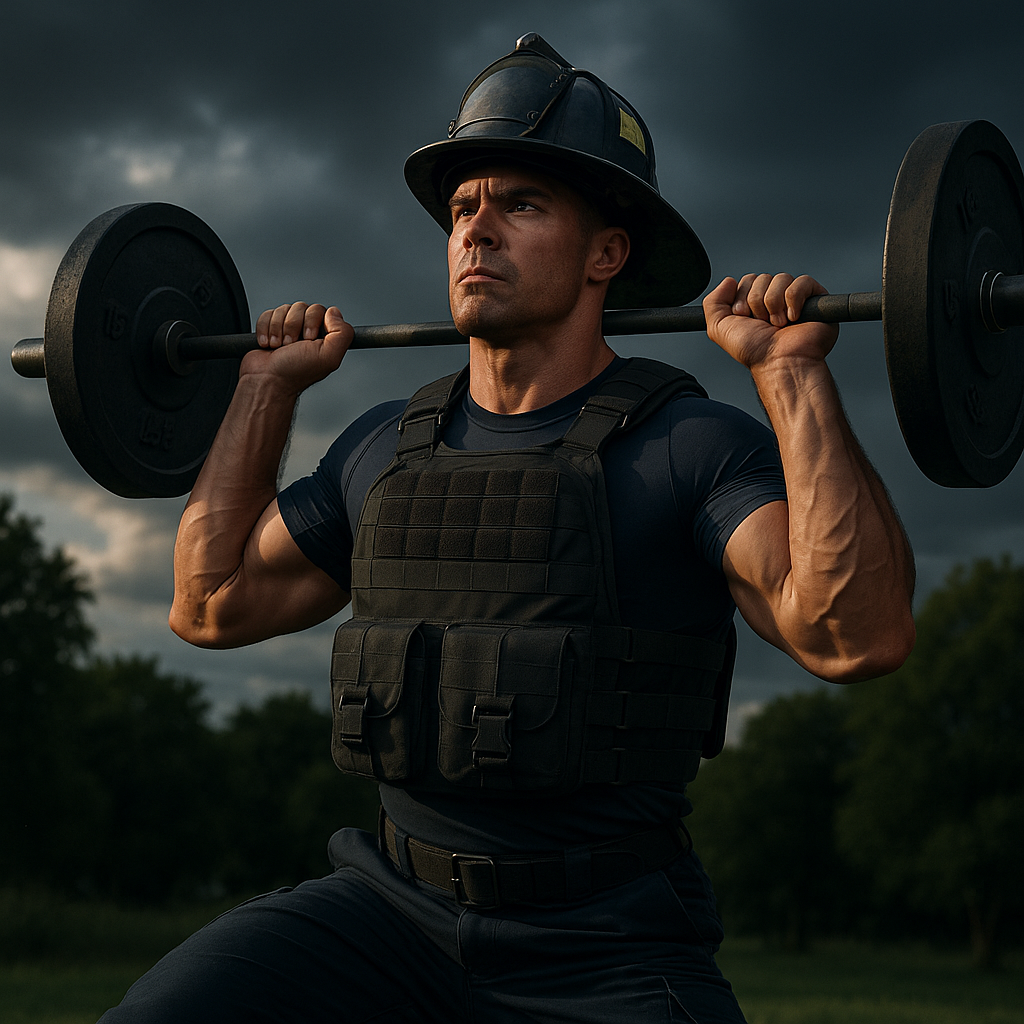
Creatine for First Responders and Military: Performance Under Pressure
Police officers, firefighters, paramedics, and military personnel rely on explosive strength, sustained endurance, and rapid cognitive recovery in ways that recreational gym-goers simply do not. Here is what the evidence says about creatine supplementation for tactical and operational athletes.
Key Takeaways
- First responders and military personnel require both explosive power (burst tasks) and cognitive resilience (decision-making under fatigue) — creatine supports both.
- Creatine's phosphocreatine system is most active during the 1–10 second all-out efforts that dominate tactical scenarios: restraining a suspect, breaching a door, lifting a patient.
- Research shows creatine supplementation may reduce cognitive fatigue and maintain decision-making speed under sleep deprivation — directly relevant to shift work.
- Most military and law enforcement organizations have no ban on creatine. Confirm with your specific branch or employer before use.
- Hydration is especially important for creatine users in hot environments (structural firefighting, summer patrol) — maintain at least 500 mL extra water per day.
What First Responders and Military Actually Need Physically
The fitness demands of operational work are distinctly different from recreational training. A firefighter fighting a structural fire may need to carry 25 kg of gear up three flights of stairs, then immediately perform a victim drag — all while wearing a self-contained breathing apparatus in 200°C heat. A police officer may sit in a patrol car for hours and then need to sprint, subdue, and handcuff in under 30 seconds.
These are repeated high-intensity, intermittent efforts — exactly the scenario where creatine supplementation has its strongest evidence base.
The phosphocreatine energy system — the one creatine directly supports — is the dominant fuel source for efforts lasting 1–10 seconds at maximum intensity. It is also the system that recharges fastest between efforts (within 2–5 minutes of rest), so maintaining high phosphocreatine stores means you are ready for the next critical task faster.
Creatine and Cognitive Performance Under Fatigue
One of creatine's less-discussed benefits is its effect on the brain under conditions of energy stress — sleep deprivation, hypoxia, and sustained cognitive load.
A landmark study by Watanabe et al. (2002) found that creatine supplementation significantly reduced mental fatigue in tasks requiring repeated mathematical processing. A 2021 review in Nutrients summarized evidence showing creatine supports cognitive performance specifically when the brain is energy-stressed — the exact state of a paramedic at hour 16 of a 24-hour shift or a soldier during a multi-day field operation.
Shift work, extended operations, and irregular sleep are occupational realities for first responders and military personnel. The emerging evidence for creatine's cognitive support role — while not yet definitive — is directly relevant to these populations.
Creatine for Firefighters Specifically
Structural firefighting is one of the most physically demanding occupations in the world. Firefighters require:
- High upper-body and grip strength (hose handling, forcible entry)
- Lower-body power (stair climbing with full gear)
- Heat tolerance and cardiovascular endurance
- Rapid recovery between alarm responses
A study of male firefighters found that 12 weeks of creatine supplementation combined with resistance training improved muscular strength, lean body mass, and physical performance markers beyond training alone. Critically, no adverse effects on renal or hepatic function were observed in this occupationally relevant population.
Heat note: Firefighters working in extreme heat environments should be particularly diligent about hydration when using creatine. Creatine increases intramuscular water retention, which can be advantageous for heat tolerance but requires adequate fluid intake to maintain this effect. The recommended additional fluid intake is at least 400–500 mL of water per day above baseline.
Creatine for Military Personnel
Military research into creatine has been ongoing for over two decades. Key findings relevant to military personnel include:
- Load-carriage performance: Creatine improves performance in weighted carries and load-bearing marches — fundamental military tasks.
- Resistance to overtraining: Military recruits in basic training experience extreme training volumes. Creatine may reduce the cellular damage markers associated with overtraining, supporting faster recovery between training days.
- TBI (traumatic brain injury) context: Preliminary research suggests creatine may have neuroprotective properties relevant to blast exposure and concussion recovery, though this evidence is early-stage and should not substitute for proper medical evaluation of any head injury.
The US Army Research Institute of Environmental Medicine and other defence research bodies have published research supporting creatine as a safe and effective supplement for military personnel. Most NATO militaries permit creatine use; confirm current guidance with your specific command.
How First Responders Should Use Creatine
The dosing protocol for first responders and military personnel is the same as for any athlete:
- Maintenance dose: 3–5 g/day, taken consistently. This is the simplest and most practical approach for operational schedules.
- Loading (optional): 20 g/day split into 4 doses for 5–7 days accelerates muscle saturation. Useful if you want faster results before a physical fitness test or training block.
- Timing: Timing matters less than consistency. Take it when it fits your shift — with a meal is ideal for GI comfort.
- Hydration: Add at least 400–500 mL of water to your daily intake. In hot environments or during heavy exertion, increase this further.
- Drug testing: Pure creatine monohydrate is not a banned substance in any military or law enforcement context we are aware of, but verify with your specific employer or branch before use.
Frequently Asked Questions
Can police officers take creatine?
Yes. Creatine monohydrate is not a controlled substance and is not banned by any Canadian police service or law enforcement body we are aware of. It is a legal, well-researched supplement. Confirm with your specific employer if you have concerns about supplement policies.
Is creatine allowed in the Canadian military?
Creatine is generally permitted. The Canadian Armed Forces do not prohibit creatine use, but specific operational commands may have guidance on supplement use. Check with your unit's medical officer if you are unsure.
Does creatine help with shift work fatigue?
There is emerging evidence that creatine supplementation reduces cognitive fatigue under conditions of sleep deprivation and energy stress — conditions that characterize shift work. While the evidence is not yet conclusive enough for a firm claim, the biological mechanism is plausible and the safety profile of creatine is excellent.
Is creatine safe for firefighters working in heat?
Yes, with adequate hydration. Creatine increases intramuscular water retention, which can be beneficial for heat tolerance, but requires increased fluid intake to maintain the effect. Firefighters should add at least 400–500 mL of extra water per day and monitor urine colour as a hydration indicator.