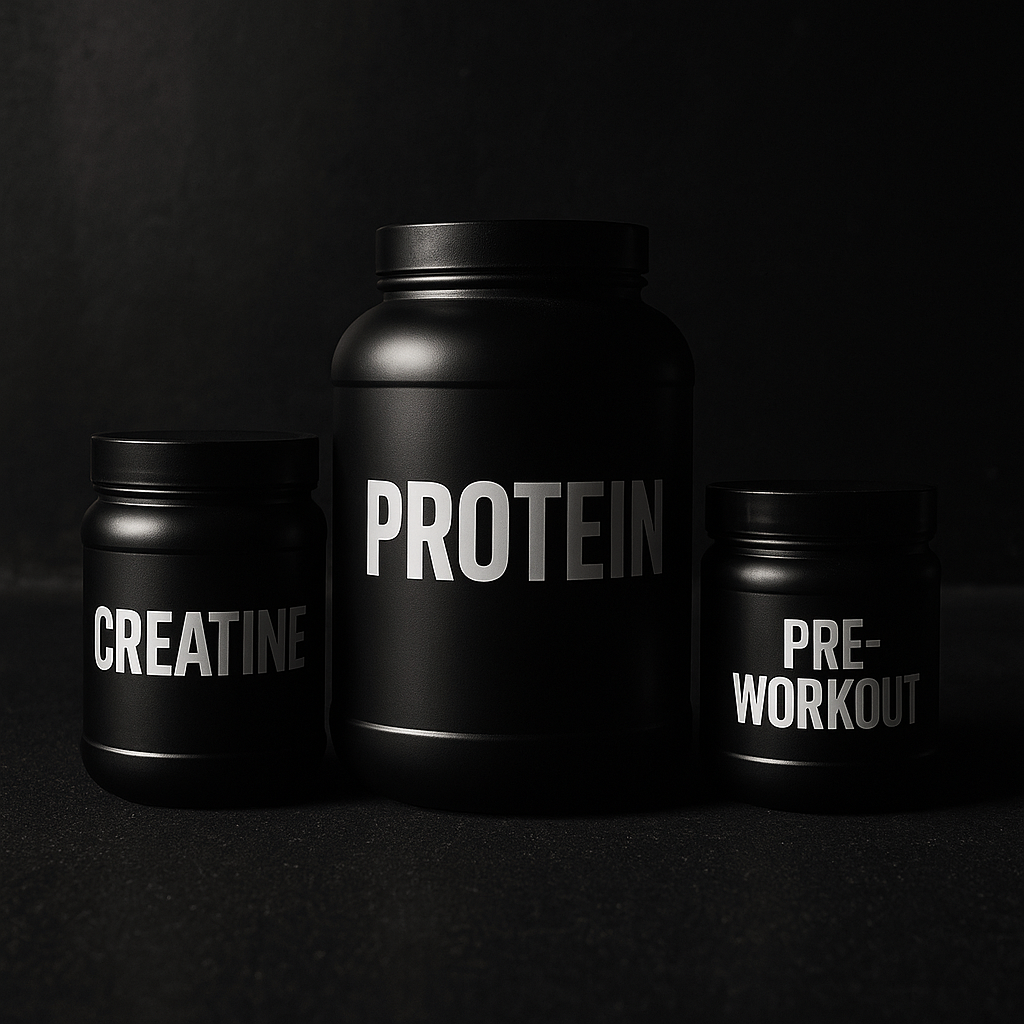
The Best Creatine Stacks for 2026: What to Pair It With (and What to Skip)
Creatine is effective on its own — but the right combination can amplify your results. Here is a ranking of the best creatine stacks based on evidence, from the combinations that are nearly certain to help to the ones that are mostly hype.
Key Takeaways
- Creatine + protein powder is the single best-supported combination for muscle gain and recovery — take them together post-workout.
- Creatine + beta-alanine has consistent evidence for high-volume training, endurance athletes, and anyone doing sets of 8–15 reps.
- Creatine + caffeine: the old myth that caffeine cancels creatine has been disproven — they can be combined safely.
- Creatine + HMB (beta-hydroxy-beta-methylbutyrate) has strong evidence specifically for preserving muscle during a calorie deficit.
- Creatine + expensive 'synergy boosters' is mostly marketing — stick to the basics.
Why Stack Creatine at All?
Creatine monohydrate is one of the few supplements with enough evidence to stand entirely on its own. A standard 3–5 g dose daily will saturate your muscle phosphocreatine stores in 3–4 weeks and produce the well-documented benefits: more strength, more power output, faster recovery, and (in some populations) cognitive benefits.
So why stack it?
Because the right combinations can address limitations that creatine alone does not fix — aerobic capacity, muscle protein synthesis rate, endurance under lactic acid accumulation — without compromising creatine's core effects. The key is being selective. Most supplement companies use the word 'stack' to sell you more products. The actual evidence supports only a handful of combinations.
Here are the stacks ranked by evidence quality.
Stack 1: Creatine + Protein Powder (Best Supported)
This is the most evidence-backed combination in sports nutrition. Multiple meta-analyses confirm that creatine and protein supplementation together produce significantly greater muscle mass gains than either supplement alone in people doing resistance training.
The mechanism is straightforward: creatine increases your training capacity (more reps, more sets, more volume), and protein provides the amino acid substrate to build the muscle that training stimulus demands. Each amplifies the other — you can do more work, and you have the building blocks to recover from and adapt to that work.
How to use it: 3–5 g of creatine monohydrate plus 25–40 g of whey protein (or a vegan equivalent), ideally post-workout. Both can be mixed in the same shake.
Does the timing matter? Post-workout appears to be slightly better than pre-workout for both supplements when the goal is muscle gain, but the difference is small compared to hitting your daily totals. Consistency matters more than precision timing.
Best for: Anyone doing resistance training with muscle gain as a goal — this is the foundational stack.
Stack 2: Creatine + Beta-Alanine (Well Supported for Volume Training)
Beta-alanine is a non-essential amino acid that increases intramuscular carnosine levels. Higher carnosine acts as a buffer against lactic acid accumulation — the hydrogen ion buildup that causes the burning sensation in high-rep sets and causes muscular failure before your muscles are truly exhausted.
Creatine and beta-alanine address different rate-limiting factors in performance:
- Creatine: Replenishes ATP faster — critical for explosive, short-duration efforts (sprints, heavy sets of 1–5 reps)
- Beta-alanine: Reduces acid accumulation — critical for sustained, moderate-duration efforts (sets of 8–20 reps, HIIT, endurance sports)
A 2006 study in the International Journal of Sport Nutrition and Exercise Metabolism found that the combination produced greater improvements in training volume and lean mass than either supplement alone. This has been replicated in several subsequent studies.
The caveat: Beta-alanine causes a harmless but sometimes uncomfortable tingling sensation (paresthesia) in many people, especially at doses above 1.6 g. This can be minimized by splitting into smaller doses (800 mg–1.2 g) throughout the day. Time-release formulations largely eliminate it.
How to use it: 3.2–6.4 g of beta-alanine daily (in split doses), 3–5 g of creatine. Both can be taken at any time — creatine timing is flexible, beta-alanine loading is cumulative.
Best for: High-volume lifters, CrossFit athletes, cyclists, swimmers, and anyone doing sets of 8+ reps or intervals.
Stack 3: Creatine + Caffeine (The Myth Is Officially Debunked)
For years, a widely circulated claim held that caffeine and creatine cancel each other out — that caffeine's diuretic effect would counteract creatine's muscle hydration mechanism, or that caffeine's effect on phosphocreatine resynthesis competed with creatine supplementation.
This claim was based on a single 1996 study that found caffeine reduced the ergogenic effect of creatine loading in a specific cycling protocol. It has not been replicated. A 2023 meta-analysis in the Journal of the International Society of Sports Nutrition reviewed 16 studies and found no evidence that caffeine blunts the performance or muscle mass effects of creatine supplementation.
Current consensus: creatine and caffeine can be safely combined. Most commercial pre-workout supplements contain both, and the available evidence says this is fine.
Practical note on timing: Caffeine has a half-life of 5–7 hours. Taking caffeine within 6 hours of bedtime can impair sleep — and creatine's cognitive benefits (and some recovery effects) are enhanced by good sleep. If you are taking a pre-workout with caffeine, consider switching to caffeine-free in the evenings or on rest days.
Best for: Anyone who uses a pre-workout for training sessions. No need to separate or alternate them.
Stack 4: Creatine + HMB (Best for Muscle Preservation in a Deficit)
HMB (beta-hydroxy-beta-methylbutyrate) is a metabolite of the amino acid leucine that has strong evidence for reducing muscle protein breakdown — particularly during calorie restriction, illness, or reduced training volume. It is distinct from leucine or BCAAs, which primarily support muscle protein synthesis.
The creatine + HMB combination is best supported in specific contexts:
- Cutting phases (calorie deficit with resistance training)
- Detraining periods (injury, illness, reduced training)
- Older adults experiencing sarcopenia
- Athletes returning from a training break
A 2014 meta-analysis found that HMB significantly reduced muscle protein breakdown during periods of muscle stress. When combined with creatine — which maintains strength and training capacity even in a deficit — the combination supports both the anabolic and anti-catabolic sides of the equation.
How to use it: 1.5–3 g of HMB per day (split into two doses), 3–5 g of creatine. HMB is typically more expensive than creatine — expect to pay $40–80/month CDN for quality HMB.
Best for: Cutting, injury recovery, and older adults. Less valuable if you are in a solid calorie surplus with no training disruptions.
What to Skip: The Overhyped Combinations
Not all creatine stacks are worth your money. Here are the combinations that fall short of the evidence bar:
Creatine + testosterone boosters: There is no evidence that any over-the-counter 'natural testosterone booster' meaningfully raises testosterone in healthy adults. Creatine does not need a testosterone lift to work, and the combination provides no additive benefit supported by clinical data.
Creatine + glutamine (for muscle gain): Glutamine is conditionally essential under severe physiological stress (burns, surgery, serious illness) but has consistently failed to show muscle gain or recovery benefits in healthy people eating adequate protein. Adding it to creatine does not improve performance or body composition in clinical trials.
Creatine + 'loading matrix' or 'transport blend': Products that add insulin-spiking sugars, electrolytes, or proprietary blends to help creatine 'absorb better' are mostly marketing. A 2003 study found that adding dextrose to creatine increased muscle creatine uptake slightly — but the difference was small and unnecessary if you are taking creatine daily over weeks. Plain creatine monohydrate with water works.
Creatine + collagen protein: These are compatible but address different things. Creatine is for muscle power and recovery; collagen peptides are studied for joint tissue support and skin. Stacking them is fine but they are not synergistic — they work on different tissues through different mechanisms.
Creatine Stack Cheat Sheet
- Creatine + Protein Best overall — muscle gain, recovery, most evidence
- Creatine + Beta-Alanine Best for volume training, HIIT, and endurance sport
- Creatine + Caffeine Safe to combine — the cancelation myth is debunked
- Creatine + HMB Best for muscle preservation during a calorie deficit
- Skip T-boosters No OTC testosterone booster has strong clinical evidence
Frequently Asked Questions
What is the best thing to stack with creatine?
Protein powder is the best-supported combination — multiple meta-analyses show greater muscle gains from creatine plus protein than either alone. For high-volume training, adding beta-alanine (3.2–6.4 g/day) is the next best addition. For cutting phases, HMB is well-studied for preserving muscle during a calorie deficit.
Can I take creatine with pre-workout?
Yes. The claim that caffeine cancels out creatine has been debunked. A 2023 meta-analysis found no evidence that caffeine blunts the performance or muscle mass effects of creatine. Most pre-workouts contain both and the combination is safe.
Should I take creatine with protein or separately?
Together is fine. Many people mix creatine into their post-workout protein shake. Timing is less important than hitting your daily doses — 3–5 g of creatine and adequate protein (0.7–1 g per pound of bodyweight) consistently, every day.
Does creatine and beta-alanine cause the tingling?
The tingling (paresthesia) comes from beta-alanine, not creatine. It is harmless but uncomfortable for some people. You can minimize it by splitting beta-alanine into smaller doses (800 mg–1.2 g at a time, 3–4 times per day) or using a time-release formulation. Creatine has no tingling effect.
Is creatine + HMB worth it?
In specific contexts, yes. HMB is well-studied for reducing muscle protein breakdown during calorie deficits, illness, or detraining. If you are cutting, returning from injury, or over 50, the creatine + HMB stack has solid evidence. If you are in a straightforward mass-gaining phase, the extra cost of HMB is probably not justified.