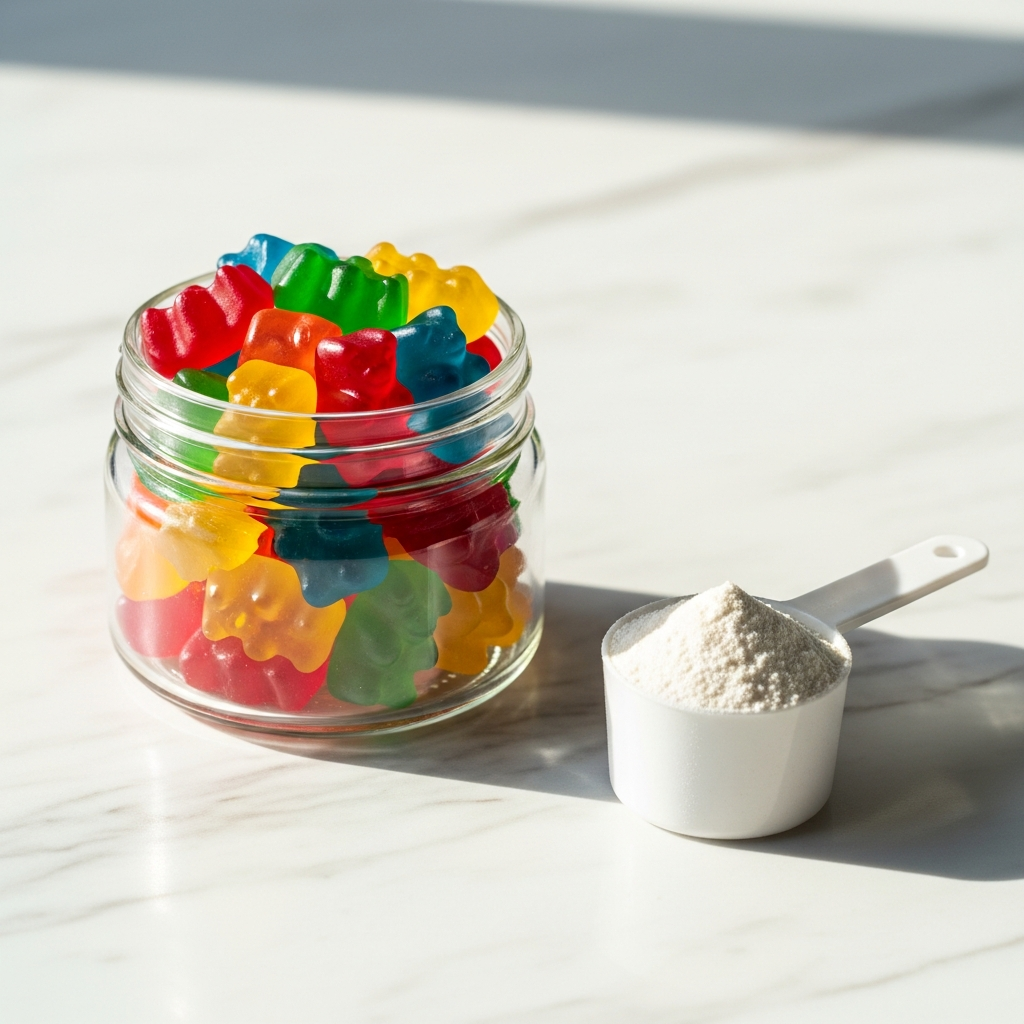
Are Creatine Gummies Worth It? An Honest Look at the Science and Value
Creatine gummies are one of the fastest-growing supplement formats — but they cost significantly more per gram than powder and use the same molecule. Here is the honest breakdown of whether they are worth it, who they make sense for, and what to watch out for.
Key Takeaways
- Creatine gummies contain the same creatine monohydrate molecule as powder — the underlying performance benefits are identical.
- Gummies typically cost 3–5x more per gram of creatine than equivalent powder products.
- Many creatine gummies are under-dosed — some deliver only 2–3g per serving when research supports 3–5g daily.
- The main advantage of gummies is convenience and taste — they are genuinely easier to take consistently, which matters for long-term supplementation.
- Check the creatine content per serving carefully — some gummy products require eating 4–6 gummies to hit a full dose.
- Gummies are a legitimate choice for people who hate powder textures or forget to mix drinks — the consistency benefit can outweigh the cost premium.
The Science: Same Creatine, Different Delivery
The fundamental answer is straightforward: creatine gummies work because they contain creatine monohydrate — the same molecule used in thousands of research studies. The format (gummy, powder, capsule) does not change the creatine's mechanism. Once absorbed, your muscles do not care whether the creatine arrived dissolved in water or chewed from a gummy bear.
No independent research has shown creatine gummies to be more or less effective than creatine powder at equivalent doses. The delivery format is a bioavailability non-issue — creatine is absorbed readily from the gastrointestinal tract regardless of whether it arrives as dissolved powder or digested gummy matrix.
So the real questions are not about the creatine itself — they are about dose accuracy, cost, and who the format actually serves well.
The Dosing Problem: Read the Label Carefully
This is where creatine gummies get complicated. The research-supported daily dose for creatine is 3–5 grams per day. Many creatine gummy products deliver significantly less per serving — often 2–3g — which may or may not be enough to fully saturate muscle creatine stores over time.
Brands structure their labels differently. A product might say '5g creatine' on the front while the serving is listed as 4 gummies — meaning you need to actually eat 4 gummies to get the full dose. Some products list total gummy weight (including the gummy matrix sugars) rather than elemental creatine content. Always check:
- Elemental creatine per serving (not total gummy weight)
- How many gummies equal one serving
- How many servings are in the container
Jacked Factory's creatine gummies, for example, deliver 5g of creatine per serving (2 gummies) — which hits the research-supported dose efficiently. Some competitors require 4–6 gummies for an equivalent dose at a higher cost-per-gram.
Cost Per Gram: The Honest Math
Let us run the actual numbers. High-quality creatine monohydrate powder in Canada costs roughly $0.04–$0.08 per gram. A 500g container (100 servings at 5g) runs $20–$40.
Creatine gummies typically run $0.15–$0.35 per gram of elemental creatine — 3 to 5 times more expensive for the same active ingredient. A 30-serving supply at 5g/day costs $20–$50 depending on the brand, versus $6–$12 for the equivalent in powder.
Over a year of daily supplementation at 5g/day:
- Powder: ~$25–$60/year
- Gummies: ~$150–$350/year
That is a $100–$300 premium annually for the same creatine. Whether that premium is worth it depends entirely on whether the format is what keeps you consistent.
Who Creatine Gummies Are Actually Right For
Despite the cost premium, creatine gummies are a genuinely good choice for specific people:
- People who consistently forget powder: If you mix creatine into water and forget to drink it, or find the routine annoying, gummies sitting on your desk are a real behavioural solution. Consistency at a higher cost beats inconsistency at a lower cost.
- Travellers: Creatine powder in a baggie looks suspicious going through airport security. A sealed gummy bottle is indistinguishable from any other supplement. For frequent travellers, this is a real practical advantage. (See our article on flying with creatine for more.)
- People who dislike the chalky texture: Some people genuinely cannot stand the grainy texture creatine powder leaves in water. Gummies eliminate this entirely.
- Those supplementing children or teens: For younger athletes, a measured gummy is easier to portion and monitor than loose powder.
If none of these apply and you are comfortable with powder, there is no performance reason to pay the premium.
What to Look for in a Creatine Gummy Product
If you decide gummies are the right format for you, here is what to look for:
- At least 3g elemental creatine per serving. Ideally 5g. Check the supplement facts panel, not the front-of-pack marketing.
- Creatine monohydrate as the listed form. Some gummies use creatine HCL or other forms — these are fine but more expensive and less researched. Monohydrate remains the gold standard.
- Third-party testing. For athletes subject to drug testing, look for Informed Sport or NSF Certified for Sport on the label. Gummy manufacturing involves more processing steps than powder, so contamination risk is slightly elevated.
- Reasonable sugar content. Most creatine gummies contain 2–5g of sugar per serving. Not a concern for most people, but worth noting if you are managing carbohydrate intake carefully.
See our full Best Creatine Gummies in Canada guide for top-rated options with price-per-gram comparisons.
Creatine Gummies vs Powder: The Numbers
- Same Active molecule — creatine monohydrate works identically regardless of format
- 3–5x Higher cost per gram for gummies vs equivalent powder
- 5g Minimum daily creatine dose — check gummy labels carefully, many under-deliver
- KD 18 Keyword difficulty for 'creatine gummies' — one of the most open ranking opportunities in creatine search
Frequently Asked Questions
Are creatine gummies as effective as powder?
Yes, at equivalent doses. The creatine molecule is identical — gummies and powder both deliver creatine monohydrate, which is absorbed and used the same way by muscle cells. The format does not affect efficacy. The key variable is ensuring your gummies actually deliver 3–5g of elemental creatine per day.
How many creatine gummies should I take per day?
Enough to deliver 3–5g of creatine monohydrate per day — check your specific product label. Some gummies provide 5g in 2 pieces; others require 4–6 gummies for the same dose. Always check the 'elemental creatine per serving' in the supplement facts panel, not the serving size in gummies alone.
Why are creatine gummies so expensive?
Gummies cost more to manufacture than powder — the gummy matrix (sugars, gelling agents, flavours) adds material and production costs, and per-gram creatine content is lower per unit weight. The format premium is real: expect to pay 3–5x more per gram of creatine in gummy form versus powder.
Are there good creatine gummies available in Canada?
Yes. Jacked Factory's creatine monohydrate gummies are available on Amazon.ca and are one of the better-dosed options (5g per 2-gummy serving). Several other brands ship to Canada through Amazon. See our Best Creatine Gummies guide for a current ranked list with pricing.
Do creatine gummies cause bloating?
Creatine in any form can cause minor initial water retention (0.5–1.5kg) as muscles increase their water content — this is not bloating, it is muscular hydration. Gummies are unlikely to cause more GI discomfort than powder unless the gummy matrix itself causes sensitivity. If anything, the smaller amount of elemental creatine per piece may be gentler on some stomachs.
Can I take creatine gummies instead of powder?
Yes — if you hit 3–5g of creatine monohydrate per day, the format is your choice. Gummies cost significantly more, but if they make you more consistent, that consistency benefit can easily outweigh the price difference in real-world results.